Rail transit interiors have to accommodate very different operating requirements within a limited amount of space. Visibility may be desirable during normal operation, while privacy becomes necessary for staff discussions, passenger services, or restricted areas. Glass partitions are useful for keeping spaces visually open, but permanent transparency does not suit every situation.
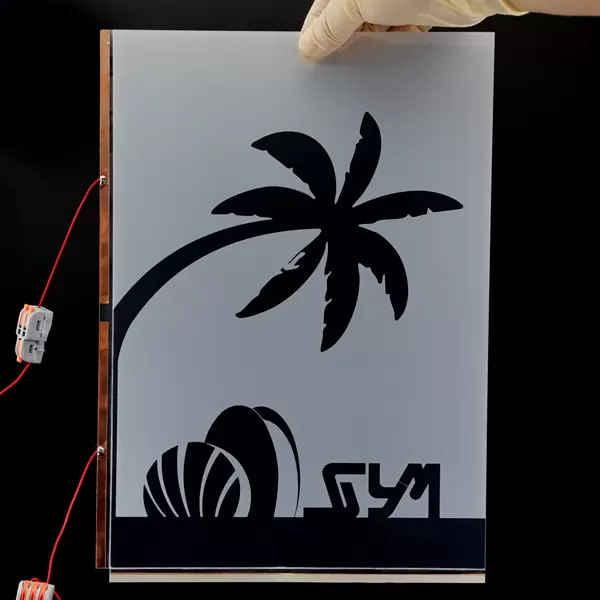
PDLC Smart Film provides an electrically controlled alternative. The glazing can remain transparent when visibility is required and switch to a diffused state when visual separation is needed. For subway projects, that function can be considered across both rolling stock and station infrastructure.
The engineering requirements vary considerably between those two environments. Train-mounted glazing has to account for vibration, vehicle integration, restricted installation space, and maintenance access. Station glazing offers more freedom for electrical routing and control, but still needs to meet the practical demands of busy public facilities.
Rather than applying switchable film to every glass surface, project teams can focus on locations where changing the visual state of glazing has a clear operational purpose.
Passenger Areas: More Than a Window Function
Passenger windows normally remain transparent throughout a journey. That arrangement works well for conventional metro services, but some newer rail interiors include private compartments, premium areas, business-oriented spaces, or flexible partitions where visual separation can be useful.
PDLC Smart Film can provide an additional operating state without introducing blinds or curtains.
Clear mode maintains the outside view and allows daylight into the carriage. Diffused mode reduces direct visibility through the glass and creates a more enclosed visual environment.
The application has to be judged against the actual carriage layout. A standard high-capacity metro carriage may have little reason to control individual passenger windows. A specialized carriage with partitioned areas may have a stronger requirement.
That distinction should be made before product selection. Switchable glazing adds electrical components and control requirements, so there should be a defined function behind the specification.
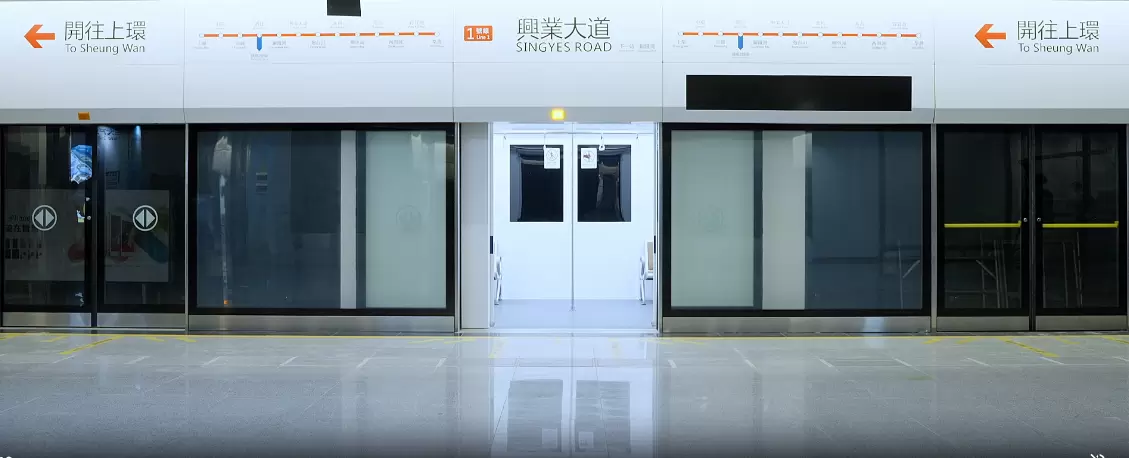
Driver Cab Partitions
Driver cabins require much more careful consideration because visibility can have an operational role.
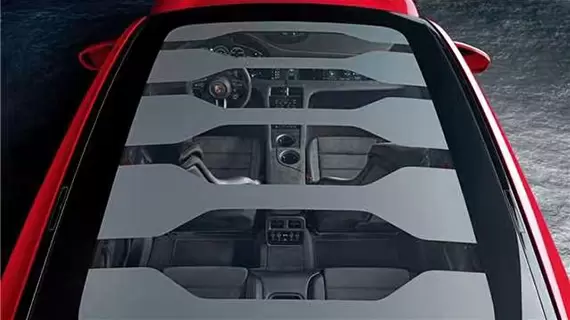
A glazed partition between the driver's area and the passenger compartment may need to provide visual separation at certain times while retaining visibility under other operating conditions. Smart Film can provide an adjustable visual boundary where the vehicle design permits such a function.
Control logic deserves particular attention. A local switch may be adequate for a simple partition, while a vehicle-integrated control system may be required for a more sophisticated arrangement.
Safety requirements always take priority. Any glazing that forms part of a driver's field of view or an operational observation area needs to be evaluated against the applicable railway standards and vehicle design requirements. PDLC technology should support the operating concept rather than interfere with it.
Internal Partitions Within Rail Carriages
Glass is sometimes used inside carriages to divide passenger areas without creating a completely enclosed compartment.
Partitions can separate seating areas, special-purpose spaces, service zones, or staff areas while maintaining a sense of openness. Fixed transparent glass works when visibility is wanted throughout the journey, but privacy requirements may change depending on how the space is being used.
Switchable glazing introduces a controllable boundary.
A partition can remain clear when the area is open to passengers and become diffused when the space is reserved or requires greater visual separation.
The practical benefit comes from the absence of mechanical moving parts associated with curtains or blinds. There is also no need for additional interior clearance around a conventional shading mechanism.
For rolling stock, however, the film, glass, electrical connections, and surrounding structure must be designed as one assembly. Vehicle vibration and repeated movement make installation quality particularly important.
Station Management Offices
Station buildings provide more straightforward opportunities for Smart Film.
Management offices often sit beside public circulation areas. Glass partitions help staff maintain awareness of activity outside the office, while private discussions or administrative work may require visual separation.
Switchable glazing allows the same partition to serve both purposes.
During normal station operation, transparent glass can maintain visibility. Meetings, personnel discussions, document handling, or other private activities can trigger the diffused state.
No physical blind has to occupy the glass surface, and the architectural appearance remains relatively clean when the privacy function is not active.
For renovation projects, self-adhesive Smart Film can also be considered where the existing glass is suitable and replacing the entire partition would create unnecessary construction work.
Customer Service Areas
Customer service counters have a different requirement from ordinary offices.
Staff need to communicate with passengers clearly, but certain situations involve personal information, documents, payment records, or internal procedures. A permanently transparent partition can make privacy difficult, while a permanent opaque barrier interferes with normal communication.
Switchable glazing offers an intermediate solution.
The glass can remain clear during customer interaction and switch to a private state when staff need to handle confidential matters or perform internal work.
For a station operator, the value is primarily operational rather than decorative. The same piece of glazing can support two different working conditions without changing the physical layout.
Control Rooms and Technical Facilities
Rail control rooms contain equipment and information that should not always be visible from public areas.
Large glazed partitions are useful for supervision and communication between technical teams, but continuous transparency may expose screens, operating information, or restricted activities to people outside the room.
PDLC glazing can provide controlled visual access.
During routine operation, clear glass supports communication and supervision. Privacy mode can be selected for meetings, system discussions, maintenance coordination, or other situations where unrestricted visual access is unnecessary.
Larger control facilities can also divide the glazing into several independent zones. Different sections of a glass wall can then operate according to the function of each room.
Staff Meeting and Training Rooms
Subway operators require regular staff training, technical briefings, operational meetings, and management sessions.
Glass meeting rooms make good use of limited station-office space, particularly where daylight is valuable. Privacy becomes necessary when internal information is discussed.
A switchable partition provides a simple change between open and private conditions.
The same approach can work in training facilities. During preparation, transparent glass helps staff maintain visual connection with adjacent spaces. During a formal session, the partition can become diffused.
For compact station buildings, that flexibility can be more useful than constructing separate rooms for every activity.
Platform Service and Security Areas
Platform-level applications require greater care because these locations are exposed to constant passenger movement.
Staff booths, service rooms, security areas, and technical enclosures may use glass to maintain visibility toward the platform. At certain times, privacy or restricted access becomes more important.
Smart Film can be considered where the glass already serves a meaningful architectural or operational function.
The decision should take account of passenger contact, cleaning frequency, access to electrical connections, and the possibility of accidental impact. A film installation should not create exposed edges or vulnerable components in locations subject to heavy public traffic.
The Engineering Difference Between Trains and Stations
Rolling stock and station buildings should not share the same specification simply because both use PDLC technology.
The surrounding conditions are very different.
Factor | Rolling Stock | Station Infrastructure |
Vibration | Continuous movement and vibration | Generally stationary |
Electrical space | Limited | Easier to allocate |
Maintenance access | Restricted | Easier to arrange |
Installation timing | Linked to vehicle production or overhaul | Linked to construction or renovation |
Glass replacement | More complex | Usually more accessible |
Control integration | May involve vehicle systems | May connect with building controls |
Passenger contact | Often frequent | Depends on installation location |
Environmental exposure | Vehicle operating conditions | Building-specific conditions |
A film configuration suitable for an interior station office should not automatically be transferred to a train window.
Vehicle-mounted glazing deserves its own engineering assessment covering the complete glass assembly, electrical connection, mounting method, operating temperature, vibration, cleaning, and applicable transportation standards.
Glass Construction Has a Direct Effect on Project Planning
The same PDLC technology can be incorporated into different glass configurations depending on project requirements.
New station construction can use laminated Smart Glass as part of the original glazing specification. Electrical connections, glass dimensions, framing, and cable routing can be coordinated before installation.
Existing partitions present a different situation. Self-Adhesive Smart Film can be installed on suitable glass surfaces, allowing the existing glazing to remain in place.
Project condition | Possible solution |
New station building | Laminated Smart Glass |
New interior partition | Laminated Smart Glass or project-specific glass assembly |
Existing office partition | Self-Adhesive Smart Film |
Existing service booth | Self-Adhesive Smart Film, subject to glass assessment |
Vehicle glazing | Vehicle-specific engineered glazing assembly |
The choice should be based on the complete project rather than film type alone. Existing glass quality, surface condition, edge access, electrical routing, and maintenance requirements all influence the final decision.
Electrical Zoning Becomes Important on Large Glass Walls
Large station facilities may contain several glass panels within one partition.
Connecting every panel to one control zone is possible, but it is not always the best arrangement.
Consider a control center with four rooms behind a continuous glass partition. Staff in one room may need privacy while another room remains visually open. A single switch controlling the entire wall would remove that flexibility.
Independent zones provide more practical control.
A project might divide the glazing into:
Zone 1: management office
Zone 2: meeting room
Zone 3: technical room
Zone 4: circulation-facing partition
Each area can then operate according to its own use.
Zoning also helps with troubleshooting. If one section requires inspection, the remaining glass can continue operating.
The number of zones should be decided during the electrical design stage because film segmentation, wiring routes, and power supply arrangements need to correspond with the glass layout.
Power Supply Location Should Be Planned Early
PDLC Smart Film requires an appropriate power supply and electrical connection. Leaving the power arrangement until after the glass has been installed can create unnecessary construction problems.
Station projects normally provide more flexibility than vehicle interiors, but cable routes still need to be coordinated with frames, ceilings, walls, doors, and other building services.
Several questions should be settled before production:
· Where will the PDLC power supply be located?
· How will wiring reach each glass section?
· Which panels should operate together?
· Can maintenance personnel reach the electrical components?
· Will the glass connect to a local switch or a centralized control system?
A clean installation usually starts with these decisions rather than with the film itself.
Cleaning and Passenger Contact Cannot Be Ignored
Public transportation facilities are cleaned frequently.
Glass surfaces around customer service areas, station offices, and passenger facilities can receive repeated wiping and contact throughout the day. Rolling stock introduces even higher levels of routine cleaning in some areas.
Installation details therefore matter.
Film edges should be properly protected. Electrical connections should not interfere with normal cleaning. Surface treatment and cleaning procedures should match the selected product construction.
Laminated Smart Glass has an advantage in new-build applications because the functional film is contained within the glass assembly. Self-adhesive film offers greater convenience for suitable retrofit projects, but exposed surface conditions and edge treatment require greater attention.
Temperature and Humidity Depend on the Installation Location
A subway network can include underground platforms, above-ground stations, vehicle interiors, depots, entrances, and equipment buildings. Each location has different environmental conditions.
Underground areas may experience high humidity or condensation. Above-ground stations can receive direct solar exposure. Trains may operate across substantial temperature changes during the same day.
The film and glass specification should therefore reflect the actual installation environment.
Project teams should provide information about:
Environmental factor | Why it matters |
Operating temperature | Influences material selection and performance requirements |
Humidity | Important for installation and long-term edge conditions |
Solar exposure | Relevant to above-ground glazing |
Condensation | Important around temperature transitions |
Cleaning frequency | Affects surface and edge requirements |
Installation position | Determines exposure and maintenance conditions |
No single configuration should be assumed to suit every part of a subway network.
Retrofit Projects Need a Different Workflow
Existing stations often contain large quantities of conventional glass. Replacing all of that glazing simply to introduce privacy control may be expensive and disruptive.
Self-Adhesive Smart Film can provide a retrofit route for suitable glass.
The existing surface needs to be assessed first. Dimensions, glass condition, surface contamination, edge accessibility, frame construction, and electrical routing all influence installation feasibility.
The process should normally begin with a site survey rather than immediate film ordering.
For a station renovation, the project team should also consider working hours, passenger flow, protection of surrounding finishes, access equipment, and installation sequencing.
That planning can make a larger difference to the final result than a small difference in film specification.
Where Smart Film Makes the Strongest Business Case
The most convincing subway applications share one characteristic: the glass has more than one required function.
Permanent transparency is useful in one operating condition, while privacy or visual separation is useful in another.
Station management offices, customer service areas, control rooms, staff meeting rooms, specialized carriage partitions, and selected driver-cabin applications can fit that requirement.
A conventional window that only needs to provide outside visibility may not justify switchable technology. Adding Smart Film simply because the project is marketed as a “smart subway” is not enough.
Project value comes from solving a defined operational problem.
A Practical Specification Checklist for Subway Projects
Before requesting a quotation, rail contractors and project designers should prepare information covering the complete installation.
Project information | Details to provide |
Application | Station, carriage, driver cabin, office, control room, service area |
Glass dimensions | Width, height, quantity, panel configuration |
Glass type | Existing glass, laminated glass, insulated glass, etc. |
Installation | New construction or retrofit |
Environment | Underground, indoor, outdoor, vehicle-mounted |
Control | Individual, grouped, centralized, integrated |
Power | Available electrical supply and installation position |
Wiring | Planned cable routes and connection locations |
Operation | When clear and diffused states are required |
Maintenance | Access requirements and service conditions |
For rolling stock, the specification should also include the vehicle platform, installation position, vibration conditions, applicable standards, and requirements established by the vehicle manufacturer or rail operator.
Smart Film Works Best When Its Role Is Clearly Defined
Smart subway systems involve far more than connected displays and automated equipment. Interior architecture also has a role to play, particularly where spaces need to change according to operational conditions.
PDLC Smart Film gives selected glass surfaces two distinct visual states. That simple change can support privacy in a station meeting room, controlled visibility in a staff facility, or flexible separation inside a specialized rail carriage.
The strongest projects will not necessarily be the ones with the largest amount of smart glass.
Careful selection matters more.
A good specification starts with the location, operating requirements, glass construction, electrical design, control method, and maintenance conditions. Once those factors are established, the appropriate Smart Film or Smart Glass configuration can be selected with much greater confidence.
For rail transit designers and contractors, the central question is therefore not how much glass can be made switchable. The better question is which glass surfaces genuinely benefit from having more than one operating state.
That approach keeps the technology tied to the actual needs of the subway system—and gives Smart Film a practical role within the wider rail environment.