What Makes Smart Glass Suitable for Modern Building Curtain Walls?
Learn more >


When you slide your finger across a phone screen, zoom on a tablet, or check data on an industrial panel, you are really “talking” to a thin, invisible layer under the glass. That layer is ITO conductive film.
As the “gold standard” of transparent conductive materials, ITO film acts like the neural pathways of modern electronics. Its job is simple to describe but hard to execute: conduct electricity evenly while letting almost all the light through.
For brands and engineers searching for an ITO film for touch and display factory, understanding how this material is designed, coated and patterned is the starting point for more reliable devices.
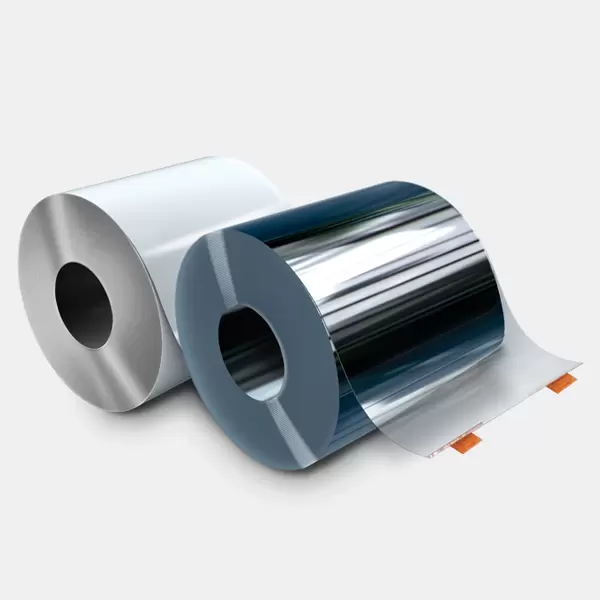
Main product reference:
ITO film for touch screen and display applications
ITO (Indium Tin Oxide) film is a transparent conductive coating on a base material (often PET or glass). In touch and display systems, it must satisfy three things at the same time:
Conductive: sheet resistance low enough, and uniform enough, to sense tiny changes from a fingertip, stylus or sensor event.
Transparent: high light transmittance and low haze, so displays stay bright and clear.
Process-ready: can be patterned into fine lines and structures without breaking continuity or losing clarity.
In other words, it has to behave like a metal and glass at the same time: carry electrons like a conductor, but stay visually almost invisible.
For touch and display work, that balance is critical. If conductivity is uneven, your finger will not be detected reliably. If transparency drops, the display looks dull and washed out. A serious ITO film for touch and display factory lives inside these trade-offs every day.
In a modern device, ITO film is responsible for four key experiences:
Smooth, responsive touch
Resistive Touch Panels detect small changes in the electrical field when a finger approaches. That requires extremely stable and uniform sheet resistance across the active area.
Clear, bright image
Any haze, color shift, or reflection from the ITO layer reduces contrast and brightness. High-quality ITO keeps the display “as-designed” by the panel maker.
Fine patterning for multi-touch
Multi-touch grids, sliders, gesture regions and stylus support all rely on fine line widths and well-defined patterns. The ITO film must tolerate photolithography, etching or laser patterning without losing adhesion or clarity.
Reliability under daily use
Devices are bent, tapped, heated, cooled and carried everywhere. The ITO film must remain conductive and intact through temperature cycles, humidity and mechanical stress.
Shuifa Singyes New Materials builds its ITO film range specifically for these use cases, rather than treating ITO as a generic conductive coating.
ITO film is often described as being “everywhere but invisible.” It quietly runs through three major domains:
Smartphones and tablets
Laptops and two-in-one devices
Smartwatches and fitness bands
Game consoles, car infotainment screens, smart home panels
Here, ITO has driven miniaturization and intelligent interaction. Without a reliable transparent conductive layer, multi-touch and gesture control would not feel natural.
HMI panels on production lines
Control panels in cleanrooms and labs
Medical imaging equipment interfaces
Touch-enabled monitoring systems in power plants and logistics hubs
These environments demand long lifetimes, glove touch, sometimes operation in harsh conditions. ITO film with stable sheet resistance and strong adhesion is central to meeting those expectations.
Beyond screens and panels, ITO film contributes to:
Certain types of photovoltaic and thin-film solar solutions
Optical sensors and detection systems
Smart windows and optoelectronic interfaces linked to building management
As devices connect into the Internet of Things (IoT) and concepts like the metaverse develop more interactive surfaces, the role of transparent conductive film expands from simple touch to full environmental sensing and mixed reality interfaces.
For a closer look at how Shuifa Singyes New Materials designs ITO film specifically for touch and display, see:
ITO film for touch screen applications
From a factory perspective, five parameters are constantly monitored.
Touch and sensing systems expect the same response from corner to corner. That requires:
Tight tolerance on sheet resistance across the entire web
Control of coating thickness and composition
Reliable process repeatability roll after roll
Any local deviation can create “dead zones” or drift in touch performance.
To keep displays sharp, ITO film must:
Let visible light pass with minimal loss
Avoid haze or scattering that blurs edges
Maintain neutral color without introducing tint
This is where the phrase “gold standard of transparent conductive materials” is more than a slogan. It reflects ITO’s proven ability to maintain transparency at useful conductivity levels.
Devices are no longer only flat rectangles. Curved dashboards, wearable bands and flexible displays require:
ITO coatings that can withstand bending and forming
Base films that match the mechanical needs of the end product
Process windows that support thermoforming or lamination steps
A capable ITO film for touch and display factory designs its products to keep conductivity and transparency stable even after these processes.
Modern touch and display designs use:
Narrower lines to reduce visual artifacts
Denser patterns for multi-touch and stylus performance
Complex routing for hybrid sensing designs
That means ITO must support:
High-resolution photolithography
Clean etching with sharp edges
Laser patterning without damaging surrounding areas
If the ITO breaks, roughens or delaminates, the circuit fails or the display looks uneven.
Over time, ITO films face:
Heat from backlighting or processors
Humidity and environmental contaminants
Repeated touch, cleaning and handling
Reliable films are tested for:
Temperature and humidity cycling
Chemical resistance to common cleaners
Adhesion after mechanical stress
Shuifa Singyes New Materials builds these considerations into manufacturing and internal qualification, rather than testing only at room temperature and ideal conditions.
To consistently deliver these characteristics, the production environment matters as much as the material formulation.
Although specific line layouts are proprietary, a typical high-end setup at a company like Shuifa Singyes New Materials includes:
Roll-to-roll coating lines in cleanrooms, capable of handling wide base films
Precise control of sputtering or other deposition methods for the ITO layer
Online monitoring of film thickness and resistance
Dedicated patterning and inspection equipment for sample and pre-production runs
The result is an ITO film tailored for downstream processes such as:
Touch sensor fabrication
Optical bonding to displays
Integration into PDLC smart film and smart glass
With vertical integration into smart film and smart glass production, Shuifa Singyes New Materials can tune ITO performance directly for its own PDLC and glazing lines as well.
The text-book use of ITO is flat touchscreens. But as devices evolve, the same base material now supports broader innovation.
Wearable devices, rollable screens and curved automotive displays all need transparent conductors that can bend without losing function.
ITO has historically been seen as brittle, but with:
Optimized thickness
Proper substrate selection
Controlled annealing and processing
it can play a real role in semi-flexible and curved designs, especially when combined with clever mechanical design of the device.
IoT is about connecting everyday objects, many of which need:
Simple touch or gesture interfaces
Small displays and status panels
Local sensing of environment (light, proximity, sometimes bio-signals)
ITO films make it possible to add thin, low-profile input and display layers onto appliances, industrial tools, building components and more.
Concepts like the metaverse rely on:
High-resolution head-mounted displays
Interactive glass, walls and table surfaces
Transparent screens layered into real environments
Every one of these needs transparent conductors that:
Do not obstruct viewing
Enable precise sensing of user interaction
Integrate with optics for AR and mixed reality
A forward-looking ITO film for touch and display factory must plan for these emerging requirements, not just existing phone and tablet formats.
Shuifa Singyes New Materials is not only a user of ITO film in smart film and smart glass; it is also a developer and manufacturer of ITO film for advanced applications.
By combining:
ITO film R&D and production
PDLC smart film and smart glass manufacturing
Application-level understanding in buildings, automotive and electronics
the company can design ITO not as a stand-alone commodity but as part of a complete light-control and interaction stack.
For engineers and buyers, that means:
One partner for conductive film, smart film and glazing solutions
Materials that are tuned from micro-level nano-coating to macro-level scenario adaptation
The possibility to align ITO specs directly with PDLC, touch and display requirements
To understand the specific ITO offerings geared towards touch and display, you can start from:
ITO film for touch screen and display
If you are planning to engage a factory like Shuifa Singyes New Materials, arriving with clear requirements will save time and avoid misalignment.
Prepare at least:
Device type and use case
– Smartphone, tablet, industrial panel, automotive display, wearable, or other.
Optical targets
– Approximate goals for transmittance, haze and color neutrality.
Electrical targets
– Sheet resistance range, panel size and expected sensing method.
Mechanical and environmental constraints
– Flat or curved, bending radius, expected operating temperature and humidity.
Processing route
– Patterning method, bonding process, whether the ITO will integrate with PDLC or other functional layers.
With this information, an ITO film for touch and display factory can provide guidance, prototypes and eventually stable volume production.
The market is full of visible innovations: bezel-less screens, curved dashboards, mirrored displays, smart windows. Yet all of them depend on silent, stable performance from materials like ITO film.
For touch and display, ITO is no longer just a thin conductive coating. It is:
A carefully engineered layer with uniform sheet resistance
A high-transparency window that respects the display’s design
A flexible interface that supports miniaturization and intelligence in devices
A platform for new interaction models in IoT and immersive environments
By choosing a specialist like Shuifa Singyes New Materials as your ITO film partner, you are not only buying a roll of material; you are tapping into a production ecosystem that understands how