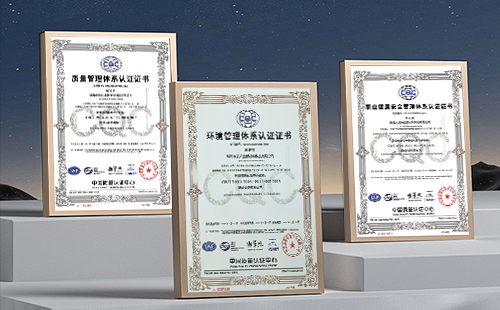
Zhuhai Shuifa Singyes New Materials Technology Co., Ltd. Successfully Passes ISO Three-System Re-certification Audit
Learn more >


When people talk about smart film and smart glass, most of the attention goes to the visible effect: glass that switches from clear to frosted, or from light to dark. But behind every stable, responsive PDLC smart film is a less visible hero: the ITO conductive film.
If you are looking for an ITO film manufacturer for PDLC, you are actually choosing the electrical and optical backbone of your smart glazing system. The quality of this layer sets the limit for how clear, how fast, how efficient and how durable your PDLC products can be.
In this article, we focus on how Shuifa Singyes New Materials approaches ITO film for PDLC, and why a full-chain, scenario-driven design is becoming the new standard for smart spaces.
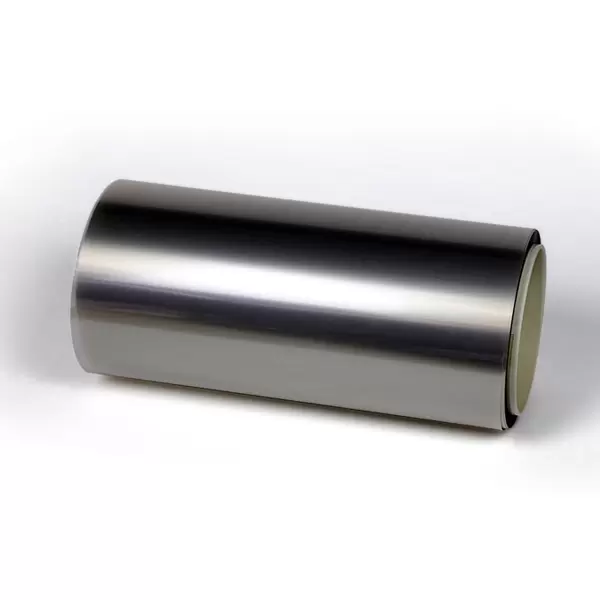
Main product reference:
ITO film for smart film applications
ITO (Indium Tin Oxide) film is a transparent conductive layer coated on a base film. In PDLC smart film and smart glass, it plays three basic roles:
Conductive electrode
It delivers an electric field uniformly across the PDLC layer, so liquid crystal droplets can reorient quickly and evenly.
Optical window
It must be highly transparent with low haze, so it does not degrade the clarity or brightness of the glass.
Mechanical base
It must adhere well to subsequent layers and maintain stability under lamination, cutting and long-term use.
If the ITO film is unstable, you will see familiar problems in the final smart film:
Uneven brightness and switching
Slow response in larger panels
Local discoloration or early failure
Visible patterns, streaks or cloudiness
So when you choose an ITO film manufacturer for PDLC, you are choosing the foundation of your entire smart glazing system.
Early generations of smart film had clear pain points:
Low transmittance – clear state still looked slightly dull or dirty
Slow response – large panels took longer to switch
Short lifespan – performance drops after cycles of switching and environmental stress
Most of these issues are not only about PDLC chemistry but also about the conductive layer. When ITO film is designed generically, for example only for touch panels, it does not fully match the dynamic needs of PDLC.
Shuifa Singyes New Materials tackles this by deeply integrating:
A high-transparency conductive ITO layer
Their own PDLC liquid crystal technology
Process know-how in coating, laminating and precision cutting
Instead of treating ITO as a commodity, they treat it as part of the “light control core component” for smart film and smart glass.
The optimized ITO film for PDLC at Shuifa Singyes New Materials is built around three real-world advantages:
Fast switching is not just a marketing promise; it is a function of:
Field uniformity across the PDLC layer
Stable sheet resistance across the panel
Low defect density (no dead zones or weak points)
A well-designed ITO film distributes the electric field evenly. That means PDLC droplets reorient quickly at the same time, so the human eye perceives a clean, consistent switch rather than patches or slow corners.
Power consumption is directly related to:
Required driving voltage
Current distribution
Leakage paths and local heating
When the ITO film has low, well-controlled sheet resistance and good adhesion, the PDLC layer can reach the required effect at a lower driving voltage. Over thousands of hours and large surfaces, this translates to lower running costs and less stress on power supplies and controllers.
Durability is where many projects struggle after a few years. Reliable ITO for PDLC must:
Maintain conductivity despite temperature cycling
Resist micro-cracking under mechanical stress and lamination
Avoid corrosion when exposed to moisture or edge conditions
Shuifa Singyes New Materials designs its ITO film as a long-term component, not a disposable layer. The goal is to keep optical clarity and electrical performance within specification over the lifecycle of the building or vehicle.
You can see more about the ITO film configurations they offer for PDLC smart film here:
ITO film for smart film
The phrase “ITO nano-coating” can sound abstract. In practice, it is about control at the microscopic level:
Uniform particle distribution – no clusters that cause local haze
Optimized thickness – balancing low resistance with high transparency
Strong bonding – between ITO layer and substrate, and later with PDLC layers
A specialized ITO film manufacturer for PDLC needs to tune:
Coating parameters for wide-width rolls
Surface roughness for best optical performance and adhesion
Properties that support the entire lamination and cutting process, including laser processing in some lines
If the ITO flakes, cracks, or delaminates, the smart film will fail regardless of how good the PDLC formula is. That is why micro-level innovation and process control are central to Shuifa Singyes New Materials’ ITO development.
High-performance ITO is only useful when it is matched with real-world scenarios. Shuifa Singyes New Materials deliberately connects micro-level innovation with macro-level scenario adaptation.
In architectural applications, ITO + PDLC works as a light control core component:
Dynamic shading reduces solar gain when needed
Glare is controlled without permanently blocking views
Privacy is provided only when required
By switching intelligently, buildings can move from passive glass to active energy-managed envelopes, improving comfort and reducing waste.
In cars, the demands are:
Sunroofs that adjust light levels
Side windows that protect privacy at the touch of a button
Glass that must withstand vibration, temperature swings and long-term UV exposure
Here, the ITO film must handle:
Curved or shaped glass
Wide operating temperature range
Strict automotive quality requirements
A low-side-view haze solution combined with robust ITO makes dimming glass more acceptable to drivers and passengers, without compromising visibility or comfort.
For displays, signage and interior design:
PDLC and ITO can be used as a protective layer that also controls visibility
Screens in retail or public spaces can become switchable: visible only when content is active
Sensitive information on larger displays can be hidden when not in use
In all of these fields, ITO film is the hidden but critical connection between electronics and optics, enabling glass to behave like a dynamic interface.
Traditional glass and basic coatings are passive materials. Once installed, they do not change or respond.
When ITO film and PDLC are integrated properly, glass becomes an active intelligent terminal:
It can switch in response to manual input (switch, button, mobile app)
It can react to sensors (light, occupancy, temperature)
It can connect to building and automotive control systems
This shift:
Changes how architects think about façades and partitions
Changes how automotive engineers design cabins
Changes how operators manage energy and privacy
The ITO film that enables this is not just a commodity sheet; it is a platform material that supports future smart space functions.
If you are selecting a supplier, a few practical criteria help you separate real capability from marketing claims.
Ask whether the manufacturer:
Produces ITO film in-house on roll-to-roll lines
Controls PDLC formulation and smart film production
Has lamination and finishing capability for smart glass
A fully integrated company like Shuifa Singyes New Materials can adjust every layer of the system, from ITO nano-coating to final PDLC film and glass.
Check whether they can provide:
Optical specs (transmittance, haze) suitable for your application
Electrical specs (sheet resistance, uniformity) and how they measure them
Information on large-area stability and variation within a roll
For PDLC, consistency is more important than chasing extreme numbers. It is better to have stable, repeatable performance than a single impressive test.
High-volume or large-format PDLC projects require:
Wide-width ITO film to reduce seams
Long rolls for efficient coating and laminating
Reliable quality over the full length and width
These are determined by the manufacturer’s equipment, cleanroom conditions and process maturity.
Finally, a serious ITO film manufacturer for PDLC should be able to show:
Relevant system certifications (quality, environment, sometimes automotive)
Laboratory test capability for optical, electrical and environmental aging
Reference projects where their ITO-based PDLC products are already in use
This combination gives you confidence that the material will behave predictably in the field.
By combining:
ITO film R&D and production
PDLC smart film formulation and coating
Smart glass lamination and system integration
Shuifa Singyes New Materials positions itself as a solution-level supplier, not just a film vendor.
For PDLC customers, this means:
Co-design support – aligning ITO specs with PDLC chemistry and application scenario
Custom configurations – for building façades, automotive glazing, displays and interior partitions
Full-chain optimization – from raw nano-coating to field use and maintenance considerations
If you are developing or sourcing PDLC smart film or smart glass, their dedicated product page is a practical starting point:
ITO film for smart film
Before you start detailed discussions, prepare:
Application scenario
– Building, automotive, display, interior, or mixed use
Optical targets
– Approximate goals for transmittance, haze and appearance in both ON and OFF states
Electrical requirements
– Basic idea of driving voltage range and panel sizes
Environmental conditions
– Temperature range, humidity, UV exposure, indoor or outdoor position
Production model
– Whether you will laminate yourself, buy PDLC film, or buy finished smart glass
With this information, an ITO film manufacturer for PDLC like Shuifa Singyes New Materials can propose a technical route that fits your real project rather than a generic specification sheet.
ITO films developed for touch panels focus on finger interaction and display readability, not on repeated field-driven switching of a PDLC layer. For PDLC, stability under continuous AC driving, uniformity across large areas, and compatibility with lamination processes are critical. A specialized ITO film for PDLC is tuned for those needs.
Not necessarily. There is a balance between transparency and conductivity. Ultra-low sheet resistance often requires thicker coatings, which can reduce transparency and increase cost or complexity. For most PDLC smart film projects, a certain range of sheet resistance combined with high transparency and stability is ideal, not the lowest possible number.
Uniform sheet resistance and good adhesion ensure that the electric field across the PDLC layer is both strong enough and consistent. Local high resistance or poor contact areas slow down droplet reorientation, which causes visually uneven or slow switching. A good ITO film makes the PDLC layer respond quickly and evenly across the entire panel.
PDLC yellowing has multiple causes, including UV exposure and polymer stability. However, poor ITO and layer bonding can create areas where stress and degradation develop faster. An ITO film designed for PDLC, combined with proper edge protection, helps support stable optical performance over time.
A practical approach is to:
Share your target application and panel sizes
Request sample rolls or laminated panels based on the ITO film for smart film configuration
Run your own lab or field tests for switching performance, clarity and durability
From there, you can gradually scale up to pilot runs and full production once the material proves itself under your conditions.