Why Shuifa Singyes Laminated Smart Film Is a Reliable Solution for Intelligent Glass Applications
Learn more >


Glass has moved well beyond windows and architectural interiors. Consumer electronics manufacturers are increasingly using glass and transparent surfaces to give products a cleaner appearance, display internal components, create interactive interfaces, or make equipment feel less enclosed.
That creates a product design problem that is easy to overlook.
A transparent surface may be attractive when a product is operating or displaying information, but transparency is not always desirable. Users may want to hide internal components, protect displayed information, reduce visual distraction, or change the appearance of a device when it is not being used.
For product managers, the question is therefore not simply whether Smart Film can be installed on an electronic product. The more useful question is whether electronically controlled privacy can provide a function that conventional glass, printed films, or mechanical coverings cannot provide efficiently.
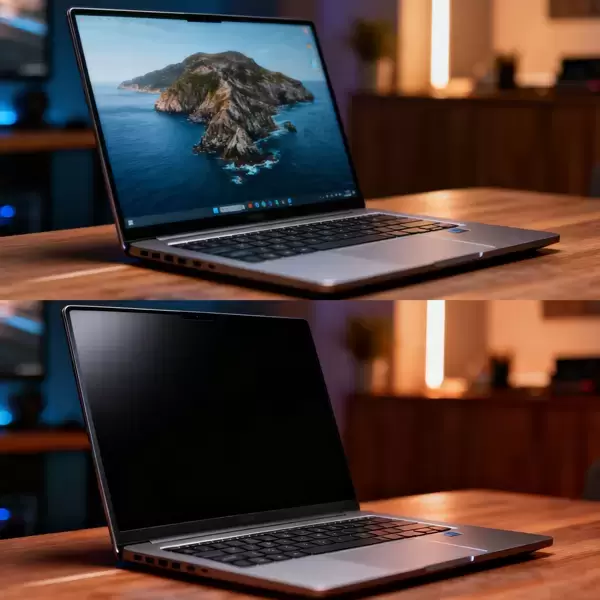
PDLC Smart Film offers one possible solution. By changing the optical state of a glass surface through electrical control, it allows a product to move between a transparent and privacy-oriented appearance without adding a mechanical blind or permanently changing the glass.
That makes it worth considering for selected consumer electronics and electronic equipment where transparency itself is part of the product experience.
Privacy is usually associated with offices, homes, hospitals, or vehicles. In consumer electronics, however, privacy can have several meanings.
A user may want to conceal information on a display. A manufacturer may want to hide internal components when a device is inactive. A retailer may want customers to see a product demonstration at one moment and create a cleaner visual appearance at another.
These are different requirements, but they have one common feature: the desired visual state changes according to how the product is being used.
Permanent frosted glass cannot provide that flexibility. A printed film can change the appearance of the product, but it cannot respond to an electrical command. A mechanical cover can provide physical screening, but it adds components, movement, assembly requirements, and potential failure points.
Switchable Film approaches the problem at the glazing level.
The glass remains part of the product, while its visual condition becomes a controllable function.
For a product manager, that distinction matters because a material is more valuable when it contributes directly to product behavior.
Not every electronic device needs electronically controlled privacy. A product only benefits when transparency and visual concealment both have a meaningful role.
Consider a transparent display cabinet used for premium electronics. During a demonstration, customers may need to see the internal structure or product components. After business hours, the manufacturer may prefer a visually closed appearance without installing physical shutters.
A PDLC Film layer can provide that change through an electrical control system.
A similar principle can apply to interactive equipment, smart appliances, display systems, and selected electronic control products.
Potential applications include:
· Interactive display equipment
· Transparent or semi-transparent electronic displays
· Premium home appliances with glass panels
· Electronic product showcases
· Commercial demonstration equipment
· Equipment with glass control or observation panels
The commercial value depends heavily on the product itself. Adding Smart Film simply because it is technically possible does not automatically improve a device.
A product team should first identify the user problem and then decide whether switchable glazing is an appropriate solution.
Traditional product development often treats glass as a passive structural or decorative component.
A panel is selected according to size, thickness, transparency, strength, appearance, and cost. Once installed, its optical condition remains essentially fixed.
Smart Glass Film changes that relationship.
The glass becomes part of an electrically controlled interface. The product can determine when the surface should remain transparent and when it should switch to a privacy state.
That opens several possibilities for product designers.
A display unit could remain transparent while presenting product information. When the demonstration ends, the same surface could switch to a private appearance.
A smart appliance could use transparent glass during operation but reduce visibility of its internal components when idle.
An electronic device used in a commercial environment could expose information only during authorized operation.
The important point is not the visual effect itself. It is the ability to connect the optical state of the glass to the operating logic of the product.
From a product development perspective, material selection should begin with function rather than appearance.
A designer may have several ways to create visual privacy. Each one affects the product structure differently.
Solution | Transparent State | Electronic Switching | Mechanical Parts | Product Integration | Typical Limitation |
Frosted glass | No | No | No | Simple | Permanent appearance |
Printed film | Limited | No | No | Easy | No active control |
Mechanical blind | Yes | Possible | Yes | More complex | Moving components |
Electrostatic or other active glazing | Yes | Yes | No | Depends on system | Higher system complexity |
PDLC Smart Film | Yes | Yes | No | Flexible | Requires power and control |
For a consumer electronics product, mechanical complexity can become a serious concern.
A blind or sliding cover needs space to move. It also needs guides, hinges, motors, or other mechanical components depending on the design.
A Smart Film solution moves the functional change into the glazing layer. That can simplify the physical appearance of the product, although it does introduce electrical integration requirements.
This trade-off needs to be evaluated at the product architecture stage.
A Smart Film specification should never be based on transparency alone.
For an electronic product, the film becomes part of a larger assembly. Its performance needs to match the glass, frame, power system, control interface, and intended user experience.
Several factors deserve attention.
Large glass panels and small display windows place different demands on the film.
A product with curved or specially shaped glass may also require a film configuration suited to the final geometry.
The film should therefore be evaluated against the actual glass drawing rather than a generic sample.
Transparency is only one part of the visual experience.
The product team should consider:
· Visible light transmission
· Haze
· Uniformity
· Privacy appearance
· Viewing angle
· Edge appearance
A display product may require high visual clarity in its transparent state, while a privacy-oriented product may place greater emphasis on uniform opacity.
The correct balance depends on the application.
A user does not experience the film as a material specification. They experience a transition.
If the product changes from transparent to private, the response should be appropriate for the intended interaction.
A control room may tolerate a different response profile from an interactive consumer device.
For this reason, switching performance should be evaluated as part of the complete product rather than treated as an isolated film parameter.
PDLC Film requires electrical power to change its optical state.
That means the product designer needs to determine:
· Available input voltage
· Power supply location
· Controller position
· Wiring route
· Switching method
· Local or remote control
· Integration with the main PCB or control system
For a small electronic product, space around the glass panel may be limited. The controller and wiring therefore need to be considered early.
Trying to add the electrical system after the enclosure has already been finalized can create unnecessary redesign work.
A smart function is only useful when users can operate it easily.
For Smart Film, the interface could be a physical button, touch control, remote controller, sensor, software command, or part of the product's existing control system.
The right choice depends on the product.
A showroom display may use an external control interface. A smart home appliance could connect the film state to its main user interface. Commercial electronic equipment may require administrator-controlled switching.
The product manager should decide whether privacy is:
user-controlled, system-controlled, sensor-controlled, or automatically scheduled.
That decision can influence the entire electrical architecture.
For example, a device could automatically switch to privacy mode when it enters standby. A display cabinet could change state according to business hours. A smart appliance could connect the glass state to its operating mode.
At that point, Smart Film is no longer just a material added to the product. It has become part of the product's control logic.
A common mistake in new product development is to evaluate the film sample separately from the final product.
A small piece of film may look excellent on a test panel. Once installed into the final enclosure, however, different issues can appear.
The glass may have different dimensions. The frame may cast shadows along the edge. Wiring may interfere with other components. Heat generated by nearby electronics may affect the local environment. The control system may also behave differently from the laboratory setup.
For this reason, prototype testing should use the intended glass and surrounding structure as early as practical.
A useful development sequence is:
Concept → Film and glass selection → Prototype assembly → Engineering validation → Pilot production → Mass production
Each stage answers a different question.
At the concept stage, the team asks whether variable privacy solves a genuine product problem.
During prototype development, the team checks appearance, fit, switching, wiring, and user interaction.
Engineering validation focuses on durability and system compatibility.
Pilot production reveals whether the design can be assembled consistently.
Only after these points have been addressed does the question of mass production become straightforward.
For a consumer electronics manufacturer, long-term performance is often more important than a good-looking prototype.
The engineering team may need to assess:
Evaluation Area | Product Question |
Thermal exposure | Will nearby electronic components affect the film environment? |
Switching cycles | Can the film support the expected operating frequency? |
Electrical stability | Does the controller operate consistently with the product power system? |
Adhesion | Does the film remain properly bonded during the expected service period? |
Surface condition | Can the finished glass withstand routine cleaning? |
Optical consistency | Does the visual effect remain uniform across the panel? |
Assembly tolerance | Can production maintain the required positioning and edge quality? |
These tests should reflect the actual product environment.
A film intended for an indoor electronic display does not necessarily need the same environmental specification as a Smart Window Film installed near an exterior building envelope.
That is why product selection should be based on the final application rather than a generic specification sheet.
A material that works well in a prototype may still create difficulties during mass production.
Consumer electronics manufacturers typically work with tight assembly tolerances and high production volumes. A glass component with Smart Film may therefore need to fit into an existing production sequence.
The development team should consider when the glass-film assembly is installed, how electrical connections are made, how the surface is protected during assembly, and how defects are identified before final product testing.
These questions are particularly important when the product uses large quantities of glass.
If the film is installed manually while the rest of the product follows an automated production process, the assembly method may affect production efficiency and quality consistency.
The supplier's manufacturing capability therefore becomes part of the material selection decision.
It is tempting to compare Smart Film with a simple printed film or frosted glass by looking only at material price.
For a product manager, that comparison is incomplete.
A mechanical privacy solution may require additional brackets, covers, motors, tracks, switches, or assembly steps. A fixed privacy material may eliminate control functions that the product team wants to offer.
Smart Film adds the film, electrical components, and control system, but it may also eliminate some mechanical structures.
The meaningful question is therefore:
What does the complete privacy function cost within the finished product?
That calculation should include material, assembly, electronics, testing, maintenance, warranty considerations, and the value of the resulting product feature.
For premium consumer electronics, a cleaner design and electronically controlled privacy may justify additional component cost when the function is visible to the customer.
A product specification can list haze, transmission, thickness, voltage, and switching performance. Customers, however, experience something much simpler.
They see a glass surface.
They press a button or select a function.
The surface changes.
The transition needs to feel consistent, the transparent state needs to provide the expected visual quality, and the privacy state needs to provide a clear difference.
If the optical effect is uneven or the control interface is confusing, a technically capable film can still produce a poor product experience.
For this reason, Smart Film should be evaluated together with the industrial design.
The frame, glass, film, lighting, display content, and user interface all contribute to the final result.
Not every consumer electronics product needs switchable glass.
There is little reason to add electronic privacy if a device never needs a transparent state or if users have no reason to change its visual condition.
The business case becomes stronger when several conditions exist together:
· Glass or a transparent panel is already part of the product design.
· Users need both transparent and private states.
· Privacy is controlled electronically.
· A mechanical cover would add unwanted complexity.
· The visual function contributes to product differentiation.
· The product has enough value to justify an additional active component.
This way of looking at the technology prevents Smart Film from becoming a feature added simply for appearance.
A good product feature should solve a problem, support the product's positioning, and remain reliable after the product leaves the factory.
Consumer electronics are becoming more interactive, and physical surfaces are increasingly connected to software and control systems.
Glass can now serve as a display surface, interface, enclosure component, observation panel, or architectural element within a product environment.
Adding electrically controlled privacy gives manufacturers another way to manage that surface.
For some products, the benefit may be privacy. For others, it may be visual presentation, internal component concealment, or a cleaner transition between operating modes.
The important development is not simply the availability of PDLC technology. It is the ability to treat the optical condition of glass as part of the product's functional design.
That opens opportunities for Smart Film manufacturers, electronic equipment developers, industrial designers, and system integrators to work together earlier in the product development process.
The strongest case for Smart Film in consumer electronics comes from products where transparency is useful but should not remain permanent.
PDLC Smart Film can provide electronically controlled visual privacy without adding a conventional mechanical covering to the product. For selected displays, smart appliances, electronic equipment, product showcases, and glass-based interfaces, that capability can become a genuine product function.
From a product development perspective, however, the decision should begin with the user's need rather than the film itself. Glass dimensions, optical performance, electrical integration, switching behavior, assembly method, durability, production tolerance, and control logic all affect whether the final product will work as intended.
A successful Smart Film application is therefore not simply a piece of film attached to glass. It is a coordinated combination of glass, film, electronics, control, industrial design, and manufacturing.
When those elements are planned together, switchable privacy can move beyond a decorative feature and become a practical part of the product experience.