How Can Smart Film Improve Privacy in Smart Subway Systems?
Learn more >


Urban rail systems are becoming more sophisticated. Automatic train operation, platform screen doors, digital passenger information, remote monitoring, and centralized control rooms are now common elements in many new subway projects. As these systems become more integrated, the role of glass inside stations, trains, offices, and control areas is also changing.
Glass is used because it provides visibility while maintaining physical separation. The problem is that visibility is not always desirable. A control room may need to remain open to the station during normal operation but require privacy during technical work. A staff office may benefit from daylight while still needing visual separation from a public corridor. Certain areas inside a modern subway system may need temporary privacy without permanently blocking the glass.
This is where Smart Film, particularly PDLC Smart Film, can have a practical role.
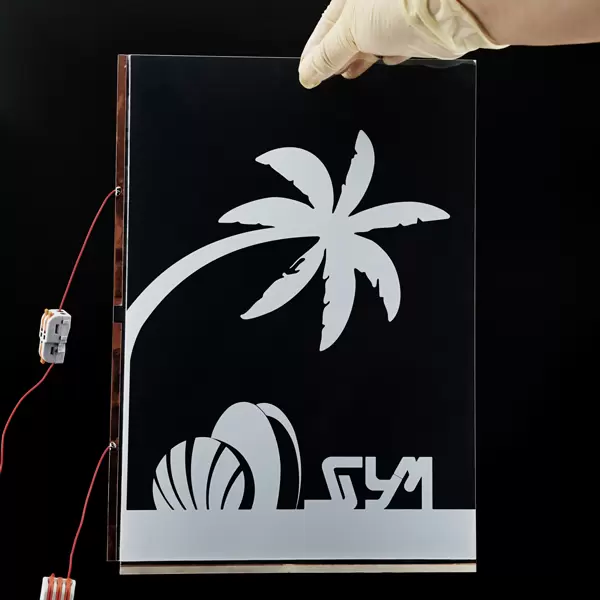
Rather than replacing the glass itself, Smart Film adds an electrically controlled privacy function to a glass surface. Depending on the system design, the glass can switch between a transparent and a privacy state when the power supply is changed.
For subway projects, the value of this technology is less about appearance and more about how a glass partition can respond to changing operational requirements.
A subway station is not simply a large public building. It operates for long hours, handles high passenger volumes, and contains areas with very different requirements within the same structure.
A glass partition beside a passenger area has a different purpose from glass inside a station control room. A train driver's cab has different visibility requirements from a staff meeting room.
Permanent frosted glass can solve the privacy problem, but it also removes visibility permanently. Curtains and blinds can provide temporary screening, but they introduce moving components, require physical operation, and may not fit well into heavily used public facilities.
Smart Film takes a different approach by allowing the glazing to remain part of the space while changing its visual condition when required.
For a subway project, this can be useful where the following requirements overlap:
· Visual access is needed during normal operation.
· Privacy is required only at certain times.
· The glass surface is already part of the architectural design.
· Manual curtains or blinds would be inconvenient.
· The project requires centralized or local electrical control.
· The glazing needs to maintain a clean and simple appearance.
The technology is therefore best considered as a functional layer for selected glass areas, rather than a universal replacement for conventional glazing.
Control rooms are one of the clearest applications for Smart Film in subway facilities.
A station control room often needs visual contact with surrounding operational areas. Staff may need to observe platform activity, equipment areas, or circulation spaces without leaving the room. At the same time, control rooms contain monitors, documents, communication equipment, and operational information that should not always be visible to passengers.
A transparent glass partition provides good visibility but does little for privacy.
With PDLC Smart Film, the same partition can remain transparent during routine operation and switch to a privacy state when staff need to discuss operational matters or work with sensitive information.
This makes the glass more adaptable to the daily working environment.
The key point is that the film does not replace the control room's physical security or access-control system. It simply provides an additional visual barrier when required.
For a large subway station, this distinction matters. Privacy film should not be treated as a substitute for doors, locks, access control, or security procedures. Its role is visual management.
Modern subway stations contain many spaces that passengers rarely notice: staff offices, dispatch rooms, technical rooms, maintenance areas, security offices, and temporary workspaces.
Some of these areas are built with internal glazing to make better use of available daylight and maintain a sense of openness. However, staff may occasionally need privacy.
A Switchable Film solution can be considered for internal glass partitions where the privacy requirement changes throughout the day.
For example, a staff office beside a public circulation area may remain transparent during normal working hours. When employees conduct a meeting, handle paperwork, or perform administrative work, the glass can be switched to its privacy state.
This approach is particularly useful in stations where floor space is limited and every room has to serve more than one function.
Smart Film is generally more straightforward to use on interior glass than on exposed exterior glazing.
Inside a station, the film is protected from direct rain, snow, road dust, and wind. The electrical connections and film edges can also be protected within the interior glazing assembly.
For subway operators, this can simplify long-term maintenance compared with installing an electronically controlled film directly on an exposed exterior surface.
Application Area | Normal State | Privacy State | Main Requirement |
Control room | Transparent | Privacy | Operational visibility |
Staff office | Transparent | Privacy | Flexible workspace |
Security office | Transparent | Privacy | Visual management |
Meeting room | Transparent | Privacy | Temporary confidentiality |
Technical workspace | Transparent | Privacy | Separation during maintenance |
The exact specification still depends on the glass construction, film type, electrical system, and project requirements.
The growth of automated and driverless metro systems has changed the way passengers interact with train interiors.
In conventional trains, the driver's cab is usually treated as a clearly separated operational space. In some modern rail designs, however, passengers may be able to see the front of the train or parts of the operating area.
That creates an interesting application for Smart Glass Film.
During normal service, transparent glazing can provide passengers with a more open view. During maintenance, staff operations, or restricted procedures, the glazing can switch to a privacy condition.
This is particularly relevant to trains designed around large front windows or passenger-facing viewing areas.
However, rail applications require more careful engineering than ordinary interior office glazing. The film and glass assembly must be evaluated together with vibration, temperature variation, power supply, cleaning requirements, and the relevant railway standards.
The Smart Film itself is only one part of the final system.
Subway operators increasingly use glass service counters and enclosed passenger assistance areas. These spaces need visibility because passengers must be able to identify staff and communicate easily.
There are also situations where staff need a degree of privacy.
A customer service room, for example, may need to remain visually open during routine passenger assistance. During internal discussions, document processing, or staff work, switching the glazing to a privacy state can create a more controlled environment.
This is particularly useful for stations with compact layouts.
Instead of allocating a separate room for every function, a glass-enclosed area can serve several purposes throughout the day.
For passengers, the change is simple: the room remains open and visible when appropriate, then becomes visually private when the staff need it.
Large metro stations are workplaces as well as passenger facilities.
Managers, engineers, maintenance teams, security personnel, and contractors may all use offices and meeting rooms within station buildings. These rooms are often located close to public areas, where conventional solid walls would make the space feel enclosed.
Smart Film allows designers to retain glass while introducing controllable privacy.
For example, a meeting room can use transparent glass during normal working periods to maintain visual openness. When a project discussion or internal meeting begins, the glass can switch to its privacy state.
This can be particularly useful in:
· Station management offices
· Operations meeting rooms
· Maintenance coordination rooms
· Engineering offices
· Security administration areas
The application is straightforward, but the specification should still account for the number of switching cycles, control method, glass dimensions, and expected operating hours.
Privacy is the most obvious reason to use PDLC Film, but subway projects can involve another consideration: visual control.
Large glazed surfaces can sometimes create unwanted visual distractions. A transparent partition between a staff workspace and a busy passenger corridor may provide constant movement in the field of view.
For certain workspaces, switching the glass to a privacy state can reduce this distraction.
The same principle applies to meeting rooms and technical offices located beside high-traffic areas.
This does not mean Smart Film should be used to block all visual activity. In many cases, transparency remains valuable. The benefit comes from having a choice rather than committing the glass to one permanent condition.
The basic operating principle is relatively simple.
PDLC Smart Film contains liquid crystal material between conductive layers. When the electrical field changes, the orientation of the liquid crystals changes, which affects how light passes through the film.
In the transparent state, light can pass through the film with much greater clarity. When the film is switched to its privacy state, light is scattered and the glazing becomes translucent.
For subway facilities, the important engineering issue is not simply whether the film can switch. It is whether the complete installation can perform consistently under the site's operating conditions.
A project specification should therefore consider:
1. Operating temperature — Station interiors may experience significant temperature changes depending on ventilation and air-conditioning conditions.
2. Humidity — Underground environments can have different humidity levels from conventional commercial buildings.
3. Electrical control — The film requires a suitable power supply and control arrangement.
4. Edge protection — Film edges and electrical connections need appropriate protection, especially in high-use areas.
5. Cleaning — The finished glass surface must be compatible with the station's regular cleaning procedures.
6. Switching frequency — Areas that change between transparent and privacy states many times each day should be evaluated accordingly.
These considerations are more important than simply choosing a film based on appearance.
A single small office may use a wall switch to operate Smart Film. A large subway station can require a more structured control system.
Multiple glass partitions may need to be controlled independently. Some areas may require local switching, while others may be integrated into a building management or facility control system.
For example, a station could divide Smart Film installations into different control zones:
· Station management offices
· Security areas
· Control rooms
· Meeting rooms
· Passenger service areas
Each zone can have its own operating requirements.
The electrical design should be completed alongside the architectural and MEP design rather than added after the glass installation has been finalized. This is particularly important for large projects because access to concealed wiring becomes more difficult once wall and ceiling finishes are complete.
Subway facilities are used intensively. Cleaning staff may work around glass surfaces every day, and equipment can remain in operation for long periods without interruption.
A Smart Film installation should therefore be selected with maintenance in mind.
The glass surface itself can generally be cleaned in the same way as other suitable interior glass, provided that the cleaning products and methods are compatible with the finished film surface. Excessive moisture around exposed electrical connections should be avoided, and the film edges should remain properly protected.
For long-term operation, maintenance teams should also know which areas contain electrically controlled film.
This sounds like a small detail, but it becomes important when stations are maintained by different contractors over many years.
Smart Film is not automatically the best choice for every subway glazing application. The decision depends on what the glass is expected to do.
Solution | Visual Privacy | Flexible Switching | Moving Parts | Daylight When Transparent | Suitable for Existing Glass |
Curtains | High | Yes | Yes | Yes | Usually |
Blinds | High | Yes | Yes | Yes | Usually |
Frosted Glass | High | No | No | Limited | No |
Etched Glass | High | No | No | Limited | No |
PDLC Smart Film | High | Yes | No | Yes | Often |
Curtains and blinds remain practical in many back-office environments. Frosted or etched glass may be more appropriate where permanent privacy is required.
PDLC Smart Film becomes more attractive when the same glass needs to serve both transparent and private functions.
That is the specific problem it solves.
A successful application begins with the glazing system rather than the film alone.
The project team should confirm the glass dimensions, thickness, installation position, expected environmental conditions, electrical requirements, and desired control method before final specification.
It is also important to distinguish between interior and exterior applications. Smart Film installed on interior partitions has a very different environmental exposure from film used near station entrances or exterior glazing.
For large transportation projects, the following points deserve particular attention:
· Glass size and configuration
· Interior or exterior installation
· Expected daily switching frequency
· Power supply and control zones
· Edge sealing and electrical connection protection
· Cleaning and maintenance requirements
· Fire, electrical, railway, and local building requirements
· Compatibility between the film, glass, frame, and surrounding system
These checks reduce the risk of treating Smart Film as a standalone decorative material.
The strongest applications are not necessarily the areas with the largest glass surfaces. They are areas where privacy changes according to the operational situation.
A control room is a good example. Transparency may be useful for most of the day, while privacy may be required during specific operational activities.
The same applies to meeting rooms, staff offices, security areas, and passenger service rooms.
For subway systems, the most practical value often comes from this combination:
glass + visibility + temporary privacy + electrical control
That combination is difficult to achieve with conventional fixed glazing.
Smart subway systems involve more than automated trains and digital passenger services. The station itself is becoming a more integrated working environment, with glass playing an important role in offices, control rooms, service areas, technical spaces, and passenger-facing facilities.
Smart Film provides another option for these areas by allowing selected glass surfaces to change between transparent and privacy conditions without relying on curtains, blinds, or permanent frosted glazing.
Its most practical applications include subway control rooms, station offices, meeting rooms, security areas, passenger service spaces, and selected train cab or viewing areas. The technology is particularly useful where visibility is needed at one moment and privacy is required at another.
For large subway projects, the right approach is to evaluate Smart Film as part of the complete glazing and electrical system. Glass specification, environmental conditions, wiring, control architecture, edge protection, maintenance, and applicable transportation requirements all need to be considered together.
When these factors are properly addressed, PDLC Smart Film can give subway designers another way to manage glass in spaces where operational visibility and temporary privacy need to coexist.