Curtains and blinds have long been treated as standard solutions for managing light and privacy. They are simple, widely available, and easy to implement. Yet in real-world use, they rarely align with how modern spaces actually function.
A curtain must be drawn manually. A blind must be adjusted repeatedly throughout the day. Once closed, both block natural light entirely. Once opened, privacy disappears just as completely. There is no flexibility between these two states, and no way to respond instantly to changing conditions.
This limitation becomes more apparent in environments where adaptability is essential. In offices, a meeting can shift from open discussion to confidential negotiation without warning. In residential spaces, occupants want daylight without sacrificing privacy. In healthcare and hospitality environments, hygiene, efficiency, and user control all become critical factors.
Traditional shading systems introduce friction into each of these scenarios. They depend on manual operation, require regular maintenance, and exist as separate elements rather than integrated parts of the space.
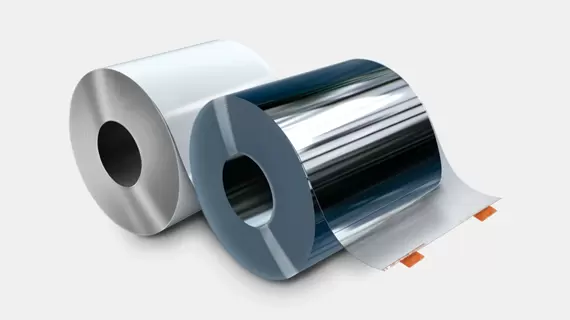
Smart Window Shading Film approaches the problem differently. Instead of adding another layer to control light and visibility, it transforms the glass itself into a responsive surface.
Glass is no longer something static.
It becomes something that can be controlled in real time.
From Static Material to Responsive Surface
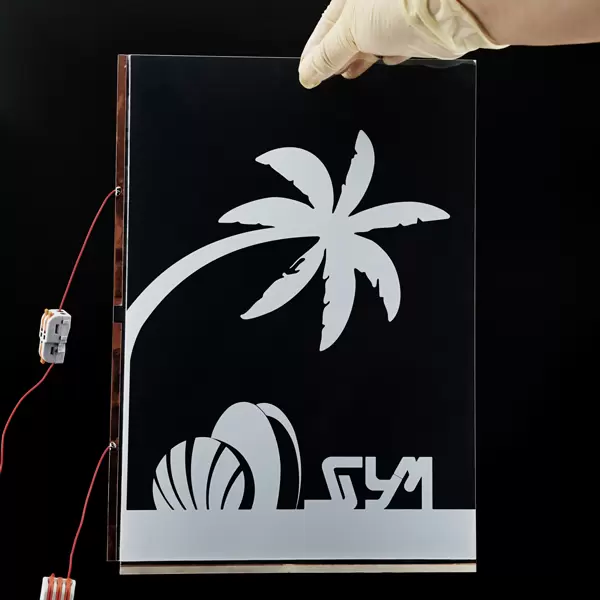
At the core of this transformation is Polymer Dispersed Liquid Crystal (PDLC) technology, a material system that changes how light interacts with glass without altering its structural role. In its natural state, liquid crystal particles within the film are randomly distributed. Light entering the surface is scattered, creating an opaque or frosted appearance. When an electric current is applied, these particles align in a uniform direction, allowing light to pass through with minimal obstruction. The glass becomes transparent.
This transition occurs almost instantly. There are no mechanical components involved, no gradual adjustments, and no delay between input and response. The speed of the change is what makes it practical for real-world environments where timing matters.
What this enables is not just a visual effect, but a functional shift. A single glass surface can now serve multiple roles, switching between openness and privacy as needed.
The difference becomes clearer when compared directly:
| Feature | Conventional Glass | Smart Window Shading Film |
|---|
| Light Behavior | Always transparent | Switchable (transparent/opaque) |
| Privacy Control | External systems required | Built into the glass itself |
| User Interaction | Manual (curtains/blinds) | Instant electronic control |
| Functional Role | Passive material | Active, responsive surface |
| Adaptability | None | Real-time adjustment |
Instead of being a fixed boundary, glass becomes a controllable interface—one that responds to user needs rather than limiting them.
Why Traditional Shading Systems Fall Short
To fully understand the value of Smart Window Shading Film, it is necessary to look at where conventional systems create inefficiencies.
Curtains and blinds were designed for environments where lighting conditions and privacy needs change slowly. That assumption no longer holds. In modern spaces, conditions shift constantly, and manual adjustments cannot keep up without interrupting workflow.
In a typical office setting, this issue appears repeatedly. A meeting begins in an open environment, and as soon as sensitive topics arise, someone has to pause, walk to the window, and adjust the blinds. It is a small action, but it disrupts continuity and happens far more often than expected.
There are also physical limitations to consider. Curtains occupy space and can interfere with interior layouts. Blinds rely on mechanical systems that wear out over time. Both accumulate dust and require regular cleaning, which introduces ongoing maintenance costs.
More importantly, these systems operate independently. They do not connect to building management systems, cannot respond to environmental data, and do not adapt automatically to user behavior.
Smart Window Shading Film removes these limitations by embedding functionality directly into the glass.
Instead of managing an external system, the user interacts with the surface itself.
Real-World Applications: Where Function Meets Daily Use
The practical value of Smart Window Shading Film becomes most evident in environments where flexibility and efficiency are essential.
In office environments, particularly meeting rooms, the balance between transparency and privacy is a constant challenge. Glass partitions are widely used to maintain openness and allow natural light to flow through the space. However, they become problematic when confidentiality is required.
In a typical scenario, a discussion turns sensitive, and someone has to interrupt the meeting to adjust blinds or curtains. With smart film, this interruption disappears. Privacy can be activated instantly, without movement or delay, allowing the meeting to continue uninterrupted.
In residential settings, the challenge is different but equally important. Bedrooms and bathrooms require privacy, but they also benefit from natural light. Traditional solutions force a compromise—either block light entirely or sacrifice privacy.
Smart Window Shading Film removes that compromise. The glass remains transparent when openness is desired and becomes opaque instantly when privacy is needed. There is no need to adjust curtains or change the physical configuration of the space.
Healthcare environments introduce additional requirements. Hygiene and efficiency are critical, and traditional fabric-based solutions can become a liability. Curtains require regular cleaning and can harbor contaminants. Replacing them with a solid-state solution simplifies maintenance and reduces risk. Visibility can be controlled instantly without physical contact, supporting both operational efficiency and cleanliness.
In hospitality settings, user experience becomes the primary focus. Guests expect control over their environment, including lighting and privacy. Smart film allows spaces within a room to adapt to individual preferences without adding complexity. It provides flexibility while maintaining a clean and minimal design.
Across these applications, the pattern is consistent. Smart Window Shading Film does not simply replicate the function of traditional shading systems. It removes their limitations while introducing a level of responsiveness that aligns with modern space usage.
The functional shift can be summarized clearly:
●Privacy is no longer dependent on physical barriers
●Light control no longer requires blocking visibility completely
●Space usage is no longer constrained by static design elements
Energy Performance and Long-Term Efficiency
While privacy control is the most visible feature of Smart Window Shading Film, its impact on energy performance is equally significant.
Glass surfaces are a major source of solar heat gain. When sunlight passes through glass, it increases indoor temperature, placing additional load on air conditioning systems. Traditional shading solutions can block visible light, but they do so after heat has already entered the space.
Smart film reduces this effect by scattering incoming light in its opaque state. This lowers the intensity of solar radiation entering the interior and helps stabilize indoor temperatures. As a result, cooling systems operate more efficiently, particularly in buildings with large glass surfaces.
From a cost perspective, the difference becomes more practical when viewed over time:
| Cost Category | Curtains / Blinds | Smart Window Shading Film |
|---|
| Initial Investment | Low | Higher |
| Maintenance | Regular cleaning & repairs | Minimal |
| Replacement Cycle | Periodic | Long-term stability |
| Labor Involvement | Required | Not required |
| Energy Impact | Limited | Reduces cooling load |
Another important factor is ultraviolet radiation. Continuous exposure to UV light can cause fading and material degradation. Smart film filters part of this radiation, helping preserve interior finishes and reducing long-term replacement costs.
Taken together, these factors shift the cost model. The initial investment is higher, but operational costs are lower and more predictable. Over the lifecycle of a building, this creates a more efficient and stable cost structure.
Installation Flexibility and System Integration
One of the reasons Smart Window Shading Film is suitable for a wide range of projects is its flexibility in installation and integration.
In existing buildings, the film can be applied directly to current glass surfaces. This retrofit approach allows property owners to upgrade functionality without replacing entire window systems. Installation is efficient and minimizes disruption.
In new construction, the film can be integrated into laminated glass during manufacturing. This approach offers improved durability and ensures consistent performance over time.
The available options can be outlined as follows:
| Approach | Application Scenario | Key Advantage |
|---|
| Retrofit Film Application | Existing buildings | No need to replace the glass |
| Laminated Glass Integration | New construction | Higher durability |
| Standalone Control | Small-scale use | Simple operation |
| System Integration | Commercial & smart buildings | Centralized automation |
Beyond installation, integration with control systems is where the technology delivers its full value. Smart Window Shading Film can connect with building management systems, allowing centralized control across multiple spaces. It can also respond to environmental inputs or predefined scenarios.
In practice, control methods are designed to match how spaces are used:
●Wall switches provide immediate control in localized areas
●Remote systems allow centralized management
●Mobile applications enable flexible user interaction
●Voice control supports hands-free operation
This level of integration transforms the film from a standalone product into part of a broader intelligent system.
Smart Window Shading Film represents a fundamental shift in how glass is used within modern spaces. It moves beyond the limitations of traditional materials and introduces a level of responsiveness that aligns with contemporary needs.
By combining instant privacy control with energy management capabilities, it addresses challenges that conventional shading systems have never fully solved. At the same time, its compatibility with intelligent control systems positions it as a key component in the evolution of smart buildings.
This is not simply an upgrade in materials.
It is an upgrade in how space functions, how users interact with their environment, and how buildings respond to changing conditions.
As expectations for flexibility, efficiency, and integration continue to rise, solutions that can operate at the intersection of physical and digital systems will become increasingly important.
Smart Window Shading Film is part of that transition—quietly redefining glass as not just a surface, but a system.