Automotive Smart Film: The “Light and Shadow Manager” for New Energy Vehicles, Unlocking a New Comfortable Driving Experience
Learn more >


Glass has become one of the defining materials in contemporary architecture. Open-plan offices, premium hotels, healthcare facilities, commercial complexes and luxury residences all rely on large glazed areas to introduce daylight, create visual openness and enhance the overall user experience. While these transparent spaces improve aesthetics, they also introduce new challenges. Occupants expect privacy without sacrificing natural light, building owners seek lower energy consumption without compromising appearance, and designers must balance comfort, functionality and sustainability within increasingly complex projects.
Traditional solutions rarely satisfy all of these requirements at the same time. Curtains and blinds interrupt daylight, require regular maintenance and often conflict with modern minimalist interiors. Frosted glass permanently blocks visibility, reducing the flexibility of multi-functional spaces. Conventional tinted glass lowers solar radiation but cannot adapt when transparency becomes necessary.
As intelligent building technologies continue to evolve, glazing systems are expected to perform far beyond their traditional role. They are becoming active components of energy management, interior comfort and smart building automation rather than passive architectural materials.
Tinted Privacy Smart Film represents one of the most practical developments in this transition. Built on Polymer Dispersed Liquid Crystal (PDLC) technology, it combines electrically controlled privacy with solar control, glare reduction and UV protection while maintaining the clean appearance expected in contemporary architecture. Instead of forcing designers to choose between transparency and privacy, the same glass surface can respond instantly to changing functional requirements throughout the day.
This capability has made Tinted Privacy Smart Film increasingly attractive in projects where occupants demand adaptable spaces and building owners focus on long-term operational efficiency. Offices require confidential meeting areas without permanent visual barriers. Hospitals seek hygienic privacy solutions that support infection control. Hotels value flexible guest environments, while premium residential projects increasingly integrate intelligent glazing into wider home automation systems.
Understanding how this technology works—and how it differs from conventional smart film—helps architects, engineers and procurement teams evaluate whether it is the right solution for their projects.
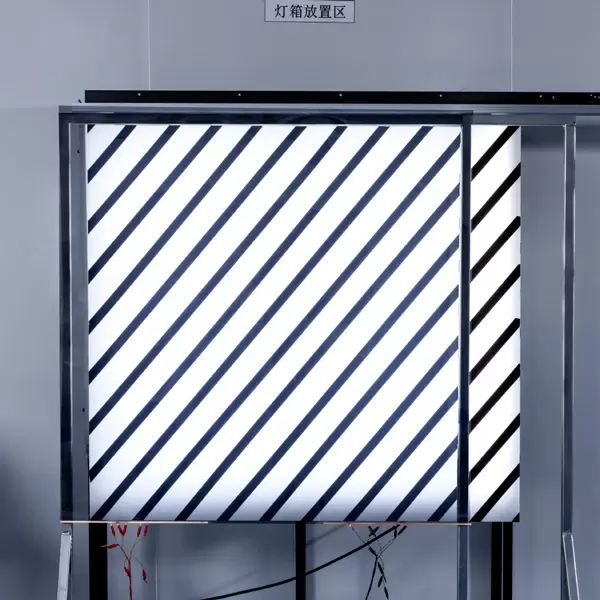
Tinted Privacy Smart Film is an electrically switchable PDLC film designed to provide both dynamic privacy and permanent solar shading characteristics. Installed directly onto existing glass or laminated between glass panels during manufacturing, it transforms ordinary glazing into an intelligent architectural system capable of changing its optical state within seconds.
Its internal structure typically includes multiple engineered layers working together:
●Protective PET films that shield the functional components from mechanical damage.
●ITO conductive coatings that distribute electrical current evenly across the surface.
●A PDLC liquid crystal layer responsible for the switching function.
●Laminating materials that ensure long-term adhesion and environmental stability.
●Integrated electrical busbars that connect the film to the control system.
The key difference between Tinted Privacy Smart Film and standard clear smart film lies in its optical characteristics. The additional tinted layer moderates incoming daylight even when the glass remains transparent. This creates a more comfortable interior environment while preserving outside views.
Installation flexibility is another important advantage. Existing glass partitions can be upgraded during renovation projects without replacing the glazing, making retrofit applications significantly more economical than complete glass replacement. New construction projects often specify laminated smart glass, where the film is permanently encapsulated inside insulated or laminated glazing units for enhanced durability and appearance.
This versatility allows architects to specify one technology across multiple project types, from office refurbishments to large-scale commercial developments.
The switching process appears almost effortless from the user's perspective, yet it is based on sophisticated material engineering.
Inside the PDLC layer are millions of microscopic liquid crystal droplets dispersed throughout a transparent polymer matrix. These droplets constantly respond to electrical voltage.
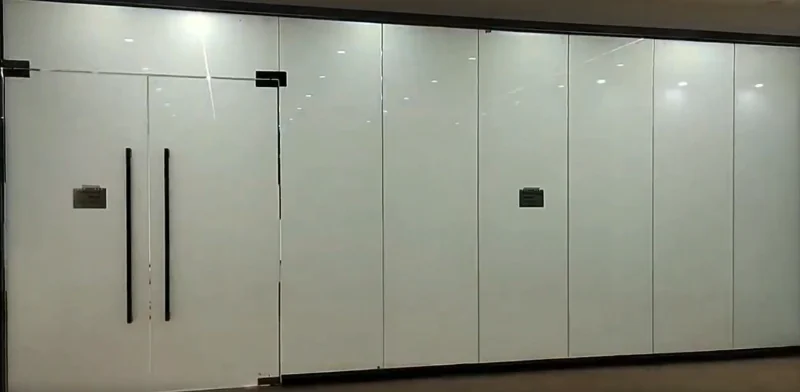
Without electrical power, the liquid crystal molecules remain randomly oriented. Incoming light encounters countless microscopic interfaces, scattering in multiple directions instead of passing directly through the glazing. The result is an opaque surface that prevents clear visibility while still transmitting diffused daylight.
Applying electrical voltage changes the molecular alignment almost immediately. The liquid crystal droplets rotate into a uniform direction, allowing light to travel through the film with minimal scattering. The glazing becomes transparent within seconds.
The absence of mechanical movement provides several engineering advantages.
There are no tracks, gears or moving shading components that require routine servicing. Daily switching does not create mechanical wear because the transition occurs entirely at the molecular level.
This simplicity improves long-term reliability while reducing maintenance requirements compared with conventional blinds or motorized shading systems.
Integration with intelligent control systems further expands its value. Privacy switching can be managed through:
●Standard wall switches for local operation.
●Wireless remote controls.
●Mobile applications connected through smart home platforms.
●Occupancy sensors that automatically respond to room usage.
●Building Management Systems (BMS) for centralized control.
●Voice assistants and programmable automation scenes.
Rather than functioning as an isolated glazing product, Tinted Privacy Smart Film becomes part of the wider intelligent building ecosystem.
Many project teams initially compare smart films according to switching speed or transparency alone. In practice, the decision often depends on broader building performance objectives.
Standard smart film focuses primarily on providing switchable privacy while maximizing visible light transmission. It performs well in interior partitions where daylight control is not a significant concern.
Buildings with extensive glazing present a different challenge.
South-facing façades, west-facing curtain walls and fully glazed meeting rooms frequently experience excessive solar radiation. Occupants respond by lowering blinds or closing curtains, eliminating the very daylight architects intended to introduce.
Tinted Privacy Smart Film addresses this issue by combining privacy control with permanent solar moderation.
Instead of allowing unrestricted daylight into the building, the tinted layer softens incoming brightness before it reaches occupied spaces. This improves visual comfort while preserving the open architectural appearance associated with glass interiors.
The practical differences become clear when evaluating everyday building operation.
| Performance Factor | Standard Smart Film | Tinted Privacy Smart Film |
|---|---|---|
| Dynamic privacy | Yes | Yes |
| Solar glare reduction | Moderate | Higher |
| Visual comfort | Good | Excellent |
| Daylight moderation | Limited | Improved |
| Architectural shading | No | Yes |
| Energy-saving contribution | Moderate | Higher |
| Suitable for large glazed façades | Good | Excellent |
For architects designing premium commercial buildings, this additional layer of performance often makes tinted solutions more appropriate than clear PDLC systems.
One of the most difficult aspects of glazing design is achieving two objectives that naturally compete with each other.
Occupants appreciate daylight because it improves comfort, supports productivity and reduces dependence on artificial lighting.
The same transparent glass that delivers these benefits may also compromise confidentiality, visual comfort and personal privacy.
Traditional architectural solutions usually force designers to prioritize one objective over another.
Curtains create privacy but remove daylight.
Permanent frosted glass protects confidentiality while preventing transparency throughout the building's entire service life.
Reflective films perform differently during daytime and nighttime conditions, limiting their effectiveness in many commercial interiors.
Tinted Privacy Smart Film introduces a more adaptable approach.
During normal operation, occupants continue enjoying natural daylight filtered through the tinted layer. Brightness becomes more comfortable without completely eliminating external views.
Whenever privacy becomes necessary, the glazing changes instantly into an opaque surface.
This flexibility creates measurable advantages across multiple building types.
●Meeting rooms remain visually open when unoccupied yet provide immediate confidentiality during discussions.
●Hospital consultation areas protect patient privacy without relying on fabric curtains that require regular replacement.
●Hotel suites maintain premium interior aesthetics while allowing guests to control visibility according to occupancy.
●Executive offices preserve modern glass architecture without sacrificing confidential working environments.
Instead of designing separate architectural solutions for daylight and privacy, both requirements are managed through one intelligent glazing system.
Building energy consumption has become one of the most important considerations in modern architectural design. As glazing areas continue to increase, managing solar heat gain becomes increasingly difficult.
Large glass façades introduce significant amounts of solar radiation during periods of strong sunlight. Interior temperatures rise, HVAC systems operate longer, and cooling costs increase throughout the building's operational life.
While Tinted Privacy Smart Film is not intended to replace specialized low-emissivity glazing or advanced façade engineering, it contributes to improved thermal performance by reducing the intensity of solar radiation entering occupied spaces.
The tinted optical layer filters part of the incoming solar energy before it reaches interior environments. Reduced glare also means occupants are less likely to close blinds and rely entirely on artificial lighting.
When integrated into broader building energy strategies, the technology contributes to several operational objectives:
●Lower cooling demand during periods of intense sunlight.
●Improved visual comfort near glazed façades.
●Better utilization of natural daylight.
●Reduced dependence on mechanical shading systems.
●Enhanced occupant satisfaction in highly glazed buildings.
For commercial developments operating thousands of square meters of conditioned space, even incremental improvements in cooling efficiency can generate meaningful long-term operational savings.
Ultraviolet radiation is often discussed in relation to occupant health, but its long-term effect on interior finishes is equally important. Continuous UV exposure accelerates fading, material degradation and discoloration across a wide range of interior products. Hardwood flooring, textiles, leather furniture, artwork, display products and decorative finishes gradually lose their original appearance after years of direct sunlight.
For commercial properties, these changes increase maintenance and replacement costs. Hotels regularly refurbish guestrooms, retailers update store displays, and museums or galleries must preserve valuable exhibits under carefully controlled lighting conditions.
High-quality Tinted Privacy Smart Film is designed to block the vast majority of harmful ultraviolet radiation while maintaining comfortable visible light transmission. The UV-filtering capability works regardless of whether the film is in its transparent or opaque state, providing continuous protection throughout daily operation.
The practical benefits extend beyond aesthetics:
●Helps reduce fading of furniture, flooring and fabrics.
●Protects merchandise displayed near windows.
●Supports preservation of artwork and decorative finishes.
●Improves occupant comfort in spaces with prolonged sunlight exposure.
●Complements sustainable building strategies by extending the service life of interior materials.
For facilities where replacement costs are significant, UV protection contributes to lower lifecycle expenses rather than serving only as a comfort feature.
Optical performance determines how well smart film functions in real architectural environments. Procurement decisions should never rely solely on privacy switching speed. Engineers and architects generally evaluate a combination of parameters that directly influence occupant comfort and long-term usability.
Key performance indicators include:
| Performance Item | Why It Matters |
|---|---|
| Visible Light Transmission (VLT) | Balances daylight and indoor brightness. |
| Haze Level | Influences image clarity when the film is transparent. |
| Switching Speed | Determines how quickly privacy changes occur. |
| UV Blocking Rate | Protects occupants and interior finishes. |
| Power Consumption | Affects long-term operating costs. |
| Uniformity | Ensures consistent appearance across large glass panels. |
| Color Stability | Prevents noticeable aging over years of operation. |
| Viewing Angle | Maintains visual quality from different positions. |
Large commercial projects often specify additional performance testing covering durability, humidity resistance, temperature cycling and continuous switching reliability. These evaluations become especially important in airports, hospitals, hotels and corporate headquarters where glazing systems are expected to operate reliably for many years.
Different industries adopt smart glazing for different reasons. Some focus on confidentiality, while others prioritize aesthetics, energy efficiency or operational flexibility.
Modern office environments increasingly favor open layouts supported by glass partitions. While transparency improves collaboration, meeting rooms, executive offices and interview spaces still require privacy.
Tinted smart film allows these areas to remain visually connected during normal operation while providing instant confidentiality whenever required. Integration with room booking systems or occupancy sensors further enhances user convenience.
Guest expectations continue to evolve toward more personalized room experiences. Smart glazing enables hotels to replace traditional curtains in selected applications, creating cleaner interior designs and reducing maintenance associated with fabric window treatments.
Conference facilities also benefit from switchable partitions that transform flexible event spaces throughout the day.
Hospitals, diagnostic centers and clinics must balance patient privacy with hygiene requirements.
Unlike fabric curtains that require frequent cleaning and replacement, smart glass partitions provide privacy through electronic control while presenting smooth surfaces that support routine sanitation procedures.
Premium retail environments use glass extensively to maximize product visibility. Smart film allows display areas, fitting rooms and private consultation spaces to adapt instantly without changing the architectural appearance of the store.
Luxury apartments and high-end residences increasingly integrate intelligent glazing into broader smart home systems. Residents can manage privacy through mobile applications, automation scenes or voice control while maintaining uninterrupted daylight.
One reason Tinted Privacy Smart Film has gained popularity is its retrofit capability.
Many commercial buildings already contain extensive glazing that remains structurally sound. Replacing every glass panel with factory-laminated smart glass would involve significant demolition, long installation periods and higher project costs.
Instead, retrofit film can be applied directly onto existing glass surfaces by trained installation professionals.
Typical retrofit projects include:
●Office renovation programs.
●Hotel modernization.
●Hospital upgrades.
●Commercial building refurbishments.
●Retail store redesigns.
●Residential smart home renovations.
Installation quality plays a major role in long-term performance. Proper glass preparation, dust control, electrical connection and edge sealing all influence durability. Experienced installers also ensure that wiring remains discreet and compatible with surrounding architectural finishes.
For new construction, laminated smart glass often provides the most integrated appearance. For existing buildings, retrofit film offers a practical balance between performance, installation time and overall project investment.
Smart film is expected to perform consistently over many years, making product quality and installation standards equally important.
Several factors influence long-term reliability:
●Quality of the PDLC layer.
●Uniformity of the ITO conductive coating.
●Stability of adhesive materials.
●Moisture protection around exposed edges.
●Power supply stability.
●Professional installation practices.
●Daily operating environment.
Buildings located in regions with high humidity, significant temperature variation or strong solar exposure require products specifically engineered for these conditions. Reputable manufacturers normally validate their materials through accelerated aging tests and environmental simulations before commercial production.
Routine maintenance is relatively straightforward. Glass surfaces should be cleaned using non-abrasive products recommended by the manufacturer, while electrical components should be inspected periodically as part of normal building maintenance programs.
Smart buildings increasingly depend on interconnected systems rather than isolated products. Lighting, HVAC, access control and shading are managed together to improve occupant experience and operational efficiency.
Tinted smart film fits naturally into this environment.
The film can communicate with intelligent control platforms through dedicated controllers, allowing automated responses based on predefined operating conditions.
Examples include:
●Meeting room privacy activated automatically when reservations begin.
●Healthcare consultation rooms switching to opaque mode when occupied.
●Hotel guestrooms synchronized with guest control panels.
●Smart homes integrating privacy settings into morning and evening automation scenes.
●Building management systems coordinating glazing with lighting and HVAC strategies.
Because the switching mechanism contains no moving mechanical components, integration is generally simpler than motorized blind systems while providing a cleaner architectural appearance.
Technical specifications alone do not determine project success. Long-term reliability often depends on the manufacturer's engineering capability, quality management and project support.
Procurement teams commonly evaluate several areas before selecting a supplier:
●Manufacturing consistency and production capacity.
●PDLC technology maturity.
●Optical performance validation.
●Electrical safety certifications.
●Quality management systems.
●OEM and customization capability.
●Technical documentation and engineering support.
●International project experience.
●Warranty policy.
●Long-term supply stability.
Manufacturers capable of supporting architectural projects usually provide more than material samples. They assist with specification development, wiring guidance, installation recommendations and after-sales technical support throughout the project lifecycle.
Sustainable architecture extends well beyond reducing energy consumption. Modern building design also considers occupant well-being, operational flexibility, material longevity and intelligent resource management.
Tinted smart glazing supports several of these objectives simultaneously.
Natural daylight remains available without creating excessive glare. Cooling demand can be moderated through reduced solar heat gain. Interior materials receive continuous UV protection, extending their useful life and reducing replacement frequency.
Flexible spaces also become easier to create. Instead of constructing permanent opaque partitions, buildings can adapt to changing functional requirements through electronically controlled glazing.
This adaptability aligns closely with current architectural priorities, where buildings are expected to remain useful despite evolving workplace layouts, hospitality concepts and healthcare requirements.
As intelligent buildings become increasingly common, glazing is expected to function as an active building system rather than a passive enclosure. Tinted Privacy Smart Film reflects this transition by combining optical performance, occupant comfort and intelligent control within a single architectural solution.
Architectural glass continues to play a central role in contemporary building design, yet transparency alone can no longer satisfy the demands of modern commercial environments. Privacy, occupant comfort, energy performance and intelligent control have become equally important considerations for architects, engineers and building owners.
Tinted Privacy Smart Film addresses these challenges through a combination of PDLC switching technology and permanent solar control characteristics. It enables instant privacy when required while maintaining comfortable daylight conditions, reducing glare and blocking harmful ultraviolet radiation throughout daily operation.
Applications now extend well beyond office meeting rooms. Hotels, healthcare facilities, retail environments, residential developments and public buildings increasingly rely on intelligent glazing to create flexible spaces without compromising architectural openness.
For project teams planning future developments or upgrading existing buildings, selecting a reliable Tinted Privacy Smart Film Manufacturer deserves as much attention as evaluating the product itself. Manufacturing consistency, optical performance, installation support, quality assurance and long-term technical service all contribute to the overall success of intelligent glazing projects.
As smart buildings continue to evolve, adaptable glazing solutions are expected to become an increasingly important part of sustainable architecture, helping buildings deliver better user experiences while supporting long-term operational efficiency.