How Does Smart Tint Work for Skylights
Learn more >


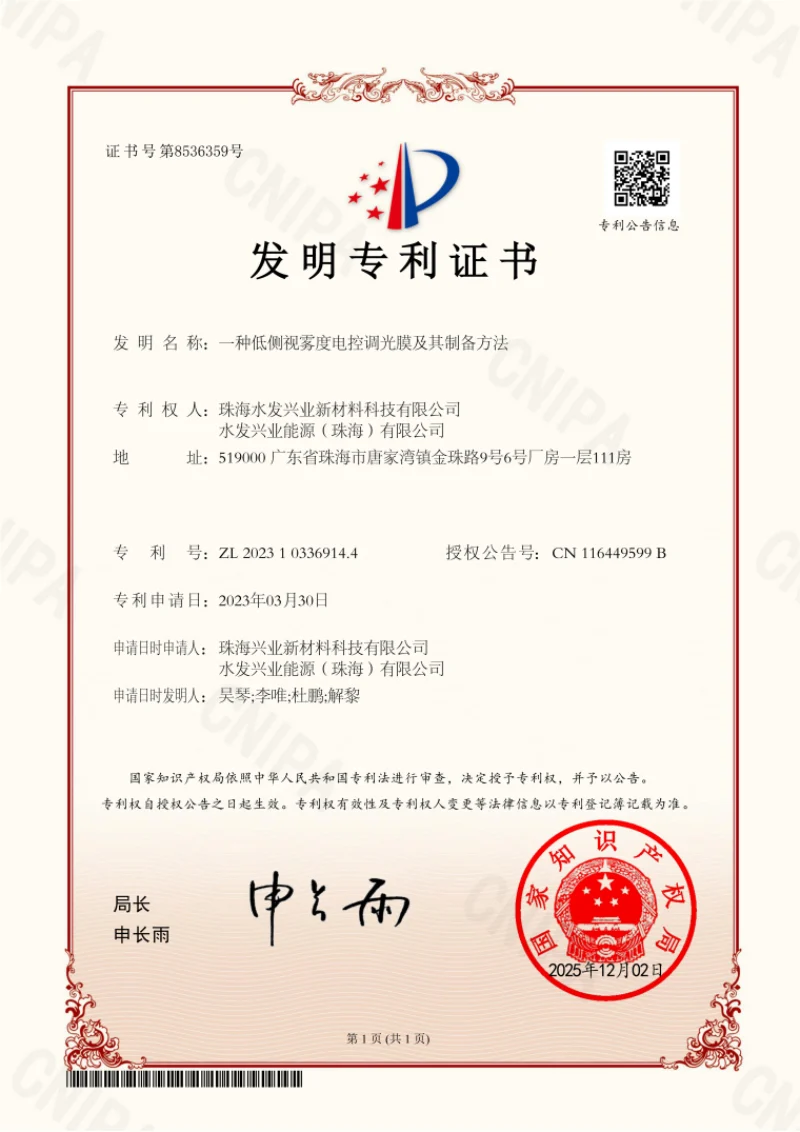
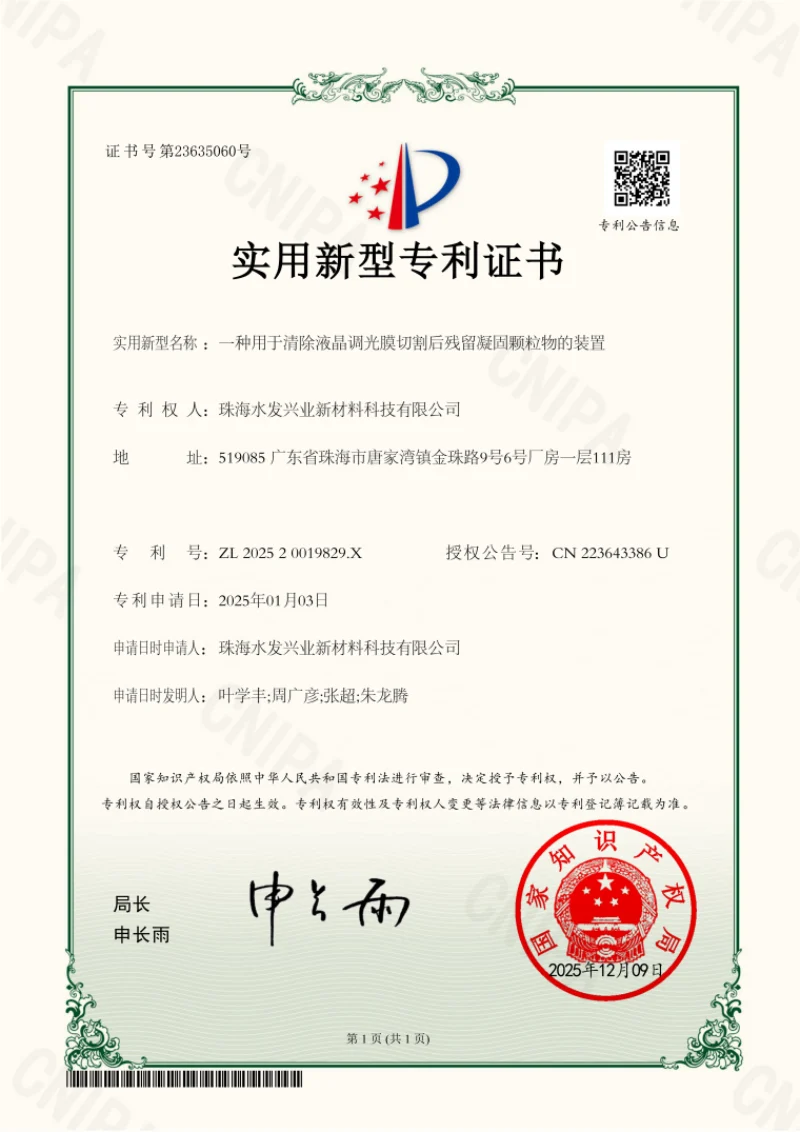
Zhuhai Shuifa Singyes New Materials Technology Co., Ltd. has achieved remarkable progress in technological innovation, with two new patents authorized by the state: a national invention patent for "A Low Side-View Haze Electrochromic Dimming Film and Its Preparation Method", and a national utility model patent for "A Device for Removing Residual Solidified Particles from Liquid Crystal Dimming Films After Cutting".
When applied to car sunroofs, traditional electrochromic dimming films often suffer from noticeable side-view haze in their transparent state, compromising user experience. To address this critical issue, the new technology reduces the thickness of the single-layer PDLC (Polymer Dispersed Liquid Crystal) layer, creating a dimming film with ultra-low side-view haze. This breakthrough overcomes the technical limitations of conventional products, delivering exceptional performance: minimal side-view haze, low haze in the transparent state, high light transmittance, and low driving voltage.
After laser cutting, liquid crystal dimming films typically leave black solidified particles along the edges due to thermal ablation. These particles not only affect the product's appearance but also cause risks like edge sparking, short circuits, and difficulties in subsequent processing. Current manual cleaning methods—using lint-free cloths soaked in alcohol—are labor-intensive and inefficient, hindering production throughput. The newly patented device enables automated removal of these residual particles, significantly boosting cleaning speed and efficiency, and thus enhancing overall production efficiency of liquid crystal dimming films.
This achievement marks a successful practice for Shuifa Singyes New Materials in transforming technical "pain points" into competitive "highlights," protecting them as intellectual property assets, and ultimately converting them into tangible business growth. Moving forward, the company will continue to deepen integration of cutting-edge technologies and advanced manufacturing processes, accelerate the commercialization of scientific achievements, and drive more innovative solutions to real-world applications.
By Chen Cailin