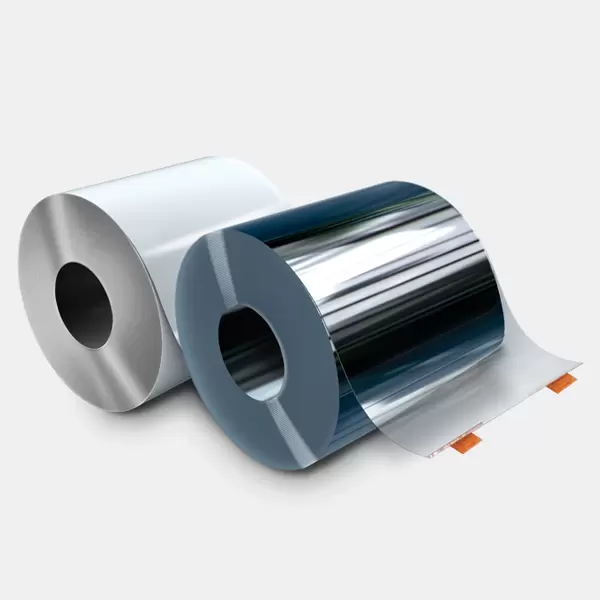
A Complete Guide to Smart Film: From Principles to Applications
Learn more >


Procurement teams often approach smart film the way they approach any other building material: pick a supplier, check the price, place the order. That works for commodity glass. It does not work here, because a building's function changes what "the right smart film" actually means.
A hospital corridor, a law firm's executive suite, and a university lecture hall all use PDLC dimming glass — yet the correct film for one would be a poor fit for either of the other two. Buyers who treat smart film as a single, interchangeable product tend to discover the mismatch only after installation, when a film that performs beautifully in a showroom struggles in a real operating room or a heavily trafficked open office.
The assumption behind most sourcing decisions is that smart film is a single category: apply voltage, the glass turns from opaque to clear, done. In practice, the buildings that use this glass ask for very different things from it.
Consider six factors that vary sharply by building type:
· Privacy — a boardroom needs total visual blockout; a reception area may only need light diffusion.
· Light transmission — a research lab wants maximum clarity when the film is on; a recovery ward may prioritize glare control instead.
· Safety — a hospital operating room and a school stairwell both have codes that a standard office partition never has to meet.
· Installation — retrofitting an existing building calls for a different film structure than specifying glass for a shell still under construction.
· Maintenance — a clinical environment needs a surface that survives repeated disinfection; an office partition rarely does.
· Glass structure — single-pane, laminated, and double-glazed assemblies each interact with PDLC film differently, and each suits a different budget and climate.
None of these factors is unique to smart film — architects have always balanced them for ordinary glazing. What is different is that smart film adds a working, powered component to the wall or window, so getting the match wrong is not just an aesthetic problem. It is a functional one.
The practical takeaway is simple: choose the application first, and let the product follow. A specifier who starts with "which film is cheapest" instead of "what does this room need to do" is the one who ends up re-ordering glass six months after handover.
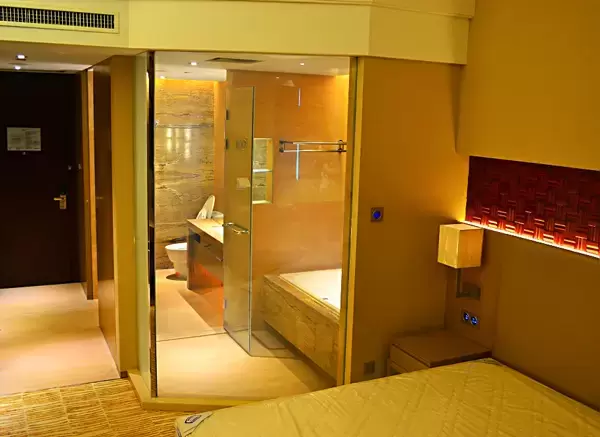
"Office partitions" is not one requirement — it is at least four, and each behaves differently once smart film is involved.
Meeting rooms need fast, reliable, full-opacity switching. A meeting room is where confidential conversations happen, so the film has to go completely private on demand, with no partial fogging or uneven transition across the panel.
Executive offices usually combine two competing goals: the occupant wants to see out and feel connected to the floor, while visitors expect a closed-door level of discretion during one-on-one conversations. This is where controllable, zone-based dimming earns its cost premium over a simple on/off partition.
Open-plan areas rarely need dimming at all — they use smart film as an architectural feature: a break-out glass wall that turns opaque for a client presentation, or a huddle space that seals itself for ten minutes without anyone touching a blind.
Reception areas care more about first impressions and daylight than about privacy. A frosted, glare-reducing look at a fraction of the switching frequency of a meeting room is usually enough.
Once those four use cases are separated, the product decision gets much easier:
· Self-adhesive smart film fits office retrofits where the glass already exists and downtime has to stay short. Because it applies directly to an existing pane, facilities teams can convert a meeting room or an executive office over a weekend, without touching the glazing itself.
· Laminated smart film is the better fit for a new commercial build, where the film is factory-laminated into the glass during fabrication rather than applied afterward. It gives a cleaner factory finish and a more durable bond, which matters for a building that expects to run its glass hard for a decade or more.
· Double Glazed Smart Glass earns its place where the partition also needs to perform thermally or acoustically — a boardroom next to a noisy lift lobby, or a perimeter office wall exposed to direct sun. The sealed insulated unit adds both sound damping and an extra layer of energy performance on top of the switching function.
A useful rule for a specifier walking a floor plan: retrofit gets self-adhesive, new-build gets laminated, and anywhere with a genuine acoustic or thermal load gets double glazing.
There is a sequencing question worth raising early with the facilities team, too: switching frequency. A meeting room booked back-to-back all day will cycle its film hundreds of times a week, while a reception wall might switch once and stay that way for hours. Film and control gear rated for occasional use will wear faster under meeting-room-level cycling, so it is worth asking a supplier for the duty-cycle rating of a given film rather than assuming every panel is built for the same workload. This is also where the control side of the project deserves attention — a partition wired to a basic on/off switch behaves very differently in daily use from one on a scheduled or app-based controller that can pre-set a meeting room to frost automatically once a booking starts.
Budget conversations tend to go smoother once these distinctions are on the table as well. A self-adhesive retrofit is almost always the lower-cost route per square meter, which makes it attractive for a tenant fit-out with a fixed budget and a short lease. Laminated smart film costs more up front but removes the adhesive layer as a long-term maintenance variable, which matters to a landlord planning to hold the asset for years rather than a single lease term. Double glazing sits at the top of the cost range, but it is solving two problems — acoustics and thermal performance — that would otherwise need separate line items in the same wall build-up.
It is tempting to treat a hospital as "an office with more sensitive conversations." That framing misses what actually drives the specification in a clinical building.
The first concern in most hospital glazing decisions is infection control — how easily the surface can be wiped down, disinfected, and kept free of the joints and gaskets where bacteria collect. The second is observation: staff frequently need to see into a room without entering it, which is the opposite of the total blockout logic that governs an office boardroom.
That changes the specification for each clinical space:
· ICU rooms need glass that can switch to frosted for patient dignity during a procedure, then instantly return to clear so nursing staff can monitor a patient from the corridor without opening a door.
· Operating rooms demand a sealed, cleanable surface with no exposed edges or adhesive layers where contamination can build up — which usually points toward a laminated or double-glazed configuration rather than a retrofit film.
· X-ray rooms add a shielding requirement on top of the dimming function, so the glass structure and any lead-lined components have to be engineered together with the smart film, not treated as two separate purchases.
· Medical consultation rooms sit closer to the office use case — private conversation with a patient, quick switching, easier maintenance requirements — but still need a wipeable, low-maintenance surface that tolerates hospital-grade cleaning chemicals.
This is also where Laminated Smart Glass does work that a simple film cannot. Because the PDLC layer sits sealed between two panes of toughened glass, there is no exposed film surface for disinfectant to degrade over time, and the assembly behaves like standard safety glass under impact — a genuine requirement in an environment where trolleys, beds, and equipment move through corridors all day.
Framed this way, a hospital buyer is not really shopping for "privacy glass." They are shopping for a piece of clinical infrastructure that happens to switch between clear and opaque.
Facilities managers in healthcare also have to think about staffing implications that an office building never faces. A nurse working a twelve-hour shift on a ward needs to check on multiple patients without repeatedly entering and re-gowning at each door, so glass that switches to clear on approach — through a simple wall switch or a motion trigger — saves real time across a shift. The same logic applies to a consultation room used back-to-back by different clinicians throughout a day: the film needs to reset to a known, private state automatically between appointments, rather than depending on the previous occupant remembering to switch it off. Procurement teams evaluating vendors for a hospital wing should ask specifically how the control system handles this kind of automatic reset, since it is easy to overlook in a product demonstration but becomes a daily friction point once the ward is in operation. Infection-control committees will also want documentation on how the sealed glass performs under the hospital's specific disinfection protocol, since not every cleaning agent is compatible with every surface treatment, and this is a detail worth confirming before, not after, a large order is placed.
The instinct to write "classrooms need smart film for privacy" undersells what schools and universities are actually buying it for.
· Lecture halls increasingly use large glass surfaces as secondary display space — a wall that is transparent during a normal lecture and becomes a projection surface during a multimedia session.
· Research labs need controlled visibility for safety supervision and equipment protection, switching to opaque when work is in progress and clear when a supervisor needs a line of sight into the space.
· STEM classrooms benefit from flexible partitions that reconfigure a single large room into two or three teaching zones depending on the day's schedule.
· Training centers run frequent multimedia sessions where a glass wall doubling as a rear-projection screen removes the need for a dedicated screen and darkened room.
This is precisely where a Smart Projection System belongs in the conversation — not forced into the article as a product mention, but introduced because interactive display and rear-projection capability is genuinely what a modern lecture hall or training center is asking for. A PDLC film that can double as a projection surface turns a partition wall into teaching infrastructure, which is a very different value proposition from "the glass goes frosted when you flip a switch."
Budget owners in education procurement tend to be more constrained than their counterparts in commercial offices or hospitals, which makes the retrofit-versus-new-build question especially relevant here. Many campuses are working inside existing buildings rather than new construction, so a self-adhesive film applied to an existing lecture hall window can deliver most of the projection and privacy benefit without a full glazing replacement — a meaningful consideration when a facilities budget has to stretch across dozens of rooms rather than a single boardroom. Where new buildings are going up, specifying laminated film or glass with projection capability from the start avoids the disruption of retrofitting an active teaching space later. It is also worth asking a supplier whether the same panel can serve double duty as both a display surface and a physical divider between two teaching zones, since that combination is often what actually justifies the line item to a facilities committee reviewing a tight capital budget.
The table below summarizes how application and product line up across the three sectors covered here.
Application | Recommended Product |
Office Retrofit | Self-Adhesive Smart Film |
New Commercial Building | Laminated Smart Film |
High Safety Requirement | Laminated Smart Glass |
Hospital ICU | PDLC Smart Glass |
Education Projection | Smart Projection System |
None of these five rows is interchangeable with another. A hospital ICU specified with a retrofit self-adhesive film would fail on cleanability. A training center specified with plain laminated smart glass, with no projection capability, would leave real functionality on the table. The table is a starting point for a conversation with an engineering team, not a substitute for one — every project still has site-specific glass sizes, control requirements, and code considerations that need to be checked against it.
Matching application to product only works if the components underneath that product are made to a consistent standard — and that is a supply chain question as much as a design question.
A specifier who buys ITO film from one factory, PDLC formulation from another, and lamination from a third is assembling a system out of parts that were never engineered together. Performance gaps tend to show up exactly where they are hardest to fix: response time drifting after a year in service, a laminated edge failing at the seal, or a control unit that cannot talk to the film it is supposed to drive.
Shuifa Singyes runs the reverse of that model. The company controls PDLC film, smart glass lamination, ITO film production, EVA interlayer manufacturing, and automotive smart film under one roof, from raw substrate through to a finished, cut-to-size panel. That vertical integration is what allows a hospital ICU panel, an office partition, and a lecture-hall projection wall to be specified from the same underlying materials science — engineered differently for each application, but built to one quality standard rather than three.
Once a project team is clear on whether they are solving for infection control, acoustic performance, or projection capability, the product choice becomes a short list rather than a guess — and the supplier behind that product list becomes the part of the decision that actually protects the investment over the life of the building.