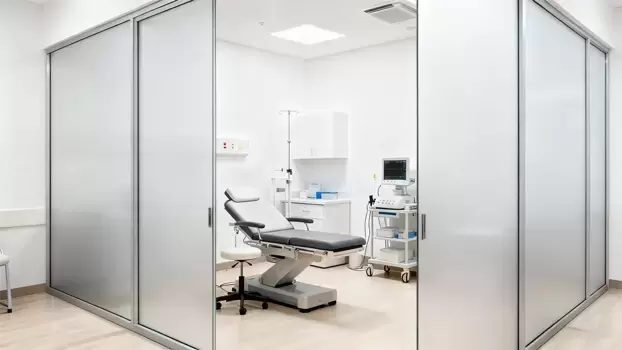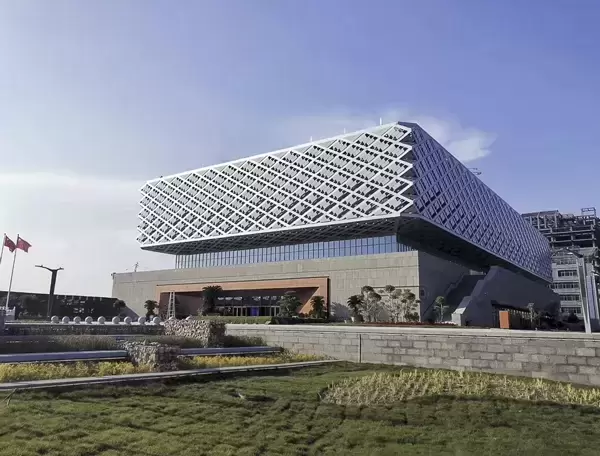
Can Smart Film Meet the Privacy Needs of Modern Healthcare Spaces?
Learn more >


Modern architecture is expected to deliver far more than attractive facades. Commercial buildings, hotels, healthcare facilities, offices, and high-end residential projects are increasingly designed around flexibility, energy efficiency, occupant comfort, and intelligent space management. As a result, architects and developers are paying closer attention to how daylight, privacy, and interior transparency can be controlled without compromising aesthetics.
For decades, conventional Venetian blinds have been the standard solution for regulating light and privacy. While effective in many situations, they also introduce challenges such as dust accumulation, mechanical wear, cleaning difficulties, and design limitations. In projects where glass has become the dominant architectural element, traditional blinds often interrupt clean visual lines and require ongoing maintenance throughout the building's lifecycle.
These evolving design priorities have encouraged the development of smarter glazing technologies. Among them, Venetian Blind Dimming Film has attracted growing attention for its ability to create a dynamic louver-like effect directly within laminated smart glass. Instead of relying on external mechanical blinds, the film electronically adjusts light transmission and privacy, allowing buildings to respond more intelligently to changing environmental and operational requirements.
Traditional blinds remain common in offices and residential buildings, but modern architectural projects demand solutions that perform beyond basic shading.
As buildings incorporate larger glazed facades and more transparent interior layouts, conventional blinds reveal several operational limitations.
Common challenges include:
· Dust accumulation between slats
· Frequent cleaning requirements
· Mechanical wear from repeated operation
· Uneven light distribution
· Limited design flexibility
· Visual obstruction even when partially opened
· Additional maintenance throughout the building lifecycle
In commercial environments such as conference centers, executive offices, hotels, and healthcare facilities, these issues become increasingly significant. Facility managers are expected to maintain clean interiors while minimizing maintenance interruptions and operating costs.
Traditional blinds also occupy physical space within window systems or interior partitions, making integration more complicated in projects where minimalist design and seamless glazing are priorities.
For architects pursuing cleaner aesthetics and smarter building systems, these limitations have accelerated interest in electronically controlled light-management technologies.
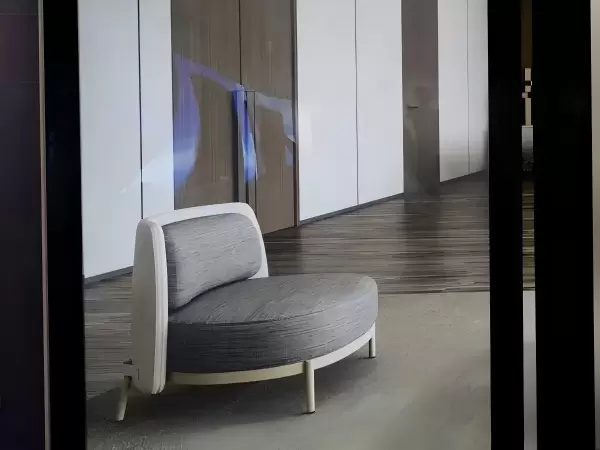
Unlike conventional smart films that simply switch between transparent and opaque states, Venetian Blind Dimming Film introduces an additional level of daylight management.
Its internal structure enables a visual effect similar to horizontal Venetian blinds, allowing occupants to regulate incoming light while preserving openness within the space.
Rather than installing movable slats, the technology integrates the light-control function directly into the glazing system.
This provides several practical advantages:
· Dynamic adjustment of daylight
· Improved privacy without physical blinds
· Cleaner architectural appearance
· Reduced moving components
· Better compatibility with modern smart building systems
Because the shading effect is generated electronically, there are no exposed cords, motors, or rotating slats requiring routine servicing.
This makes the technology particularly attractive for buildings where appearance, hygiene, and long-term maintenance are equally important.
Architectural specifications increasingly emphasize user experience as much as structural performance.
Glass is no longer viewed solely as a transparent material. It has become an active building component capable of improving comfort, supporting energy efficiency, and adapting to different functional requirements throughout the day.
Light Control Film with Venetian Effect offers architects greater design flexibility because it combines several functions within a single glazing solution.
These functions include:
· Privacy control
· Daylight regulation
· Visual comfort
· Modern interior aesthetics
· Reduced reliance on mechanical shading devices
For projects featuring open-plan offices or executive meeting spaces, maintaining transparency while controlling glare can significantly improve the usability of interior environments.
Rather than permanently blocking natural light, architects can create spaces that remain bright while reducing excessive solar exposure when required.
Natural daylight plays a critical role in occupant wellbeing and workplace productivity.
However, excessive sunlight can introduce problems such as:
· Screen glare
· Eye fatigue
· Increased cooling loads
· Uneven interior brightness
· Reduced visual comfort
Traditional blinds often solve these issues by blocking daylight entirely.
In contrast, Venetian Blind Dimming Film enables a more balanced approach by moderating incoming light instead of simply eliminating it.
This creates more comfortable working environments where daylight remains available without producing excessive glare.
For office buildings, educational facilities, and healthcare environments, improved daylight management contributes to both occupant satisfaction and operational efficiency.
Modern office design has shifted dramatically over the past decade.
Open layouts encourage collaboration, but they also introduce new privacy challenges.
Meeting rooms, executive offices, and collaborative workspaces frequently require adjustable privacy depending on how the space is being used throughout the day.
Conventional blinds provide only limited flexibility and often interrupt the visual continuity of contemporary interiors.
As a result, many designers are specifying Shutters Dimming Film or Louvers Dimming Film integrated within glass partitions instead of external window coverings.
Typical office applications include:
· Executive offices
· Conference rooms
· Boardrooms
· Interview rooms
· Training centers
· Financial institutions
· Co-working spaces
Electronic switching enables privacy to change instantly without physically altering the interior environment.
This flexibility supports multifunctional spaces while maintaining the clean appearance increasingly favored in corporate architecture.
Hospitality projects present unique challenges because guest comfort and long-term maintenance are equally important.
Traditional blinds can become damaged through daily guest use, require regular cleaning, and gradually affect the visual quality of premium interior spaces.
For upscale hotels, designers increasingly seek glazing solutions that simplify maintenance while enhancing the guest experience.
Mini-blinds Dimming Film and Slats Dimming Film technologies provide an alternative approach by eliminating exposed mechanical components while preserving effective daylight control.
Typical hospitality applications include:
· Guestroom partitions
· Bathroom glazing
· Presidential suites
· VIP lounges
· Conference facilities
· Reception areas
· Sky bars and restaurants
Beyond improving aesthetics, reducing maintenance requirements also lowers operating costs throughout the building's service life, an increasingly important consideration for hotel operators managing large property portfolios.
The growth of smart home ecosystems has changed how homeowners interact with their living spaces. Lighting, climate control, security, and entertainment systems are increasingly connected through centralized automation platforms, and glazing technologies are becoming part of that intelligent environment.
Unlike traditional blinds that require manual adjustment or dedicated motorized mechanisms, Venetian Blind Dimming Film can be integrated into smart control systems for more convenient operation.
Possible control methods include:
· Wall switches
· Remote controllers
· Mobile applications
· Voice assistants
· Smart home automation platforms
· Timed scheduling systems
This level of integration allows homeowners to adjust privacy and daylight according to different scenarios, such as movie viewing, entertaining guests, or maximizing natural daylight during working hours.
As residential construction continues to adopt intelligent building technologies, electronically controlled glazing is becoming a natural extension of the connected home.
When evaluating light-control solutions, decision-makers often compare overall building performance rather than initial installation costs alone.
The following comparison highlights the practical differences.
Feature | Venetian Blind Dimming Film | Traditional Blinds |
Appearance | Integrated within glass | Visible external system |
Privacy control | Electronic switching | Manual or motorized adjustment |
Cleaning | Minimal maintenance | Frequent dust removal |
Mechanical wear | No exposed moving slats | Slats and cords wear over time |
Daylight management | Dynamic light regulation | Limited adjustment |
Smart building integration | Easy integration | Additional automation required |
Interior aesthetics | Clean, minimalist design | Visible hardware |
Although both solutions provide privacy, integrated glazing technologies offer advantages for projects where architectural consistency, maintenance efficiency, and smart control are priorities.
Technology performance depends not only on product design but also on manufacturing quality and engineering support.
For large commercial projects, buyers should evaluate potential suppliers beyond price alone.
A professional Venetian Blind Dimming Film Manufacturer typically demonstrates strengths in several areas.
Important evaluation criteria include:
· Stable production capacity
· Consistent optical performance
· Reliable quality management
· Product testing capabilities
· Technical documentation
· Project support experience
· International export capability
· Long-term product availability
Because smart glazing often becomes part of permanent building structures, selecting an experienced manufacturing partner helps reduce technical risks during both installation and long-term operation.
China has become one of the world's largest production bases for architectural smart glass materials and intelligent glazing technologies.
As manufacturing capabilities continue to improve, many international contractors and distributors now work directly with a Venetian Blind Dimming Film China supplier for both standard and customized projects.
Typical advantages include:
· Large-scale production
· Mature supply chains
· Competitive manufacturing costs
· Flexible OEM and ODM services
· Faster project customization
· Global export experience
However, supplier selection remains critical. Buyers should evaluate technical expertise, quality systems, project references, and engineering support rather than focusing solely on unit price.
Working with an experienced Venetian Blind Dimming Film Factory can provide greater confidence in product consistency and long-term supply stability.
As architects place greater emphasis on adaptable interiors and intelligent building systems, electronically controlled glazing is finding applications across a wider range of projects.
Today, Louvres Dimming Film and Jalousies Dimming Film solutions are commonly specified for:
· Corporate headquarters
· Commercial office buildings
· Hotels and resorts
· Hospitals and medical centers
· Universities
· Luxury residences
· Retail flagship stores
· Exhibition halls
· Airports
· Government buildings
Although each project has different functional requirements, they all benefit from flexible control over transparency, privacy, and natural daylight without relying on traditional mechanical shading systems.
Sustainability is influencing every stage of modern building development, from material selection to operational performance.
Design teams are increasingly looking for technologies that improve occupant comfort while supporting energy-efficient building operation.
Integrated smart glazing contributes to these goals by helping regulate daylight, reducing dependence on artificial lighting during appropriate periods, and supporting more flexible interior environments.
As building automation systems become more sophisticated, electronically controlled glazing is expected to play a larger role in future commercial developments.
Rather than serving as a decorative feature, technologies such as Venetian Blind Dimming Film are becoming functional building components that contribute to comfort, operational efficiency, and architectural quality.
Modern buildings require more than basic shading devices. Architects, developers, and facility managers are increasingly searching for solutions that combine privacy, daylight management, aesthetic consistency, and long-term reliability within a single integrated system.
Compared with conventional blinds, Venetian Blind Dimming Film offers a cleaner architectural appearance, fewer maintenance requirements, and greater compatibility with today's smart building technologies. Whether applied in office partitions, hotel interiors, healthcare facilities, or luxury residential projects, it provides flexible control over transparency while preserving the open design language favored in contemporary architecture.
As demand for intelligent glazing continues to grow, choosing an experienced Venetian Blind Dimming Film Supplier becomes just as important as selecting the technology itself. Manufacturing quality, technical support, and project experience all influence long-term performance and installation success.
For architects, contractors, and distributors seeking dependable smart glazing solutions, professional manufacturers with mature production capabilities and international project experience are well positioned to support a wide range of commercial and architectural applications, delivering modern light-control systems that align with evolving building design trends.