Which ITO film manufacturer for PDLC fits your needs best
Learn more >


Glass has become an important part of modern commercial architecture. Shopping malls, hotels, exhibition halls and corporate spaces use large glass surfaces to maintain natural light, create visual openness and connect indoor areas with their surroundings. However, glass is usually treated as a building material rather than a medium for displaying information. When a commercial project needs to present brand content, promotional messages or visual presentations, separate LED screens, projection screens or printed displays are often installed.
This creates a practical design question: can an existing glass surface serve both architectural and display purposes without permanently changing the appearance of the space?
A Smart Projection System provides one possible solution by combining smart glass with projection equipment. The glass acts as a switchable display surface. When projection is required, the glass changes to an opaque state and provides a surface for projected images. When the display is not in use, it can return to a transparent state, allowing the glass to continue serving its original architectural function.
For product managers and project teams, the value of this system is not simply the ability to project an image onto glass. The important consideration is how the glass structure, projection equipment, control system and installation environment work together as one complete solution.
A Smart Projection System combines two main components: smart glass and a projection system. Each component performs a different function, and the final display effect depends on their compatibility.
Smart glass provides the switchable surface. Projection equipment supplies the visual content. A control arrangement coordinates the glass state and the projection operation according to the requirements of the project.
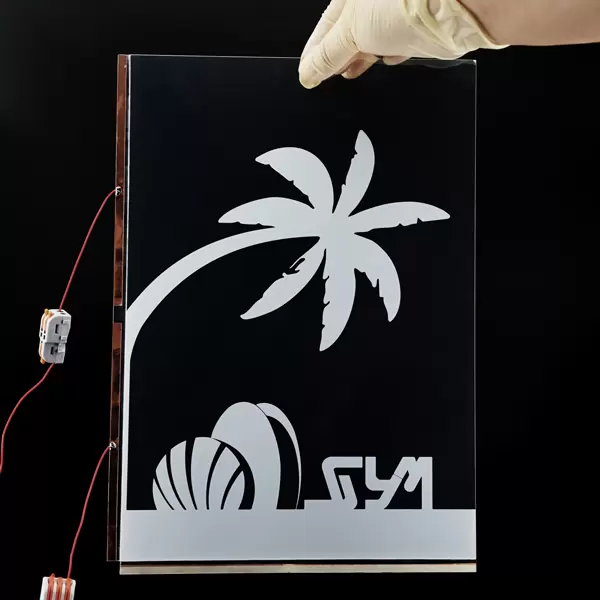
PDLC smart glass uses a polymer dispersed liquid crystal layer between conductive layers. Its optical appearance changes when an electrical field is applied or removed.
In its transparent state, the liquid crystal molecules align under the applied electrical field, allowing light to pass through the glass with greater clarity. When the electrical field is removed, the molecules become randomly arranged and scatter incoming light. The glass then appears opaque or translucent.
For projection applications, this change in optical state is particularly important. The opaque state creates a scattering surface that can receive projected images. Instead of installing a separate projection screen in front of the glass, the glass itself becomes part of the display arrangement.
The exact optical performance depends on the smart glass construction, film characteristics, glass processing and installation conditions. Project teams should therefore evaluate the actual product configuration rather than assume that every PDLC glass product will produce the same projection result.
The projector sends light and image information toward the smart glass surface. Once the glass enters its opaque state, the scattered light makes the projected content visible to viewers.
The projector must be selected according to the required image size, installation distance, ambient lighting and viewing arrangement. A projector that performs well in a small meeting room may not be suitable for a large commercial glass installation.
Projection equipment and smart glass should be assessed together during the design stage. If the projector position is decided too late, the project may face restrictions involving ceiling height, equipment access, viewing angles or the available projection distance.
The operating sequence should be considered as part of the system design. When a display is scheduled, the smart glass changes to its projection state and the projector begins displaying the selected content. When the display is no longer required, projection can stop and the glass can return to its transparent state.
The control arrangement may vary according to the project. Some installations require basic switching, while others need integration with a building management system, scheduled content playback or centralized control.
From a product management perspective, the control method should be confirmed before equipment selection. It affects electrical planning, wiring routes, user operation and future maintenance. A technically suitable projector and glass combination can still create operational difficulties if the control requirements are not defined at the beginning.
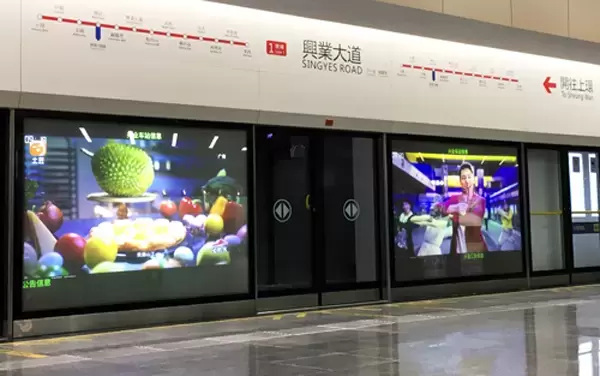
Traditional projection screens are designed specifically for image display. They are available in fixed-frame, motorized and portable configurations. They can provide a dedicated projection surface, but they also occupy space and may become visually prominent when not in use.
Smart glass projection takes a different approach. It incorporates the display surface into the glass elements of the building or interior space.
In a conventional arrangement, a glass wall and a projection screen are usually separate elements. The glass provides openness, while the screen is installed for presentations or promotional content.
With a Smart Projection System, these functions can be combined within one glass installation. During display operation, the opaque glass provides the projection surface. When projection is not required, the transparent state helps preserve the original visual connection between spaces.
This arrangement can be useful in commercial environments where a large screen is needed only at certain times of the day. A shopping mall may use the glass for promotional content during campaigns, then return it to a transparent state outside the display schedule.
A traditional projection screen can often be installed after the interior layout has been completed. Smart glass projection usually requires more coordination because the glass is part of the display system.
The project team needs to confirm glass dimensions, electrical connections, mounting details, projector position and maintenance access. These requirements can influence the glass specification and construction sequence.
For example, a glass partition in a hotel lobby may need to maintain a clean appearance while accommodating wiring and control components. If electrical connections are not considered before installation, additional surface-mounted cables or modifications may affect the finished design.
Smart glass projection should not be evaluated only by its image performance. The glass still needs to meet the requirements of its architectural application.
Depending on the project, these requirements may include glass dimensions, safety considerations, laminated construction, edge treatment, fixing methods and compatibility with surrounding materials.
Laminated Smart Glass can be considered where the project requires a laminated glass structure. However, the suitable configuration depends on the intended installation and product specifications. The glass supplier, projector supplier and project contractor should confirm the complete arrangement before production.
For projects that require both switchable privacy and projection display, the relationship between the smart glass structure and the projection equipment needs to be assessed as one system rather than as two independent purchases.
The system is most relevant to spaces that already contain substantial glass surfaces and have a clear need for scheduled or occasional visual communication.
Shopping malls use glass in storefronts, interior partitions, feature walls and public areas. These surfaces can be associated with brand promotion, seasonal campaigns, product launches and event announcements.
A Smart Projection System can turn a selected glass area into a display surface without requiring a permanently visible screen. Retail operators can use the display during promotional periods and return the glass to a transparent state when the content is no longer needed.
The main planning issue is the relationship between the display and the surrounding retail environment. Project teams should consider customer viewing distance, pedestrian movement, ambient lighting and the position of nearby shop lighting. Content should also be designed for the actual glass dimensions rather than simply scaled from a standard television format.
Hotel lobbies and clubhouses often use glass partitions or large glazed surfaces to create an open interior. At the same time, these spaces need to communicate information such as event schedules, membership activities, brand stories and welcome messages.
A smart glass projection surface can provide a display area without requiring a separate permanent screen in the same location.
The operating schedule is important in these environments. A hotel may use the projection system during an event or at selected times, while keeping the glass transparent during normal operation. The control interface should be simple enough for the property team to operate without requiring technical assistance for routine switching.
Exhibition halls require flexible presentation arrangements. Product information, campaign videos and brand content may change between events or exhibition periods.
Smart glass projection can support these requirements when the glass surface, projector and content layout are designed together. The glass can serve as an architectural element during normal use and as a display surface during presentations.
For exhibition projects, the system should be assessed against the expected content type. Text-heavy presentations, detailed product images and full-motion video place different demands on image quality and viewing distance. The display design should reflect what visitors need to read or see rather than focusing only on the total screen area.
Large glass surfaces in commercial buildings can provide opportunities for architectural projection. Depending on the building layout, suitable areas may include interior glass walls, feature partitions and selected curtain wall sections.
The project team must distinguish between indoor projection and outdoor-facing applications. Daylight, direct sunlight and surrounding artificial lighting can affect image visibility. Structural conditions, access for installation and equipment protection also need to be assessed.
Not every glass façade is suitable for projection. The final decision should be based on the actual glass configuration, projector location, environmental conditions and intended viewing direction.
A Smart Projection System does not produce the same image under every installation condition. Image visibility is influenced by the glass surface, projector configuration, ambient light, viewing distance and content design.
These factors should be checked before the project moves into production and installation.
The smart glass is the surface receiving the projected image, so its optical characteristics matter. Differences in glass structure, PDLC film properties, processing quality and installation can influence the appearance of the projection area.
For a large display, the project team should pay particular attention to the consistency of the glass surface. If the display is divided into several glass sections, the visual relationship between adjacent panels should be reviewed.
Laminated Smart Glass may be used as part of the system, depending on the project requirements. Its dimensions, layer arrangement, edge treatment and electrical connections should be confirmed with the manufacturer. The final sample should be evaluated under conditions that are as close as possible to the intended installation.
The distance between the projector and the glass affects the achievable image size and equipment arrangement. The required projection distance depends on the projector's throw ratio and the dimensions of the display area.
Ultra-short-throw equipment may help reduce the space needed between the projector and the glass, but it still requires accurate positioning and suitable mounting conditions. The projector should be selected according to the actual installation geometry rather than based only on a general product description.
During technical planning, the team should confirm the projector mounting location, image dimensions, lens characteristics and access for adjustment. These details become more difficult to change after ceilings, walls and glass panels have been completed.
Ambient light is one of the most important factors in projection performance. Shopping malls, hotel lobbies and exhibition spaces often have strong artificial lighting. Some locations also receive direct or reflected daylight through nearby windows.
Excessive ambient light can reduce the perceived contrast of projected content. Even when the projector has sufficient output, the image may appear less distinct if the surrounding environment is too bright.
The solution should be assessed at the actual installation location. Where possible, project teams should conduct a projection test with the planned lighting arrangement. Adjustments may involve projector selection, display scheduling, lighting control or the position of the glass display area.
A 500㎡ display installation has different planning requirements from a small glass screen. The larger the display area, the more important it becomes to define the viewing zones, content layout and projector arrangement.
Project teams should establish whether the display is intended to be viewed from one main direction or from several areas. They should also consider how viewers move through the space and how much time they have to read the content.
A large display does not automatically require the same content across its entire surface. In some commercial projects, a combination of brand visuals, campaign information and moving images may be more suitable. Content dimensions and image proportions should be confirmed before the final projection arrangement is approved.
Projector brightness, resolution, throw ratio and lens configuration all influence the final result. The appropriate specifications depend on the display area and viewing environment.
The control system also needs attention. Smart glass switching, projector operation and content playback should follow a clear operating sequence. If several display areas are installed, the project team should decide whether they operate together or independently.
For a commercial property, the control interface should match the daily work of the operations team. A complicated control process can reduce the practical value of the system, even if the hardware performs as intended.
The Shanghai Yaohan project provides a practical example of combining smart glass with projection technology in a commercial environment.
Located in Shanghai, China, the project covers approximately 500 square meters and uses Smart Glass together with a Smart Projection System. The large display area was designed for commercial information presentation, brand promotion and activity announcements.
The project uses smart glass as the projection carrier. When the glass enters its opaque state, it provides an even surface for projected content. The display area can present dynamic material such as brand promotions and activity information.
When projection is not required, the glass can switch back to a transparent state. This allows the commercial space to retain natural light and visual openness rather than keeping a large screen permanently visible.
From a product planning perspective, the key requirement was to balance two different functions. The glass needed to support large-area visual presentation while remaining part of the commercial interior when the display was inactive.
A 500㎡ application requires more planning than a small projection installation. The display area, glass arrangement, projector configuration and operating requirements need to be considered together.
For a commercial property, the display must fit the building's circulation and visual layout. Promotional content needs to be visible to visitors without interfering with the overall interior design. The project also needs an operating arrangement that allows the display to be used when required and the glass to return to its transparent state at other times.
The Shanghai Yaohan case demonstrates how Smart Glass and Smart Projection System can be combined for large-area commercial display applications. It also shows why project requirements should be defined before the glass and projection equipment are finalized.
For project teams considering a similar installation, the most useful reference is not simply the total display area. They should also examine the glass configuration, content requirements, viewing environment and operating method of the intended space.
Huafa Century in Zhuhai, Guangdong Province, provides another example of smart glass projection in a clubhouse environment. The project uses Smart Projection System with Laminated Smart Glass to create a 120-inch projection display on clubhouse curtain wall glass.
When the glass is in its opaque state, it serves as a projection surface for clubhouse concepts, activity announcements and other information. When projection is not required, the glass returns to a transparent state and retains the openness of the curtain wall.
Compared with the 500㎡ Shanghai Yaohan installation, Huafa Century uses a smaller display area and a different commercial setting. Together, the two projects show that the system can be considered for both large commercial display areas and more focused architectural presentation spaces. The final configuration still needs to be determined according to each project's glass structure, equipment arrangement and display requirements.
A successful installation depends on decisions made before the glass is manufactured and the projector is mounted. Product managers should coordinate the glass supplier, projection equipment provider, designer and installation contractor at an early stage.
The team should establish the dimensions of each glass section, the total display area and the way the glass will be supported. If the display is divided into multiple panels, the layout should be reviewed to ensure that the overall visual arrangement meets the design requirements.
The glass specification should also match the intended architectural application. Where laminated construction is required, the manufacturer should confirm the available structure and processing details.
Projector selection should follow the confirmed display dimensions and installation conditions. The team needs to know where the projector will be mounted, how far it will be from the glass and whether the equipment can be accessed for maintenance.
If the available space is limited, short-throw or ultra-short-throw equipment may be considered. However, the final selection should be based on a technical assessment of the actual site.
Smart glass requires an appropriate electrical connection for switching. Projection equipment also needs power, signal connections and a suitable control arrangement.
The electrical plan should identify cable routes, power access, control points and equipment locations. For large installations, the team should also confirm how different display areas will be controlled and whether the system needs to connect with existing building controls.
A sample test can help identify problems before full-scale installation. The test should use the intended glass configuration and a projector with suitable specifications.
The team should check image visibility, surface uniformity, viewing distance and the effect of surrounding lighting. Testing under actual or closely simulated site conditions is more useful than relying only on product specifications.
Commercial display systems need to remain manageable after handover. Project teams should confirm how the glass is switched, how content is updated, where projector equipment is accessed and who is responsible for routine checks.
Maintenance access should be included in the initial design. If the projector is installed above a finished ceiling or in a restricted area, future adjustment and repair may become difficult.
Smart Projection System combines the switchable characteristics of smart glass with projection technology, allowing selected glass surfaces to serve as dynamic display areas when required. It provides a different approach to commercial information presentation by bringing the display function into the architectural glass itself.
The Shanghai Yaohan project demonstrates how the combination can be used across a 500㎡ commercial display area, while Huafa Century shows its application in a 120-inch clubhouse projection installation. Both cases highlight the importance of matching the glass configuration, projection equipment and operating requirements to the actual project environment.
For developers, designers and commercial property operators, the main decision is whether the glass surface can meet both the architectural and display requirements of the space. Glass dimensions, ambient lighting, projector position, control arrangements and maintenance access should all be reviewed before production begins.
Zhuhai Shuifa Singyes New Materials Technology Co., Ltd. provides Smart Projection System and Laminated Smart Glass solutions for architectural and commercial display applications. Project teams can review the Smart Projection System product information and the Laminated Smart Glass range when assessing a suitable configuration. For project-specific requirements, contact the team through the inquiry page.