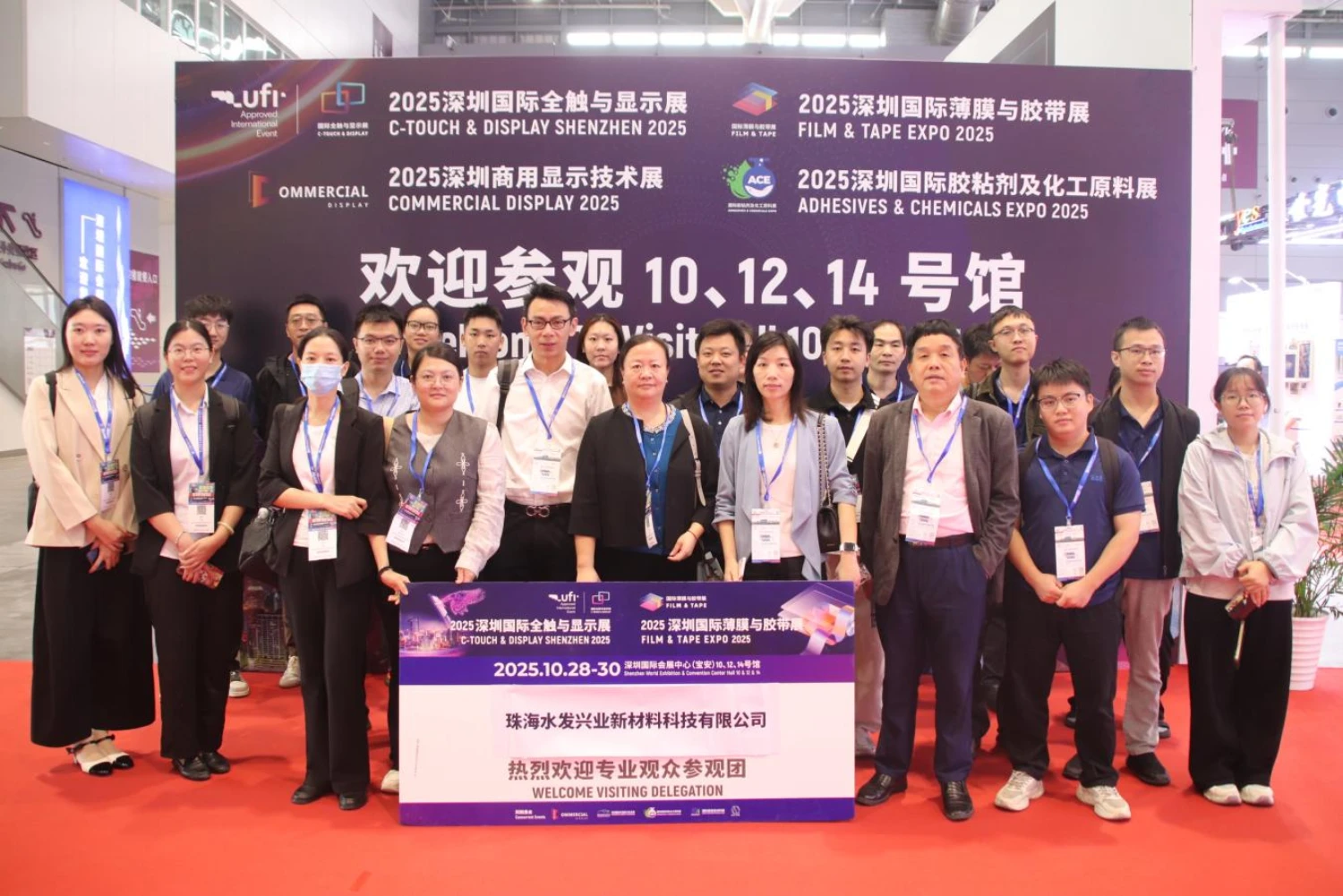
Exploring New Chapters of Development Together! Shuifa Singyes New Materials Participates in C-Touch & Display Shenzhen 2025 and Commercial Display
Learn more >


When panoramic glass roofs first appeared on premium vehicles, they were primarily regarded as a styling feature. Larger glass panels created brighter cabins, expanded the driver's field of view, and gave passengers a stronger connection with the outside environment. As electric vehicles became more popular, panoramic roofs gradually evolved from an optional luxury feature into a common design element across many vehicle segments.
Today, buyers expect far more than attractive styling. A panoramic roof should improve everyday driving rather than becoming something that requires additional accessories to make it comfortable. Drivers want natural daylight on cloudy mornings, an unobstructed view during scenic journeys, comfortable cabin temperatures on hot afternoons, and privacy whenever the vehicle is parked.
Meeting all of these expectations with a single fixed glass panel is becoming increasingly difficult.
This challenge explains why automotive manufacturers are paying closer attention to dynamic glazing technologies. Instead of treating the roof as a passive piece of glass, engineers are developing systems capable of adapting to changing weather conditions, lighting environments, and passenger needs throughout the day.
Among these technologies, PDLC Smart Film has become one of the most practical solutions for intelligent panoramic roof systems. Rather than changing the vehicle's overall design, it adds flexibility to a component that drivers interact with every day.
For vehicle manufacturers, the value is not limited to introducing another premium feature. A smart panoramic roof improves daily usability while supporting the broader development of intelligent cockpits and connected vehicle interiors.
Most vehicle owners use their cars in a wide variety of environments within a single day.
The morning commute may begin under soft daylight. By noon, direct summer sunshine can significantly increase solar radiation entering the cabin. Later in the evening, passengers may want a completely transparent roof to enjoy city skylines or natural scenery. During charging stops or lunch breaks, privacy often becomes just as important as visibility.
These constantly changing conditions highlight an important limitation of conventional panoramic roofs.
A fixed glazing system performs the same way regardless of the surrounding environment.
Drivers therefore have only two basic choices:
· Leave the roof completely exposed to incoming sunlight.
· Install a physical sunshade that permanently blocks much of the panoramic view.
Neither option fully satisfies the expectations associated with modern electric vehicles.
The popularity of panoramic roofs is largely based on openness. Buyers choose them because they create a brighter interior, improve passenger visibility, and make the cabin feel considerably larger than its actual dimensions.
Adding a thick fabric shade immediately changes that experience. Natural light decreases, the cabin appears more enclosed, and one of the vehicle's signature design features becomes hidden for much of the year.
For this reason, automotive designers have gradually shifted their attention away from passive shading toward adaptive glazing systems capable of responding to different driving scenarios without sacrificing the advantages of panoramic glass.
The roof itself is beginning to function as an intelligent component rather than a fixed structural element.
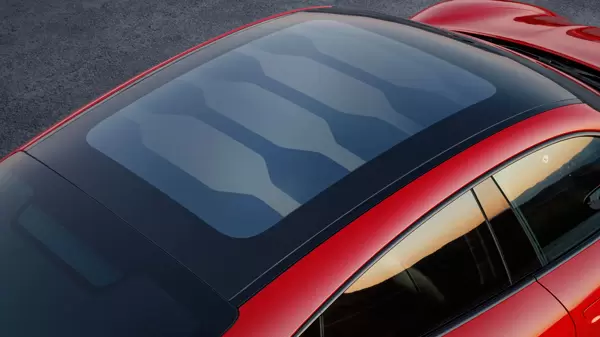
One of the biggest advantages of Automotive Smart Film is its ability to adjust light transmission according to actual driving conditions.
Instead of forcing drivers to choose between full transparency and complete shading, intelligent glazing provides multiple levels of adjustment that better reflect real-world use.
On bright summer afternoons, reducing light transmission helps decrease glare entering the cabin while making the upper seating area noticeably more comfortable.
During cloudy weather, increased transparency allows additional natural daylight to enter the vehicle, maintaining the spacious atmosphere that panoramic roofs are designed to create.
After sunset, maximum transparency restores a completely open viewing experience without unnecessary visual obstruction.
This flexibility becomes even more valuable during long-distance travel, where lighting conditions may change several times throughout the day.
Some advanced PDLC Smart Film systems now support multi-level dimming rather than simple on-and-off switching. By adjusting voltage input, the transparency of the glazing can change gradually instead of moving between only two fixed states.
This allows drivers to select lighting conditions that match personal preference instead of adapting to a limited number of predefined settings.
From a product engineering perspective, variable transparency improves overall usability far more than simply increasing the size of the panoramic roof.
Driving Situation | Preferred Roof Condition | Driver Benefit |
Strong summer sunlight | Lower light transmission | Reduced glare and improved comfort |
Cloudy weather | Higher transparency | More natural daylight inside the cabin |
Scenic driving | Fully transparent | Maximum panoramic visibility |
Vehicle charging or parking | Privacy mode | Improved interior privacy |
Evening travel | Transparent mode | Better outside visibility |
The emphasis is no longer placed on making the roof darker. The objective is to provide the appropriate lighting environment for each driving situation.
Privacy was once considered important mainly for executive vehicles.
Today, it has become relevant to a much broader range of drivers.
Electric vehicles are increasingly used for activities beyond transportation. Owners frequently remain inside their vehicles while waiting for family members, taking short breaks during business trips, responding to emails, or resting at charging stations.
During these moments, maintaining a certain degree of privacy significantly improves the overall cabin experience.
Traditional curtains and removable sunshades provide privacy by physically covering the glass, but they also occupy space, interrupt the vehicle's interior design, and require manual operation each time they are used.
A Privacy Smart Film system approaches the problem differently.
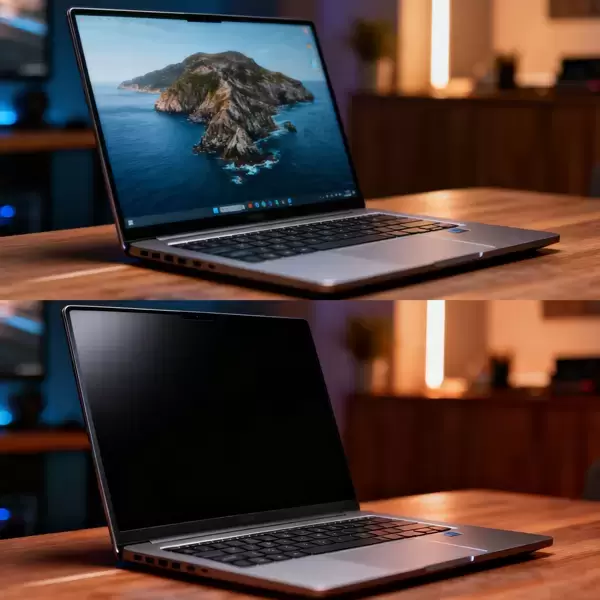
Once activated, the film changes from a transparent state to a uniformly diffused appearance, preventing clear visibility into the cabin while allowing soft natural light to remain inside.
This creates a more comfortable environment for activities such as:
· Short rest breaks during long-distance driving.
· Mobile office work while parked.
· Waiting inside the vehicle during passenger pickup.
· Family travel requiring additional privacy for children.
Because the transition occurs electronically, the roof can return to full transparency almost immediately whenever outside visibility is preferred.
This ability to switch between openness and privacy has become increasingly valuable as vehicle interiors continue evolving into multifunctional living spaces rather than simply seating areas for transportation.
Many first-time users are surprised that a panoramic roof can change appearance within seconds.
The operating principle behind PDLC Smart Film is straightforward, although the engineering involved in manufacturing the material is highly sophisticated.
Inside the laminated structure, microscopic liquid crystal droplets are dispersed throughout a polymer matrix.
When electrical power is removed, these liquid crystal molecules remain randomly oriented. Incoming light is scattered in multiple directions, producing a translucent appearance that improves privacy while diffusing direct sunlight.
When voltage is applied, the liquid crystal molecules align in a uniform direction. Light passes through the film with minimal scattering, restoring a clear and transparent view through the panoramic roof.
This optical transition occurs rapidly, allowing drivers to change the roof condition almost instantly.
For vehicle occupants, the technology appears simple.
Press a button.
Adjust the transparency.
Continue driving.
Behind that simple operation is a carefully engineered optical system designed to provide consistent switching performance throughout years of vehicle use.
Another important advantage is that PDLC Smart Film manages daylight instead of permanently reducing it.
Many conventional window films rely on fixed darkness levels that remain unchanged regardless of weather or driving conditions.
Dynamic glazing provides greater flexibility because light transmission can be adjusted according to actual environmental requirements instead of remaining constant throughout every journey.
Changing between transparent and diffused states is only one aspect of a vehicle-grade Smart Glass Film. For automotive manufacturers, the more important question is whether the material can continue delivering stable performance throughout years of daily operation.
Passenger vehicles operate under conditions that differ significantly from architectural applications. Every journey exposes glazing systems to vibration, repeated temperature changes, ultraviolet radiation, humidity fluctuations, and mechanical stress. A panoramic roof installed in a family SUV or an electric crossover may experience thousands of heating and cooling cycles during its service life.
For this reason, automotive-grade PDLC Smart Film is developed with long-term reliability as a primary objective.
Several performance characteristics receive particular attention during product development.
Temperature stability is one of them. Vehicles may remain parked outdoors during freezing winter nights before operating under intense summer sunshine only a few months later. A panoramic roof solution should maintain consistent switching performance across these changing environments without noticeable delays or optical irregularities.
Many automotive solutions are engineered to operate across temperature ranges of approximately -30°C to 100°C, allowing the optical system to remain stable under demanding seasonal conditions.
Durability is equally important.
Repeated switching should not lead to uneven transparency, localized discoloration, or visible performance differences across the glazing surface. Optical consistency remains an essential requirement because even minor defects become immediately noticeable on large panoramic roof panels.
Vehicle manufacturers also evaluate:
· Optical uniformity across large glass areas.
· Long-term UV resistance.
· Electrical reliability during continuous operation.
· Compatibility with curved laminated automotive glass.
· Stable performance after repeated environmental testing.
Meeting these requirements involves considerably more engineering than producing decorative smart film for interior partitions or office glass.
Energy management has become an increasingly important consideration throughout the automotive industry.
Every electrical component inside an electric vehicle contributes to overall power consumption. While the operating power required by PDLC Smart Film is relatively low, manufacturers still pay close attention to system efficiency because intelligent glazing is expected to integrate smoothly with the vehicle's electrical architecture.
The objective is not to replace climate control systems.
Instead, intelligent glazing works alongside existing thermal management technologies.
Reducing glare can improve passenger comfort before occupants feel the need to lower cabin temperature.
Managing incoming daylight more effectively can reduce localized heat around the upper seating area.
Providing privacy electronically removes the need for bulky mechanical accessories.
Each improvement may appear modest on its own, yet together they contribute to a cabin environment that feels more comfortable throughout daily driving.
For electric vehicles, this integrated approach aligns well with broader vehicle development goals that emphasize efficiency, intelligent interaction, and optimized user experience rather than relying on a single technology to solve every challenge.
Vehicle interiors have changed considerably over the past decade.
Large touchscreens, voice interaction, digital instrument clusters, over-the-air software updates, and advanced driver assistance systems have transformed the cabin into an intelligent environment rather than a traditional driving space.
The panoramic roof is gradually following the same direction.
Instead of functioning solely as a transparent window, it is becoming an interactive component capable of responding to user commands and environmental conditions.
This evolution fits naturally within the broader concept of the smart cockpit.
Drivers increasingly expect vehicle systems to adjust automatically instead of requiring constant manual intervention. Climate control regulates cabin temperature, adaptive headlights respond to surrounding traffic, and intelligent suspension adapts to changing road surfaces.
Managing incoming daylight through Switchable Film follows the same design philosophy.
Rather than asking occupants to install and remove sunshades throughout the year, the glazing system itself becomes part of the vehicle's intelligent control network.
As software-defined vehicles continue to develop, intelligent glazing is expected to integrate even more closely with cabin control systems, allowing lighting, privacy, and passenger comfort to be managed through a unified interface.
Although many premium electric vehicles now offer intelligent panoramic roofs directly from the factory, millions of vehicles already on the road continue using conventional panoramic glass.
For these owners, replacing the entire roof assembly is rarely practical.
This has created growing interest in retrofit solutions based on Self Adhesive Smart Film and related technologies.
Depending on the glazing structure and vehicle configuration, existing panoramic roofs can often be upgraded without replacing the original glass assembly. This approach allows owners to improve functionality while maintaining the factory appearance of the vehicle.
Professional installation remains essential because automotive glazing requires careful attention to electrical integration, optical alignment, edge sealing, and long-term environmental protection.
As installation techniques continue to mature, retrofit solutions are expanding the availability of intelligent panoramic roof technology beyond newly manufactured vehicles.
This trend also creates opportunities for automotive customization companies, vehicle refurbishment specialists, and premium aftermarket service providers seeking to offer higher-value cabin upgrades.
The role of panoramic roofs is changing.
Initially, they were introduced to improve aesthetics.
Today, they influence comfort, privacy, lighting quality, and the overall driving experience.
Future vehicle development is likely to place even greater emphasis on adaptive glazing systems capable of responding to changing environmental conditions without requiring additional accessories or manual adjustments.
Instead of asking drivers to choose between an unobstructed view and effective sun protection, intelligent roof systems allow both objectives to coexist.
This shift represents more than a material upgrade.
It reflects a broader transition in automotive engineering, where static components are gradually being replaced by systems that actively interact with passengers and their surroundings.
Within this trend, Automotive Smart Film, PDLC Smart Film, and Smart Window Film are expected to play an increasingly important role in next-generation electric vehicles, premium passenger cars, and intelligent mobility platforms.
The panoramic roof will remain an important design feature, but its value will no longer be measured simply by its size.
Its ability to adapt, protect occupants, improve comfort, and support a smarter cabin experience will become equally important.
Panoramic glass roofs have become one of the defining characteristics of modern vehicle design, offering brighter interiors, a stronger sense of space, and a more enjoyable driving experience. As expectations for vehicle comfort continue to increase, drivers also expect these roof systems to perform well under a much wider range of real-world conditions.
PDLC Smart Film provides a practical approach by allowing panoramic roofs to adapt to changing lighting environments instead of relying on fixed glass or traditional mechanical sunshades. Adjustable transparency, electronic privacy control, improved glare management, and compatibility with modern intelligent cockpit systems make it an increasingly valuable technology for both vehicle manufacturers and aftermarket upgrades.
As the automotive industry continues moving toward software-defined vehicles and smarter cabin environments, panoramic roofs are evolving from passive glass panels into functional, interactive systems. Intelligent glazing is becoming part of that transformation, helping create vehicles that are not only visually impressive but also more practical for everyday driving.