Why Is Auto Modification Smart Film Becoming Essential for EV Smart Cabin and Luxury Vehicle Privacy Systems?
Learn more >


When people hear “smart film,” they often imagine a complicated project: specialist installers, lamination, long downtime, and difficult wiring. That used to be true for many applications.
Self-adhesive smart film changes that completely.
By combining PDLC smart dimming technology with optical-grade double-sided adhesive, self-adhesive smart film turns smart glass into something you can apply directly onto existing glass – almost like putting on a high-end screen protector, but with full transparent / frosted switching.
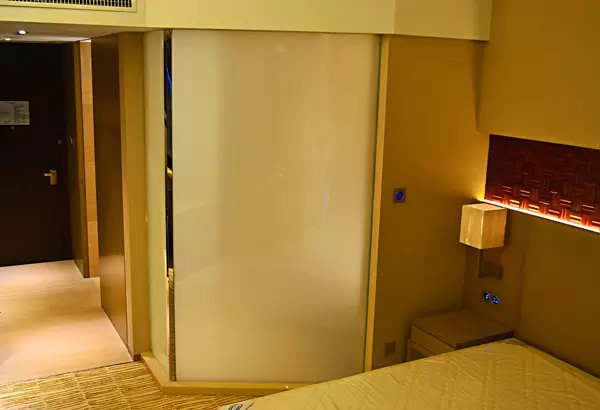
For brands, integrators and end users looking for a fast, low-disruption way to upgrade glass, this is a very practical solution. In this article, we’ll look at how it works, where it fits, and how Shuifa Singyes New Materials approaches self-adhesive smart film as both a product and a system.
Main product reference:
➤ Self-adhesive smart film product page
Self-adhesive smart film is a PDLC-based smart film with a pre-applied, optical-grade double-sided adhesive on one side.
Basic structure:
Two transparent conductive ITO layers
A PDLC liquid crystal layer in the middle
Protecting layers and self-adhesive backing on the installation side
Functionally it behaves like standard PDLC smart film:
Power off → frosted (privacy, soft light)
Power on → clear (normal transparent glass)
The difference is how you install it:
Clean glass → peel backing → align and stick → connect power.
No lamination line, no glass replacement, no long drying times. For many retrofit or light-renovation projects, this is a major time and cost advantage.
Traditional smart film often requires:
Professional installers
Careful lamination with liquid or specific adhesives
Controlled environment to avoid bubbles and dust
Self-adhesive smart film from Shuifa Singyes New Materials is designed to simplify this:
Clean the glass
Degrease and remove dust
Ensure the surface is smooth and dry
Peel the backing
Expose the optical-grade double-sided adhesive
Avoid touching the adhesive area with bare hands
Align and apply
Carefully align one edge
Use a squeegee or roller to press out air as you go
Connect the power
Follow the wiring guide for busbar connection
Hide cables in frames, ceilings or profiles
For small projects (like a bathroom door, a shop window, or a café partition), this can be handled by a local contractor or a trained in-house team, instead of requiring a full glazing replacement.
One common concern is whether self-adhesive versions “cut corners”. In this case, the smart film:
Retains the core dimming function – fast transparent/frosted switching
Keeps high transparency and controlled haze in clear state
Maintains strong obscuration in frosted state for privacy and soft light
Offers UV blocking to help reduce fading of interiors
Supports glare reduction when frosted
In other words, you get the same functional backbone as laminated smart film, but with a different installation mode.
For many use cases, it is essentially a “smart curtain replacement”: you get on-demand privacy and light control without physical fabric or slats.
Another strength of self-adhesive smart film is how broadly it can be used on glass:
Clear float glass
Tempered glass
Laminated glass
Low-E glass (in many configurations, depending on which side is coated)
This means you can target:
Existing office partitions
Home windows and doors
Storefronts and display cabinets
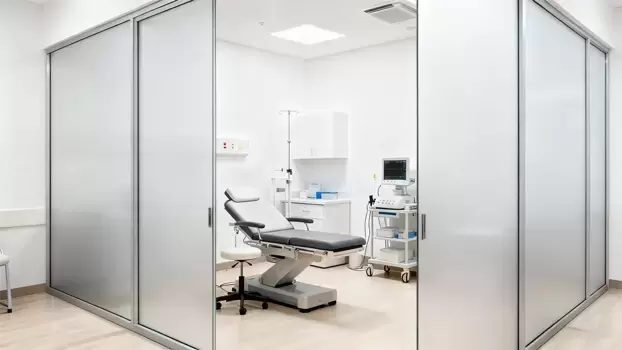
Partition glass in salons, cafés and clinics
Unlike factory-laminated smart glass, you do not need to remove and replace the glass panels. You simply turn ordinary glass into smart glass where it already stands.
The easiest way to understand self-adhesive smart film is to look at practical scenarios.
Application areas:
Bathroom doors and shower partitions
Bay windows and balcony doors
Kitchen partitions between cooking area and living area
Core value:
Replaces frosted glass or curtains
Provides privacy only when needed
Contains fumes or splashes while keeping an open feeling
For example, a family might:
Keep the bathroom glass clear most of the time
Switch it to frosted with a button or sensor when in use
Use it as a soft light panel in the evening, instead of heavy blinds
Because self-adhesive smart film is applied on existing glass, homeowners can upgrade without rebuilding the bathroom or changing the window frame.
Application areas:
Store windows and shopfronts
Nail salon and beauty salon partitions
Café and restaurant glass walls
Core value:
Show products clearly during the day
Switch to frosted mode as a projection screen for ads or ambience
Create private customer spaces when needed
Change the café or store atmosphere with one control
A typical pattern:
Morning to afternoon: glass stays clear to showcase products and interior
Evening: glass turns frosted, and projectors display dynamic content, menus or branding on the glass
During treatments or private consultations: smart film is turned to privacy mode
Instead of installing new walls, business owners get a flexible, reconfigurable display and privacy tool.
Application areas:
Exhibition booths
Museum display cases
Temporary event halls
Core value:
Quick setup of dynamic display walls from standard glass or acrylic
Protect exhibits after hours by switching to frosted mode
Use the glass as a projection surface for digital content
Because exhibitions often have tight schedules and temporary structures, self-adhesive smart film is ideal:
It can be applied just before the event
Removed or replaced for the next show, depending on substrate and adhesive handling
Allows exhibitors to reuse glass or frames while changing the visual concept each time
Application areas:
Apartment windows in rented homes
Glass partitions for co-working spaces and shared offices
Core value:
Lightweight alternative to heavy curtains or blinds
Tenant-friendly: can often be removed without major trace on the glass
Creates temporary meeting rooms or focus rooms in shared offices
Owners and operators gain flexibility:
A co-working operator might apply self-adhesive smart film to certain glass modules, creating “instant meeting rooms” that can be repurposed later.
A tenant might improve privacy and comfort without violating building rules about drilling or permanent modifications.
For the workplace, this supports dynamic layout changes without touching the base building structure.
Application areas:
RV side windows and skylights
Partition glass in camper vans and small buses
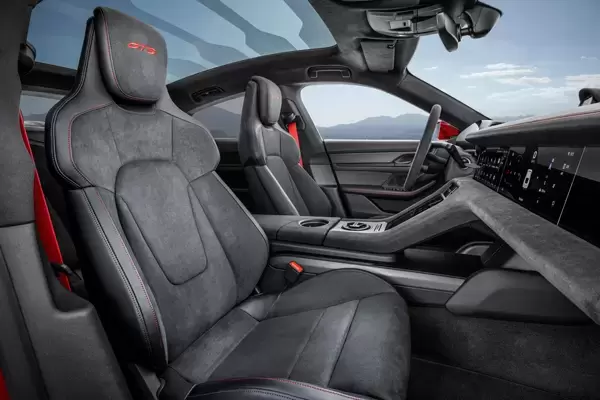
Vehicle sunroofs (in specific retrofit configurations)
Core value:
Replaces traditional shades or curtains in RVs, saving space
Offers quick upgrade to a “smart dimming roof” for suitable vehicles
Easier to install in specialty vehicles and low-volume conversions
For RV owners and converters:
Self-adhesive smart film can be used on interior glass surfaces where full laminated replacements would be too costly or complex
Privacy and glare control become controllable with switches or integrated controls
Shuifa Singyes New Materials already supplies automotive smart film in other product forms, so the self-adhesive range naturally complements that expertise in vehicle-related applications.
The concept of self-adhesive smart film as a “curtain replacement” or a “mark-free transformation tool” is more than a slogan.
In apartments, hotels and small offices:
Traditional curtains add bulk, collect dust and visually shrink the space
Blinds require hardware installation and can look dated
Self-adhesive smart film:
Stays flush with the glass, preserving clean lines
Requires only discrete wiring and a small control unit or switch
Can be controlled centrally or per-pane
Especially in modern minimal interiors, this keeps the design language cleaner and more consistent.
For landlords and tenants:
Drilling into frames or walls often needs approval
Permanent frosting or sandblasting is hard to reverse
Self-adhesive smart film can often be removed with appropriate techniques, making it:
Friendly for short- or mid-term leases
Suitable for shared offices that change layout and branding frequently
Useful for pop-up shops, seasonal stores and brand activations
The glass itself remains usable and neutral when needed; the “smart” function is carried by the film.
As a specialist in PDLC smart film and smart glass, Shuifa Singyes New Materials brings:
PDLC formulation and ITO conductive film know-how
Laminated smart film and smart glass production experience
Understanding of both B2B project needs and B2C-like scenarios such as home upgrades and small business retrofits
For the self-adhesive smart film line, this translates into:
Optical-grade double-sided adhesives that do not significantly degrade clarity
Stable electrical and optical performance comparable to standard smart film
Design support for wiring, busbar positions and integration into different frame types
You can explore product details and further technical information here:
➤ Self-adhesive smart film by Shuifa Singyes New Materials
Whether you are a homeowner, a contractor or a system integrator, a few practical tips will help your project go smoothly.
Surface preparation matters
Take time to clean glass thoroughly.
Remove any silicone residue, stickers or rough edges.
Plan the wiring path
Decide how to hide or route cables: through frames, ceilings, tracks or profiles.
Keep power supplies accessible for maintenance.
Start with a trial panel
For larger projects, test one panel first.
Confirm clarity, switching effect and wiring details before rolling out.
Combine with smart controls if needed
For offices and shops, consider linking smart film to lighting scenes or booking systems.
For homes, a wall switch plus simple remote or app integration may be enough.
Train users
Explain the basic do’s and don’ts for cleaning and operation.
Make sure staff or family members understand that it is an electronic material, not just decorative film.
Self-adhesive smart film is applied on top of existing glass, so the safety and structural performance still depend on the underlying glass. The film itself provides smart dimming, privacy and UV blocking, but it does not replace the role of tempered or laminated safety glass where required by code.
In general, smart film should be pre-cut to size according to design drawings. On-site cutting risks damaging the internal layers and busbars. Small adjustments may be possible in some cases, but it is better to work with precise dimensions from the start.
Clean it as you would normal glass, but:
Use neutral glass cleaners and soft cloths
Avoid sharp tools or abrasive pads
Be careful around the edges where the electrical connections are located
Yes, self-adhesive smart film can be applied to the interior surface of double-glazed units, as long as the glass surface is accessible. The electrical design and routing must be planned to avoid interfering with frames and seals.
When power is off, PDLC smart film returns to its frosted state. This means that in a power cut, privacy is preserved by default.