How to Choose PDLC Smart Glass for Building Curtain Wall Projects?
Learn more >


Smart glass is becoming an increasingly practical option in modern residential design. Homeowners and interior designers are using switchable glass solutions in bathroom partitions, bedroom windows, living room dividers, sunrooms, and other areas where privacy needs to change throughout the day. However, choosing the right product is not always straightforward, particularly when a renovation project involves existing windows or glass partitions.
Two common options are laminated smart glass and self-adhesive smart film. Both can use Polymer Dispersed Liquid Crystal (PDLC) technology to switch between transparent and frosted states, but their construction, installation requirements, and project suitability are different.
Laminated smart glass integrates the PDLC layer into a glass assembly during manufacturing. Self-adhesive smart film is designed to be applied to the surface of suitable existing glass. One is generally considered during glass production or replacement, while the other can offer an alternative for selected renovation projects.
For a Smart Home project, the decision should not be based on product price alone. Glass condition, installation access, electrical planning, safety requirements, appearance, and long-term maintenance all influence the final result. Comparing these factors before ordering helps homeowners and project contractors avoid unnecessary modifications after installation.
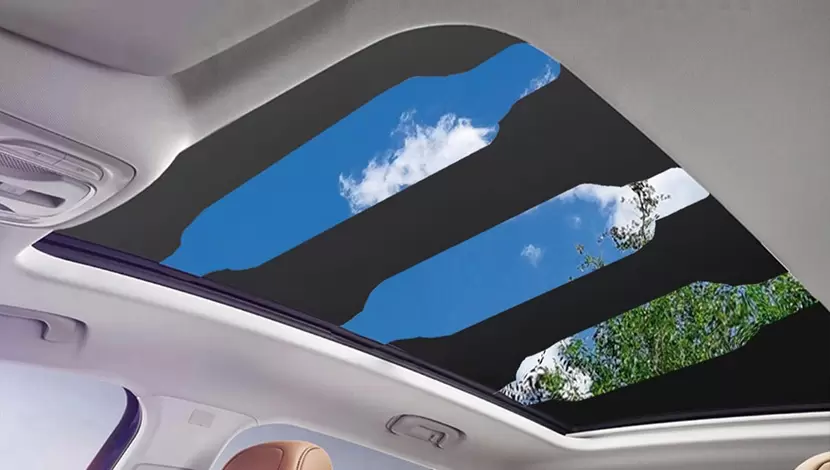
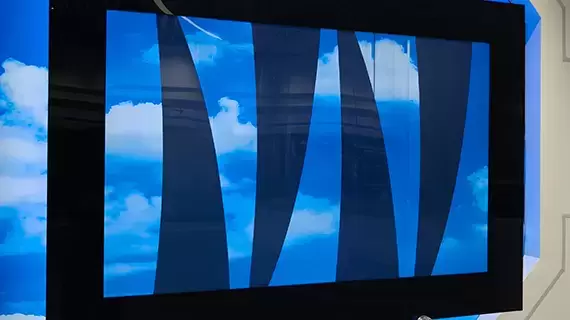
PDLC Smart Film contains liquid crystal material dispersed within a polymer matrix. When an electrical field is applied, the liquid crystal droplets become more regularly aligned, allowing light to pass through with less scattering. The film appears transparent. When the power is switched off, the liquid crystals return to a random arrangement, scattering incoming light and creating a frosted appearance.
This operating principle allows the same glass surface to serve different purposes depending on the user's needs. A glass partition can remain transparent during normal daily activities and switch to a private state when someone needs to use the enclosed space.
In residential applications, this function is relevant to several areas:
l Bathroom partitions: Glass can provide an open appearance when privacy is not required and turn frosted during bathing or changing.
l Bedroom windows: Residents can adjust the glass state according to their privacy requirements and daily routines.
l Living room dividers: Glass partitions can separate functional areas without permanently closing off the space.
l Home offices: A transparent partition can maintain visual contact with the rest of the home and become frosted during private calls or focused work.
l Walk-in closets: Switchable glass can separate dressing areas while maintaining a consistent interior design.
PDLC technology does not operate in the same way as conventional blackout curtains. Its frosted state scatters light rather than necessarily blocking all incoming light. The amount of light transmitted depends on the specific film, glass construction, and product specifications.
Another point concerns privacy at night. When indoor lighting is brighter than the outdoor environment, the visual effect may differ from daytime conditions. Homeowners should evaluate the intended privacy level under realistic lighting conditions rather than assuming that a frosted appearance guarantees complete visual concealment in every situation.
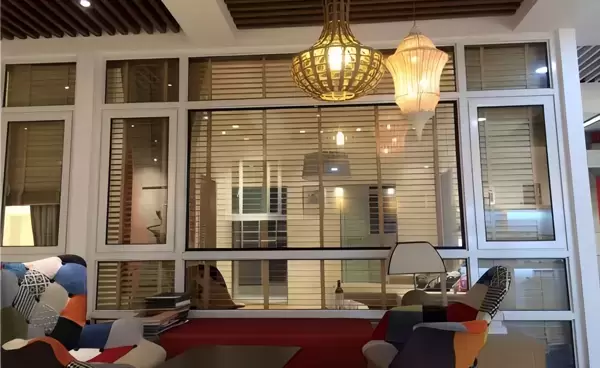
Laminated smart glass is manufactured by integrating a PDLC film or interlayer between glass sheets. The assembly is processed using a suitable lamination method so that the functional layer becomes part of the finished glass unit.
Since the PDLC material is enclosed within the glass structure, the active film is not directly exposed on the room-facing surface. This construction is particularly relevant to projects that require a finished glass product with a consistent appearance and defined dimensions.
The production process generally involves several coordinated steps, including glass preparation, PDLC interlayer positioning, lamination, and quality inspection. The exact process depends on the glass structure, interlayer materials, and manufacturing equipment.
For residential projects, the main advantage is that the smart function can be considered alongside the glass specification rather than added as a separate surface layer after the window or partition has already been installed.
Design teams can coordinate glass dimensions, thickness, edge treatment, electrical connections, and installation details before production. This is useful for projects involving multiple glass panels or custom interior layouts.
The PDLC layer is enclosed within the laminated glass assembly. This reduces direct contact between the active material and everyday cleaning activities compared with an exposed surface-mounted film.
However, the finished product still requires appropriate edge sealing, electrical connection protection, and installation practices. Lamination alone does not remove the need to consider moisture, temperature changes, mechanical stress, or the operating environment.
For bathrooms and other areas with frequent moisture exposure, project teams should confirm that the selected glass construction and electrical components are suitable for the intended location.
Laminated smart glass is often a practical option when a Smart Home project already includes new windows, replacement glass, or a complete interior renovation.
The glass manufacturer can work from approved drawings and dimensions, while the electrical contractor can plan the power supply and control wiring before the glass is installed. This reduces the likelihood of having to route visible cables or modify finished surfaces later.
For projects with curved or unusual glass shapes, the manufacturing team should review the design before production. Not every glass shape or lamination structure is suitable for every PDLC configuration.
Self-Adhesive Smart Film provides another way to introduce PDLC switching functionality into a residential space. Instead of manufacturing a new laminated glass assembly, the film is applied to the surface of suitable existing glass.
The film includes a self-adhesive layer that allows it to be attached to a properly prepared glass surface. Once installed and connected to a compatible power supply, it can switch between transparent and frosted states in a similar way to other PDLC products.
This approach is often considered when homeowners want to upgrade existing windows, office-style partitions, or interior glass doors without replacing the entire glass panel.
Replacing an existing glass partition can involve more than purchasing new glass. Contractors may need to remove frames, modify surrounding finishes, transport large panels, and coordinate installation with other renovation work.
Self-adhesive smart film can reduce the amount of glass replacement work when the existing panel is suitable. The original glass remains in place, while the film provides the additional switching function.
Nevertheless, the condition of the glass is important. Surface scratches, contamination, uneven areas, unsuitable coatings, and irregular edges may affect installation quality. Contractors should inspect the glass before confirming that a self-adhesive PDLC film is appropriate.
Installation quality has a direct effect on the appearance and performance of self-adhesive smart film. Dust, fingerprints, moisture, and other contaminants trapped between the film and glass may create visible defects.
The glass surface must be cleaned and prepared according to the manufacturer's installation requirements. Film alignment, edge finishing, electrical connection, and protection of exposed components also need attention.
For larger glass panels, installation should be handled by trained personnel with suitable tools and experience. An installation method that works on a small sample may not produce the same result on a full-height residential window.
Self-adhesive smart film is not a passive privacy layer. It requires a compatible power supply and appropriate electrical connections to switch between states.
Before installation, the contractor should identify the location of the power supply, cable route, transformer access, and control switch. If the film is being added to an existing Smart Home system, compatibility with the planned control equipment should also be checked.
The electrical design should be completed before the final film installation wherever possible. Leaving connection planning until the glass surface is finished can create avoidable installation difficulties.
Although both products can use PDLC technology, they serve different project conditions. The following comparison focuses on the factors that usually influence residential product selection.
Comparison Factor | Laminated Smart Glass | Self-Adhesive Smart Film |
Product construction | PDLC layer integrated between glass sheets | PDLC film applied to an existing glass surface |
Typical project stage | New construction, glass replacement, major renovation | Selected renovation and glass upgrading projects |
Existing glass required | Usually supplied as a complete glass assembly | Yes, a suitable existing glass surface is needed |
Functional layer | Enclosed within the glass structure | Installed on the glass surface |
Installation planning | Requires glass measurement, production, transport, and installation coordination | Requires glass inspection, surface preparation, film application, and electrical connection |
Appearance | Integrated glass finish | Depends on film quality, installation, and edge treatment |
Maintenance considerations | Glass surface can be cleaned normally, subject to product instructions and edge protection | Film surface and exposed edges require appropriate cleaning and care |
Customization | Based on glass dimensions and manufacturing capabilities | Based on available film dimensions and installation conditions |
Main selection factor | Glass specification and project design | Existing glass condition and renovation feasibility |
The comparison does not mean one product is universally better. Laminated smart glass is generally more suitable when the glass itself is being specified or replaced. Self-adhesive smart film can be more convenient when the existing glass is in good condition and the project aims to add a switching function without replacing the panel.
Cost should also be evaluated at the project level. The price of the film or glass is only one part of the total expense. Glass removal, transportation, installation labor, electrical work, surface preparation, and possible frame modifications can all affect the final budget.
The construction stage is one of the most useful starting points when choosing between laminated smart glass and self-adhesive smart film.
For a newly built Smart Home, laminated smart glass can be included in the architectural glass schedule from the beginning. Architects and contractors can coordinate the glass size, frame design, wiring routes, power supply, and control equipment before interior finishes are completed.
This is particularly useful for large glass partitions, bathroom enclosures, and floor-to-ceiling windows. The glass assembly can be produced according to approved project dimensions, provided that the design is compatible with the manufacturer's production capabilities.
Early coordination also helps avoid conflicts between the glass installation and other building services. For example, the location of the electrical connection should be considered alongside wall construction, ceiling access, and the position of the control switch.
During a major renovation, the choice depends on whether existing glass panels will be retained.
If the renovation already includes replacing windows or rebuilding glass partitions, laminated smart glass may fit naturally into the construction schedule. The contractor can arrange new glass production and installation together with other structural and interior work.
If existing glass is being retained, self-adhesive smart film may be worth evaluating. It can provide a switching function without automatically requiring a complete glass replacement.
The decision should account for the age and condition of the original glass, its dimensions, the surrounding frame, and access for installation. Older glass panels may have coatings or surface conditions that affect film compatibility.
For homeowners who only want to upgrade one or two glass panels, self-adhesive smart film may offer a more direct route, provided the glass is suitable.
However, small projects still require proper measurement and electrical planning. Film should not be ordered based solely on approximate window dimensions. The usable film area, wiring position, connection requirements, and edge treatment need to be confirmed in advance.
When several panels are involved, consistency becomes another consideration. Film orientation, visible wiring, edge finishing, and control grouping should be planned so that the completed installation looks uniform.
Product selection is only part of the purchasing process. Buyers also need to assess whether the manufacturer can supply the required material, process the product to the correct specifications, and provide technical information for installation.
For a residential project, the following points deserve attention.
Ask whether the supplier is offering laminated smart glass, self-adhesive smart film, or another type of PDLC product. Similar product names do not necessarily indicate identical construction.
Technical information should cover the available dimensions, thickness, electrical requirements, optical performance, and operating conditions. For laminated glass, the glass composition and interlayer structure should also be clarified.
The supplier should be able to explain which specifications are standard and which require customization. This distinction matters when project drawings include non-standard dimensions or special glass configurations.
A China Smart Film Manufacturer may offer different levels of production and processing capability. Some suppliers focus on film production, while others also provide cutting, lamination, or finished glass processing.
Buyers should confirm which stages are completed in-house and which are handled by external partners. This helps clarify production responsibility, quality inspection arrangements, and delivery coordination.
For projects involving multiple glass panels, it is also useful to confirm whether the supplier can maintain consistent product specifications across different production batches.
Smart Film OEM ODM services may be relevant when a project requires specific dimensions, film structures, packaging, or branding arrangements.
Before discussing customization, buyers should provide clear project information, including the application area, glass dimensions, expected quantity, installation method, and electrical requirements.
The manufacturer can then assess whether the requested configuration is technically feasible. Customization should be confirmed through drawings, samples, and written specifications rather than relying only on verbal descriptions.
A sample evaluation can help buyers assess transparency, frosted appearance, surface quality, and switching behavior before placing a larger order.
For laminated smart glass, a sample should represent the intended glass structure as closely as practical. For self-adhesive smart film, the test should use a glass surface similar to the one planned for the project.
Buyers should also request relevant technical documents and test reports where applicable. If a project has specific safety, environmental, or building requirements, the required evidence should be confirmed before procurement.
A smart glass installation needs more than a PDLC product and a power supply. The electrical and control arrangements determine how easily residents can operate the glass in daily use.
For a simple installation, a wall switch may be sufficient. Larger residential projects may require remote controls, grouped switching, or integration with a centralized Smart Home automation system.
PDLC smart glass and film require a compatible power supply. Buyers should confirm the product's electrical specifications and the number of panels that will be connected to each power unit.
The power supply should be selected according to the total connected load and the manufacturer's instructions. It should also be installed in a location that allows appropriate ventilation, access, and maintenance.
Not every glass panel needs to operate at the same time. A bathroom partition, bedroom window, and living room divider may have different operating schedules and privacy requirements.
Dividing the installation into control zones allows residents to operate individual areas without changing the state of every glass panel in the house.
For example, a homeowner may want the living room glass to remain transparent while the bathroom partition is frosted. The electrical layout and control system should support this arrangement.
Some Smart Home systems support centralized control through compatible relays or other control interfaces. However, compatibility should never be assumed from the product name alone.
The glass supplier, electrical contractor, and automation integrator should confirm the required control signals, power arrangements, and switching logic before installation.
If voice control, mobile applications, or scheduled operation are required, these functions should be tested as part of the complete system rather than treated as automatic features of the PDLC film itself.
Several avoidable mistakes can affect product performance, installation quality, and project cost.
Choosing based on price alone
A lower film price does not necessarily mean a lower project cost. Existing glass condition, preparation work, electrical installation, and labor can change the overall budget. Compare complete installation costs rather than material prices alone.
Assuming self-adhesive film fits every glass surface
Glass coatings, surface defects, dimensions, and installation access can affect compatibility. The original glass should be inspected before an order is confirmed.
Treating frosted mode as complete blackout
PDLC technology scatters light to reduce visibility. It does not necessarily provide the same darkness as an opaque blind or blackout curtain. Projects requiring complete darkness should consider additional shading.
Leaving electrical planning until the end
Power supply locations and cable routes should be decided before the glass or film is installed. Late electrical modifications can affect the finished appearance and increase labor.
Ignoring maintenance and environmental conditions
Bathrooms, sunrooms, and skylights have different operating environments. Product selection should account for moisture, temperature variation, sunlight exposure, and the manufacturer's stated operating limits.
Laminated smart glass and self-adhesive smart film both provide ways to introduce PDLC switching functionality into residential spaces, but they address different installation conditions.
For new construction and projects involving glass replacement, laminated smart glass offers an integrated product structure that can be coordinated with architectural drawings and electrical planning. For selected renovation projects where existing glass can be retained, self-adhesive smart film may provide a practical alternative.
The most reliable choice comes from evaluating the actual glass, project stage, privacy requirements, electrical layout, and expected maintenance conditions. Homeowners should also confirm product specifications and installation responsibilities with the supplier before placing an order.
Zhuhai Shuifa Singyes New Materials Technology Co., Ltd. works with smart film and smart glass products for architectural and other application fields. Its product range includes PDLC smart film and laminated smart glass, with related processing capabilities supporting different project requirements. Buyers considering a residential application can review the laminated smart glass product page and the Smart Home application page for further product and application information.
A well-planned Smart Home glass installation should begin with the right product structure, not simply the most convenient installation method. Matching the glass solution to the building conditions and the way residents use each space will lead to a more practical and consistent result.