How to Choose the Right ITO Film for Your Touch Screen Project
Learn more >


Exhibition: Glasstec 2026
Location: Messe Düsseldorf, Germany
Dates: October 20–23, 2026
Booth: 11A88-1
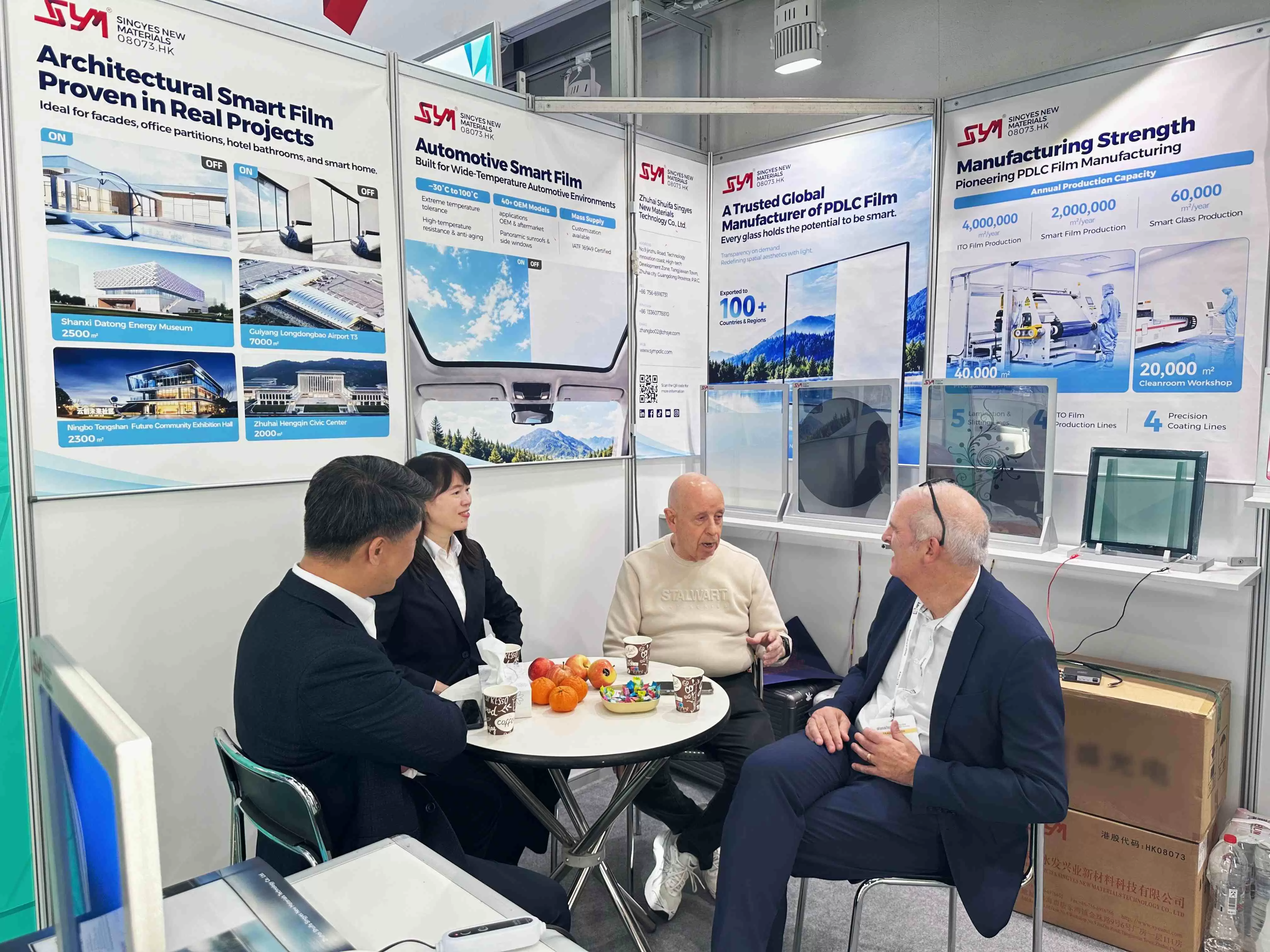
Zhuhai Shuifa Singyes New Materials Technology Co., Ltd. participated in Glasstec 2026 from October 20 to 23 in Düsseldorf, Germany. At Booth 11A88-1, the company presented its PDLC smart film, etched smart film, multi-color smart glass and customized glass solutions to professionals from the international glass industry.
The exhibition provided an opportunity to showcase the company's product range and manufacturing capabilities while discussing the practical requirements of different smart glass applications. From switchable privacy glass to decorative film patterns and large-format glass walls, the products on display reflected the variety of functions and design requirements that smart film materials can support.
For glass manufacturers and project developers, choosing a suitable material involves more than appearance alone. Glass dimensions, electrical connections, processing methods and the intended application all influence the final product. These considerations remain important when developing customized smart glass for commercial buildings, interior spaces and other specialized environments.
The company's display covered several product categories, including PDLC smart film, etched smart film, multi-color smart glass, ITO film and ESD film. Each serves a different purpose, giving customers more options when selecting materials for specific applications.
PDLC Smart Film
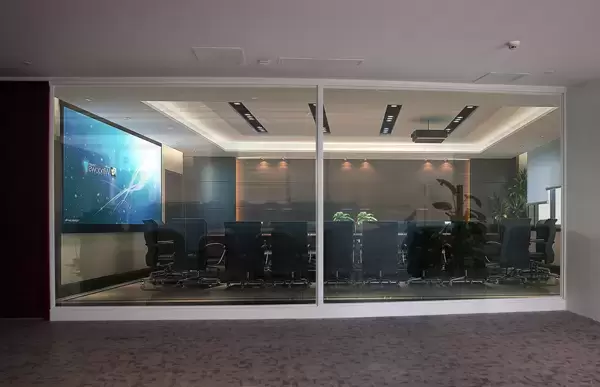
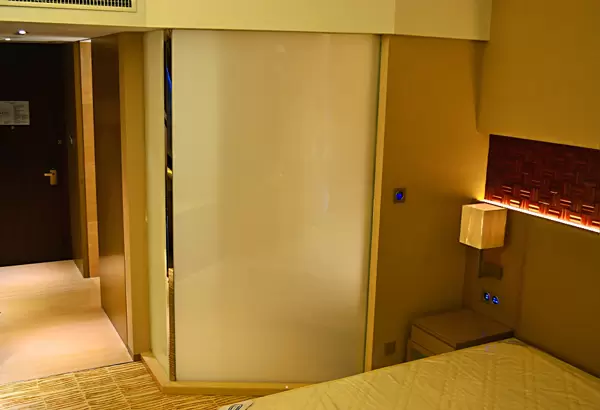
PDLC smart film is designed to provide switchable privacy when integrated into compatible glass and connected to a suitable electrical system. It is commonly considered for office partitions, hotel bathrooms and architectural glazing where privacy requirements change throughout the day.
Product selection depends on the glass structure, required optical performance and installation conditions. For manufacturers, confirming these details before production helps ensure that the selected film is compatible with the intended glass assembly.
Etched Smart Film
Etched smart film offers additional flexibility for projects requiring specific patterns or defined functional areas. Pattern processing needs to be coordinated with the glass dimensions, conductive layout and electrical connections to achieve the intended result.
This is particularly relevant for customized glass designs where decorative requirements and switching functions must work together. Reviewing drawings and samples before production can help confirm that the pattern matches the final glass configuration.
Multi-Color Smart Glass
Color selection plays an important role in many architectural and interior projects. White and black PDLC film, together with other available color options, can give designers and glass processors more flexibility when coordinating smart glass with the surrounding environment.
The final configuration should be assessed against the project's appearance, processing and functional requirements. Color alone does not determine whether a particular film is suitable for a finished glass product.
Large-Format Smart Glass
Large-format smart glass walls require careful coordination of dimensions, film positioning, lamination and electrical routing. When several panels are installed within the same space, consistency in appearance and switching performance also becomes an important consideration.
Early communication between the film supplier, glass processor and installation team helps establish clear specifications before manufacturing begins.
[Suggested image: Product display showing PDLC smart film, etched patterns and multi-color smart glass]
Not every smart glass project can use the same standard dimensions or configuration. Office partitions, hotel interiors, decorative glass and large architectural installations may require different film sizes, patterns and processing arrangements.
Zhuhai Shuifa Singyes New Materials provides customization options for different smart film applications. The company's exhibition materials indicate film widths of up to 2 meters, offering a useful reference for customers assessing their dimensional requirements.
Customization usually begins with the details of the finished glass product. Film dimensions, glass shape, active areas, edge conditions and electrical connection positions may need to be confirmed before processing. Projects involving etched patterns or non-standard sizes may also require sample evaluation to verify the proposed design.
Clear specifications help reduce avoidable changes during manufacturing. They also give the supplier and customer a shared basis for checking product compatibility, production arrangements and delivery expectations.
For international buyers, the ability to discuss these details is an important part of supplier evaluation. A suitable smart film solution should meet the actual requirements of the project rather than simply match a general product description.
Zhuhai Shuifa Singyes New Materials Technology Co., Ltd. is listed on the Hong Kong Stock Exchange under stock code 08073.HK. The company has experience in ITO film and PDLC smart film research and production, with manufacturing processes covering ITO production, PDLC formulation development, cutting to size and glass lamination.
These processes connect material development with downstream glass manufacturing. ITO film provides conductive properties in relevant product structures, while PDLC formulation development supports the production of switchable film. Cutting and lamination prepare materials for integration into finished glass assemblies.
Coordination between these stages matters because the quality of the finished product depends on both the materials and the way they are processed. Clear production specifications and suitable quality checks help maintain consistency when materials are prepared for different applications.
The company's exhibition materials also highlighted more than 120 granted patents and a range of quality and management systems. These details reflect its work in material development and manufacturing. For buyers assessing a supplier, the next step is to confirm how the available products, specifications and production capabilities match the requirements of their own projects.
120+ granted patents
Up to 2-meter film width
ITO film production and PDLC formulation development
Cut-to-size processing and glass lamination
The figures and capabilities above are based on the company's exhibition materials. Product specifications and processing availability should be confirmed for each individual project.
[Suggested image: Manufacturing equipment or product display illustrating smart film production capabilities]
Smart film can be used in a variety of architectural and commercial settings, but each application has its own priorities.
In offices, switchable glass partitions can provide privacy for meetings while preserving an open appearance when privacy is not required. In hotels, smart glass may be used for bathroom partitions and interior glazing where privacy and design need to be considered together.
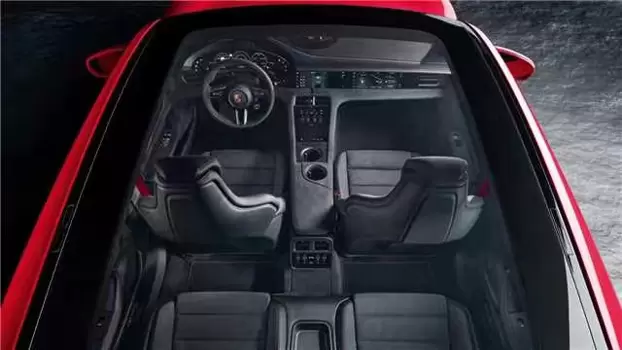
Architectural projects may place greater emphasis on panel dimensions, installation conditions and coordination with building systems. Decorative applications can require customized colors or patterns, while large-format glass installations need careful planning for alignment, lamination and electrical connections.
These differences make application-specific product selection important. A configuration suitable for one project should not automatically be assumed appropriate for another. Glass construction, operating conditions, electrical arrangements and required performance all need to be considered before the final specification is approved.
Early technical communication helps manufacturers and project teams identify potential constraints before production begins. Confirming drawings, samples and inspection requirements also provides a clearer basis for quality control and delivery planning.
In addition to PDLC smart film, the company's exhibition materials included ITO film and ESD film. These materials serve different purposes and should be selected according to their intended functions.
ITO film is relevant to applications requiring transparent conductive properties. In a suitable smart film structure, its conductive layer forms part of the electrical arrangement that enables operation. Its integration needs to be considered alongside the other material layers and the processing method used in the finished assembly.
ESD film serves a different function and is not a substitute for PDLC smart film. For buyers reviewing a supplier's product portfolio, understanding the role of each material helps narrow the selection to products that match the project's technical requirements.
The company's experience with related film materials provides a basis for discussions about product structures, compatibility and downstream processing. The final choice should always be based on confirmed specifications and the requirements of the intended application.
Glasstec 2026 gave Zhuhai Shuifa Singyes New Materials an opportunity to present its work in PDLC smart film, etched smart film, multi-color smart glass and customized glass applications to the international glass industry.
The exhibition also highlighted the relationship between material development, manufacturing processes and practical application requirements. As smart glass projects become more varied, customers need solutions that balance optical performance, design flexibility, processing compatibility and reliable production.
Zhuhai Shuifa Singyes New Materials will continue to develop smart film materials and customization options for customers in architectural and other relevant markets. Cooperation with glass processors and project partners remains important when translating material capabilities into finished products that meet specific application requirements.
Visitors who met the company at Booth 11A88-1 during Glasstec 2026 are welcome to continue discussions about PDLC smart film, etched film, multi-color options and customized smart glass solutions.
For product inquiries and project discussions, please visit the official website at https://www.sympdlc.com/.