What Is Electrochromic Film and Why Is It Transforming Modern Smart Glass Applications?
Learn more >


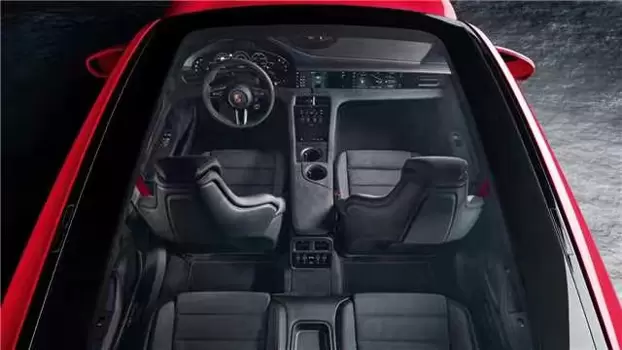
Automotive glass rarely follows one standard shape. Side windows, rear windows, sunroofs and interior partitions can differ considerably in dimensions, curvature, edge structure and available installation space. When switchable film is integrated into these components, the film needs to correspond closely with the actual glass design rather than being treated as a fixed-size material.
For vehicle manufacturers, glass dimensions are usually determined by the body structure and styling requirements. A small change in the glass outline can affect the active area, connection position and installation clearance. Curved surfaces can introduce additional considerations because the film must remain properly positioned across the intended area without compromising the appearance or switching function.
This makes dimensional customization an important part of automotive smart film development. The supplier needs to work from accurate glass information and understand how the film will be incorporated into the finished glazing.
The shape of a vehicle window is closely connected to the body design. Side windows may have tapered edges or irregular outlines, while rear windows can include large curved areas and complex perimeter shapes. Sunroofs may also use different dimensions and geometries depending on the roof structure.
These differences mean that the same film specification cannot simply be transferred from one vehicle model to another.
The initial design review should establish the actual glass outline and identify the portion intended for switching. The overall glass dimensions are only one part of the information required. The active area, edge clearance and electrical connection region also need to be defined.
A typical dimensional review may cover:
· Overall glass length and width
· Glass curvature
· Active switching area
· Edge clearance
· Connection position
· Mounting and sealing areas
· Adjacent trim components
· Areas that must remain outside the active zone
A clear distinction between the glass outline and the active film area helps prevent dimensional conflicts during later processing.
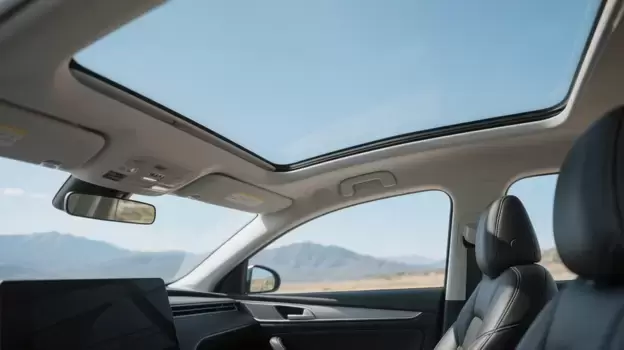
Curved automotive glass presents a different challenge from flat panels. The film must follow the intended surface while maintaining the required position throughout the active area.
The degree and direction of curvature can vary between vehicle components. Some glazing has relatively gentle curvature, while other designs use more pronounced shapes to follow aerodynamic body lines.
The supplier therefore needs accurate information about the glass geometry before confirming the film configuration.
Curvature can affect several aspects of the finished assembly:
· The available active area
· The position of the film relative to the glass
· Edge clearances
· Electrical connection placement
· Assembly tolerances
· Visual uniformity
The relationship between these factors needs to be evaluated as one system. Increasing the active area, for example, may reduce the space available around the perimeter for connections or installation requirements.
For prototype development, representative glass samples are particularly useful. They allow the film configuration to be checked against the actual geometry instead of relying entirely on two-dimensional drawings.
The entire glass surface does not always need to be covered by the active film.
Automotive glazing may contain areas reserved for mounting, sealing, electrical connections or structural requirements. Some regions may also be hidden behind trim after assembly.
The active area should therefore be defined according to the actual visual and functional requirements of the vehicle.
For example, a side window may require a large continuous switching area, while an interior partition may use a defined section based on the layout of the passenger compartment. A sunroof may require a different arrangement because the surrounding roof structure and shade system influence the usable glazing area.
During design confirmation, it is useful to separate the following dimensions:
Overall glass size → usable glass area → active film area → connection area
Each dimension serves a different purpose. Treating them as identical can create unnecessary complications during manufacturing and installation.
Automotive smart film can be used across several types of glazing, but the requirements are not identical.
Sunroofs often have larger uninterrupted viewing areas and may use distinctive roof geometries. Side windows are closely integrated with doors, seals and lifting mechanisms. Rear windows may have complex outlines and additional vehicle components around the glass. Caravan partitions have different structural and functional requirements again.
The film configuration should therefore be developed around the specific component.
Automotive glazing | Main dimensional consideration |
Sunroof | Large active area, roof curvature and surrounding structure |
Side window | Door structure, edge clearance and moving components |
Rear window | Irregular outline, curvature and surrounding body structure |
Caravan partition | Interior dimensions, partition layout and installation method |
This approach also makes it easier to manage different vehicle models. Each model can have its own approved film dimensions and connection arrangement rather than forcing several applications into one generic specification.
The perimeter of automotive glass is not simply unused space. It may contain sealing areas, mounting structures, connectors or other components that need to remain clear.
The distance between the active film area and the glass edge therefore needs to be established during design.
If the active area extends too close to the edge, there may not be sufficient space for the electrical connection or surrounding installation components. If the inactive border is unnecessarily large, the finished switching area may not provide the intended visual coverage.
A balanced edge design should consider:
· Required electrical connection space
· Glass processing requirements
· Sealing position
· Mounting structure
· Visible border requirements
· Installation tolerance
The final border should be confirmed against the actual glass construction and vehicle assembly method.
Electrical connection points need to be located where they can be reached during assembly and protected after installation.
For a flat architectural panel, the connection position may have relatively few restrictions. In a vehicle, available space can be limited by frames, seals, trim, wiring harnesses and moving components.
The film layout may therefore need to be adjusted according to the connection location.
For each vehicle glass configuration, the design team should confirm:
· Where the connection is located
· Which direction the cable exits
· How much space is available around the connection
· How the connection is protected during installation
· Whether the connection remains accessible for service
· Whether the cable path conflicts with other vehicle components
This is one reason dimensional customization cannot be separated from electrical design. The shape of the active area and the location of the connection need to work together.
Automotive manufacturers develop vehicles with different body sizes, window proportions and styling requirements. Even two models from the same manufacturer may use completely different glass dimensions.
A supplier providing customized smart film can adjust the film dimensions to match the approved vehicle glass instead of relying only on standard sizes.
Customized sizing can be important when dealing with:
· New vehicle platforms
· Different wheelbase versions
· Passenger and commercial vehicles
· Different roof configurations
· Special-purpose vehicles
· Caravan interiors
· Aftermarket replacement glass
The purpose of customization is not simply to make the film larger or smaller. The complete dimensional relationship between the glass, active area, edge region and connection needs to remain consistent with the vehicle design.
Automotive glass can contain curved corners, angled edges, narrow sections or other irregular boundaries. These details should be represented clearly in the technical drawings used for production.
A simple length and width measurement may not provide enough information for an irregular panel.
The drawing package may need to show:
· Complete glass outline
· Reference points
· Radius or curvature information where applicable
· Active area boundary
· Connection location
· Required inactive regions
· Orientation
· Installation reference
Accurate drawings also help prevent mistakes when several similar panels are used in the same vehicle.
Where the left and right sides have different shapes, they should be treated as separate configurations even if their overall dimensions appear similar. The same applies to front and rear sections or different vehicle variants.
Every manufacturing and installation process has tolerances. Automotive glass, film cutting, assembly, sealing and vehicle body construction all involve dimensional variation within controlled limits.
The film size therefore should not be determined by nominal dimensions alone.
The engineering team needs to understand how the approved glass dimensions relate to the actual assembly tolerances. Sufficient clearance must be maintained where necessary, while the active area still covers the intended region.
Tolerance review is particularly important around:
· Glass edges
· Curved sections
· Connection areas
· Sealing interfaces
· Mounting points
· Adjacent trim
The goal is to create a configuration that remains practical during real assembly rather than one that only fits an ideal drawing.
Changing the shape of the glass should not create obvious differences in visual performance across the active area.
When the film is switched, the appearance should remain as uniform as the approved configuration allows. Irregular outlines can make differences around corners or narrow sections more noticeable, so the complete assembly needs to be reviewed.
For vehicle manufacturers, evaluation can include:
· Clear-state appearance
· Switched-state uniformity
· Edge transition
· Color consistency
· Haze
· Visual appearance under different lighting conditions
Adjacent pieces of glass should also be considered when several panels form one visual area. Differences between panels can become noticeable through the vehicle exterior or interior, particularly when the glazing is large.
For standard rectangular glazing, dimensional confirmation may be relatively straightforward. More complicated vehicle glass benefits from physical prototype evaluation.
A representative sample can confirm whether the film follows the intended glass geometry, whether the active area is positioned correctly and whether the connection region works with the surrounding structure.
Prototype evaluation can also identify issues that may not be obvious in technical drawings.
The review process may include:
· Checking the film against the actual glass outline
· Confirming the active area
· Inspecting the edge region
· Checking the connection position
· Reviewing the installed appearance
· Operating the switching function
· Confirming compatibility with nearby components
Any dimensional change identified during prototype testing should be reflected in the controlled production drawing before the configuration moves forward.
A supplier supporting multiple vehicle models needs a reliable way to distinguish their film configurations.
Each model may have its own:
· Glass dimensions
· Active area
· Connection position
· Control arrangement
· Glass construction
· Installation requirements
Maintaining separate engineering records helps prevent one model's configuration from being incorrectly applied to another.
This becomes increasingly important when the supplier supports several vehicle types, including passenger cars, commercial vehicles, buses and caravans. Their glass shapes and installation environments can be substantially different.
Shuifa Singyes New Materials provides customized sizing for automotive smart film and has reported applications across more than 40 vehicle models. Such projects require the film configuration to be matched to the specific vehicle glazing rather than treated as a universal product size.
The purpose of dimensional customization is to make the smart film fit the vehicle glass accurately while keeping manufacturing and installation practical.
A good configuration should provide sufficient active coverage, appropriate edge clearance, accessible electrical connections and compatibility with the surrounding vehicle structure.
For automotive manufacturers, the most useful starting point is accurate glass information. Once the supplier has the approved geometry, active-area requirements and installation conditions, the film can be developed around the actual vehicle rather than adapted from a generic configuration.
Automotive Smart Film can therefore be supplied in different dimensions and configurations to support different vehicle glazing designs. The engineering focus should remain on the relationship between the film and the finished glass assembly.
For sunroofs, side windows, rear windows and caravan partitions, the final requirements may vary considerably. Careful dimensional definition, accurate drawings, prototype verification and controlled production information help ensure that the film remains compatible with the intended vehicle glass.
The result is not simply a film that matches a particular length and width. It is a switchable glazing component whose dimensions, active area, connection position and installation interfaces have been developed around the actual vehicle design.