What Is Smart Film Technology for Vehicle Windows
Learn more >


A sheet of PDLC film can turn a panoramic roof into a controllable shade in summer and into a private lounge at night. Fit that same film to a windshield and the result is a safety problem rather than a feature. The gap between those two outcomes is why the question of where automotive smart film applications belong matters more than the question of which brand to buy.
This article answers that question one window at a time, in the form of the questions buyers actually ask. Each section takes a specific opening, states what the film can realistically deliver there, and sets out the constraints that decide whether the idea works at all. It ends with the evidence to request before a specification is released, so that the answer you reach on paper survives contact with a real vehicle.
Product and performance details below are drawn from the automotive smart film range published by Shuifa Singyes New Materials and from public technical standards. Figures taken from a product page describe the film under stated test conditions. They are not a guarantee for a finished assembly, and the assembled part should always be retested.
Yes, and the reason is mechanical rather than marketing. PDLC film works by scattering light. In its energised state the liquid crystals align and the layer clears; with power removed they scatter incoming light and the glass turns milky. That mechanism explains both the appeal and the boundary. A frosted state is not a blackout, and a clear state is not identical to untreated glass. How those two states read to a driver, a passenger or an inspector depends heavily on the glazing around them.
Four variables change from one opening to the next.
Regulated vision area. Most markets set a minimum visible light transmission for glazing the driver looks through. UNECE Regulation No. 43, widely used as a baseline outside North America, requires a regular transmittance of at least 70 percent for safety glazing in the windshield and side windows relevant to the driver's field of view. Local rules differ and some allow lower values on rear glass, but the principle holds: the front of the cabin is measured far more strictly than the back.
Curvature and size. Windshields and rear screens are strongly curved, often heated, printed with antenna elements or bonded to sensors. Side glass is flatter and easier to laminate or retrofit. A film that conforms neatly to a door window may wrinkle or show optical distortion on a deeply curved screen.
Solar load. The roof and windshield take the greatest solar input. Research published by the US National Renewable Energy Laboratory on vehicle thermal management shows how strongly glazing area and orientation drive cabin heat gain. The position that needs heat control most is often the one under the tightest visibility rules.
Power and routing. Every switchable opening needs a conductor busbar and a hidden feed to the controller. Running that feed through a door card is straightforward. Running it through a heated, sensor-filled windshield assembly is not.
These four factors are why one automotive smart film specification cannot serve every window, and why a supplier quoting a single price for the whole car should be asked to break it down opening by opening.

Technically yes. For most programmes the practical answer is not to do it.
Start with visibility. The driver looks through this glass, so it falls under the strictest transmission requirements. A film in its energised state still carries residual haze, and in its scattered state it destroys the forward view. Neither condition suits a primary vision surface during normal driving. If a project genuinely needs a switchable windshield, the realistic configuration is a small, clearly defined zone that stays clear while the vehicle moves, with switching limited to stationary use. That concept has to be validated on the complete laminated assembly, not on a film sample.
Then consider what is mounted to the glass. Modern windshields carry head-up display projection areas, rain sensors, cameras for advanced driver assistance and, increasingly, heating elements around sensor windows. A scattering layer behind a head-up display will diffuse the projected image. A layer in front of a camera changes the optical path the calibration assumes. Both problems are expensive to discover after tooling has been committed.
There is also a thermal irony here. The windshield delivers a large share of cabin solar load, exactly where a heat-control film would help most. But heat-control claims have to be weighed against the visibility and sensor constraints above. Conventional metalized or ceramic windshield shades remain the practical answer for many platforms, while switchable film is better reserved for other openings. If the brief really calls for a changeable windshield, involve the glazing supplier, the sensor supplier and the certification body at concept stage rather than treating it as a product selection exercise.
These are a common application because they offer a workable compromise. The driver needs a clear view through them, yet occupants want shade and privacy. Switchable film resolves that conflict better than a permanent dark tint: clear when visibility matters, scattered when the car is parked or when the driver chooses.
The constraint is again regulatory. Many jurisdictions set a minimum light transmission for the driver's side glass, and enforcement practice can be tighter than the written standard. A dark film that passes on paper may still attract attention if its scattered state looks heavily tinted from outside. For this position a high-transmission white or light grey construction is usually the safer specification. It gives a visible privacy change when power is removed, while the clear state integrates with standard original glass.
Fitment method matters too. A self-adhesive film applied inside an existing door glass keeps a retrofit simple and avoids replacing the pane. A laminated construction, with the film sealed in the interlayer during glass manufacture, gives better optical stability and durability but requires an OEM or tier-one production route. The choice is not about which product is better in the abstract. It is about whether you are building a new vehicle or upgrading an existing fleet.
Night driving deserves a separate test. In the scattered state a light-coloured film still passes light and can pick up reflections from oncoming headlamps. Specify and evaluate the film under night conditions rather than only in a showroom, and confirm that the clear state meets the customer's expectation for outward visibility.
Rear side glass. There is no driver sightline requirement on the same scale, so a lower-transmission construction becomes acceptable and the privacy effect is much stronger. This is the position to use when the brief mentions VIP transport, chauffeur services, family vehicles or ride-hailing interiors, a theme developed further in the article on smart film in EV cabins and luxury privacy systems.
A black or dark-grey film works particularly well here. The dark dye reduces light in both states, so the scattered condition reads as real privacy rather than a pale frost. In the energised condition the pane still clears, which is the advantage over a fixed limousine tint: the cabin can be opened up when the customer wants daylight or a camera-friendly interior.
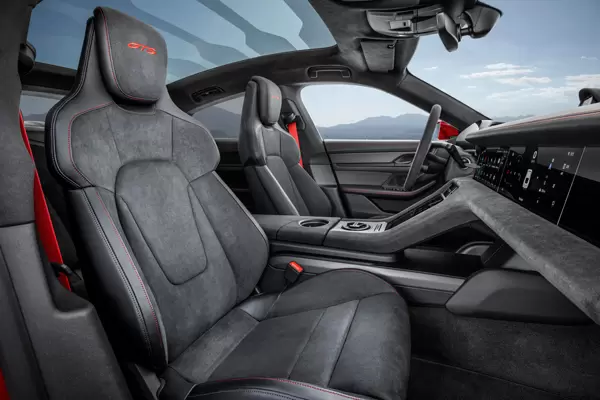
For luxury and executive vehicles, the rear cabin is increasingly treated as a controlled environment rather than just seating. Switchable glass can be paired with zoned control so that passengers adjust their own side of the vehicle, and with etched patterns carrying a brand mark or a subtle gradient. Those options are normally specified together with the film, because the etching and the busbar layout have to be designed as one drawing.
Fleet buyers follow a different logic. A taxi or shuttle operator cares less about brand expression and more about consistent privacy, easy cleaning and a predictable failure rate. For that buyer, a standard dark construction with a documented quality system and traceable batches is worth more than a bespoke pattern. The article on black automotive smart film for privacy car windows goes into the optical differences in more detail.
It is mentioned less often than the sunroof, yet it delivers a clear privacy and comfort benefit, especially on SUVs and estate bodies where the glass area is large and close to the rear seats.
Three practical details separate a successful rear-window installation from a disappointing one. Most rear screens carry a demister circuit printed or bonded to the glass, so the switchable layer has to be integrated without interfering with it and the busbar must avoid the heater tracks. The glass is often more curved than a door pane and may include a wiper park area, which affects where the film can terminate cleanly. Rearward visibility is still a safety function, so even where the letter of the law is looser, the clear state should leave the driver with a usable view through the mirror or camera.
The construction choice is rarely obvious here. A retrofit fleet may use self-adhesive film on the inner face, while a new platform can specify a laminated module with the switchable layer sealed inside. Both approaches work; they simply belong to different production models, and the differences between OEM and aftermarket programmes are worth reviewing at this point. Ask the supplier for a cross-section of the proposed build instead of a flat sample, because the layer stack is what determines long-term behaviour on a heated, curved screen.
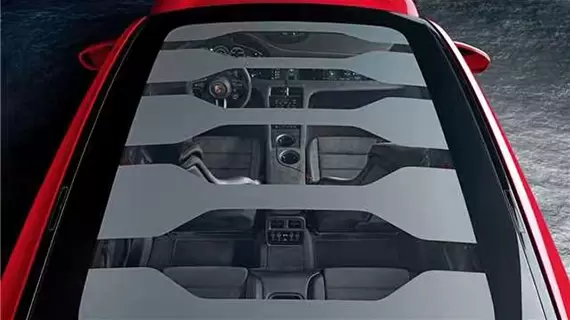
If one application defines the commercial value of automotive smart film, it is the roof. A panoramic glass roof looks premium and admits a great deal of light, but it also delivers heat and glare straight into the cabin. A switchable layer lets the occupant control that without a mechanical shade, and it preserves the open feeling of the glass when the film is clear.
The technical demands are higher here than anywhere else. The roof sees the highest surface temperatures, so a standard-grade film can lose switching performance or show accelerated ageing. Automotive programmes therefore specify wide-temperature constructions validated across cold starts and hot-soak conditions. The technical note on why wide-temperature smart film is used in automotive applications covers the test logic, and the discussion of why panoramic glass roofs become a challenge in hot weather explains the thermal case in depth.
Designers also treat the roof as a visual surface. Pattern etching can divide a large pane into zones, create a gradient across the glass or place a logo in the opaque area. An article on the role of pattern etching in automotive smart film design explains how the pattern and the conductive layers are coordinated. Because those patterns are created during film production, they should be agreed before the glass is cut rather than treated as a finishing detail.
This subject is already covered extensively elsewhere on this site, so the technical treatment is not repeated here. For the fundamentals, see the explanation of what smart film for a car sunroof is and how it works, the comparison of PDLC film for a car sunroof against traditional tint, and the overview of key benefits of smart film for car sunroofs.
Beyond passenger cars there is a group of applications where switchable glazing solves a problem that conventional tint cannot: shared spaces with changing privacy needs.
Coaches and shuttle vehicles use large side windows where passengers sit for long periods. A fixed dark tint blocks daylight all the time; a switchable layer lets the operator offer an open view in scenic sections and privacy when asked. The same reasoning applies to passenger train interiors, where the glazing area is large and the orientation changes along the route.
Marine cabins are a smaller but technically interesting case. Yacht windows face salt spray, high humidity and strong direct sun, and the interior often combines a day area and a sleeping area behind the same glass line. A switchable construction gives a single pane two roles. The material has to be qualified for that environment, particularly the edge seal and the interlayer, and the controller installation must follow marine electrical practice. A supplier offering only automotive-grade film for a yacht project should be asked for the relevant environmental test evidence.
These segments rarely appear in general smart-film articles, which is precisely why they are worth covering. They also tend to buy in smaller volumes with higher specification requirements, so the conversation with a supplier starts with validation capability rather than unit price.
Once the opening is defined, three decisions remain.
Adhesive or laminated. Self-adhesive film is applied to existing glass and suits retrofits, leased vehicles and aftermarket programmes. Laminated film sits inside the interlayer during glass manufacture and suits OEM modules where optical quality and long-term durability are specified from the start. A direct comparison of laminated smart film and self-adhesive smart film sets out the trade-offs, and the note on whether smart film can be installed on existing glass without replacement addresses the retrofit boundary.
White, black or grey. Colour changes the look of both states and the amount of light transmitted. White gives the strongest visual contrast between clear and frosted and suits front side windows where transmission matters. Black and dark grey give stronger privacy on rear glass and roofs. Grey sits between them and is often chosen where a neutral appearance is required. The comparison of white and black automotive smart film explains the choice, supported by the white and black automotive smart film product pages.
Standard or wide temperature. Any exterior roof, windshield-adjacent position or unconditioned commercial vehicle application should be assessed against the temperature range the part will actually see. Do not assume a film qualified for interior partitions is qualified for a roof. Ask for the test method, the number of cycles and the pass criteria, not just a temperature figure on a datasheet.
One more point belongs here. A switchable film is only part of the system. It needs a matched driver, a controlled switching sequence and a fail-safe state that is safe for the application. On a privacy partition, defaulting to frosted when power is lost is desirable. On a vision surface it may not be. Define the required power-off behaviour for each window before the electrical design is frozen.
Use these questions as a review gate before releasing a drawing or a purchase order.
1. Which regulation applies to this exact opening? Record the market, the glazing position and the required visible light transmission. Do not rely on a generic compliance statement.
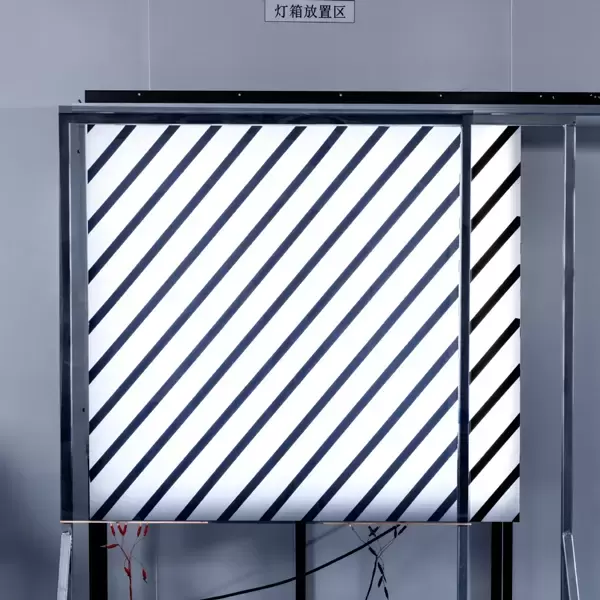
2. What are the film-level optical numbers? Ask for luminous transmittance and haze measured under a recognised method such as ASTM D1003, for both the clear and the scattered state.
3. Have those numbers been repeated on the finished assembly? Lamination, curvature and adhesive layers all change the result. Require a measurement on a production-representative part.
4. What temperature profile has been validated? Request the test range, dwell time, cycle count and acceptance criteria, especially for roof and commercial vehicle use.
5. How is the layer stack built? Ask for a cross-section showing film, interlayer, busbars and any printed elements, and confirm that demisters, antennas and sensors are not compromised.
6. What is the switching behaviour at low temperature? Switching time changes with temperature. Ask for data at the coldest expected condition rather than at room temperature alone.
7. What quality system covers the batch? For automotive projects, IATF 16949 certification and batch traceability are the baseline expectations. Confirm the scope of the certificate, not just its existence.
8. What happens when power fails? State the required default state for each window and confirm that the controller delivers it.
9. Who owns the integration risk? Where film, glass and controller come from different suppliers, name one party responsible for combined performance.
Working through this list keeps automotive smart film applications aligned with the real constraints of each opening, and it catches most problems that would otherwise surface during validation or, worse, in the field.
Rear side glass and panoramic roofs give the clearest return. Front side windows work when a high-transmission construction is chosen and local rules are respected. Rear screens are viable but need careful attention to demisters and curvature. Windshields remain heavily constrained, and specialty vehicles reward buyers who specify environmental validation before price.
In short, the right question is never whether a car can take smart film. It is which opening you are building, and what that opening is allowed to do. List the positions, assign a target behaviour to each, and take that list of automotive smart film applications to a supplier who can show test evidence at assembly level. To discuss a specific window position or request samples, contact the Shuifa Singyes team through the automotive smart film product hub.