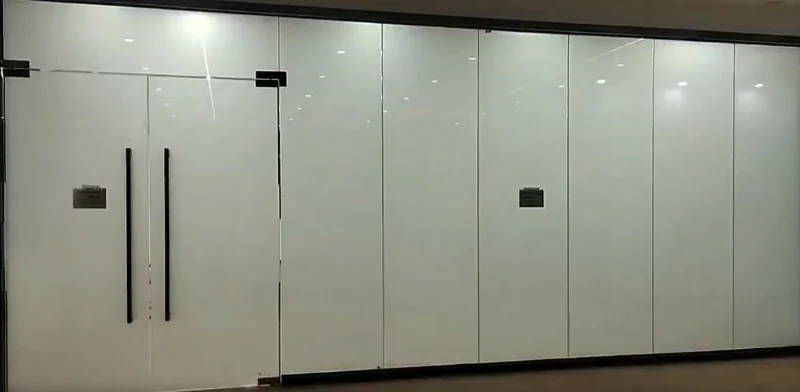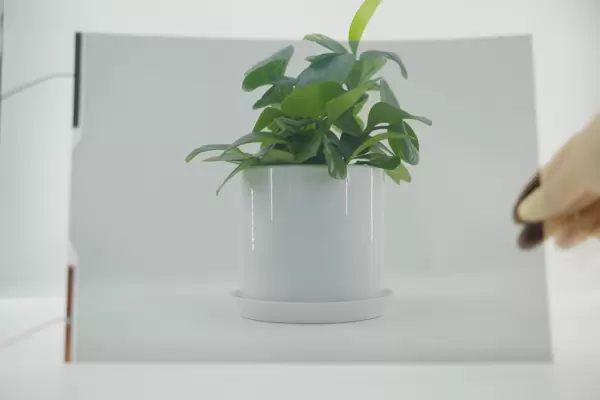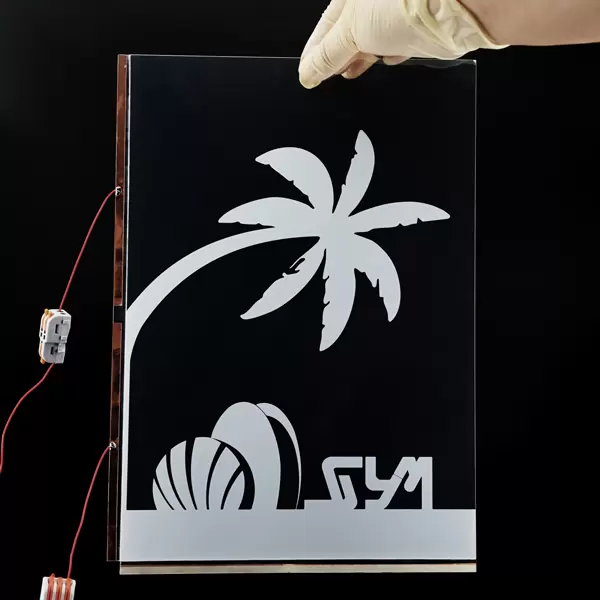
How to Choose a Smart Film Manufacturer in China: A Practical Guide for Real Projects
Learn more >


Choose white automotive smart film when the priority is daylight, an open cabin and maximum clarity, and choose black automotive smart film when the priority is privacy, parked-car security and a darker appearance. On the published product specifications, the white variant lists visible light transmittance above 83 % and the black variant 35 %; a grey smart film sits between them at 38 % (Shuifa Singyes product pages, accessed 11 November 2026). Nothing else about the two films changes as much as that number — the switching mechanism, thickness, width capability and control options are shared. The real decision is therefore not "which colour looks better" but which glass position, which lighting conditions, which legal VLT limit, and which brand language the programme is built around. The sections below work through those four variables and name the figures a specifier should ask for.
In architectural glazing, colour is often treated as an interior-design choice. In a vehicle, it is coupled to three hard constraints: how much light the driver can see through, whether an outside observer can see in, and how much solar energy the assembly admits. A dyed or tinted base layer changes all three at once, which is why a white and a black PDLC film cannot be swapped late in a programme without re-checking the glazing file.
The underlying mechanism is identical. Polymer dispersed liquid crystal droplets sit in a polymer matrix between transparent conductive coatings. With no voltage, random droplet orientation creates refractive-index mismatch and scatters light; with an AC field applied, the droplets align and light passes through. Published PDLC characterisations describe this two-state behaviour, report 98 % haze in the scattering state for a large-format film, and show only a modest difference in solar heat gain coefficient between the two states. What colour changes is not the switching physics but the absorption layered on top of the scattering. A white film mainly scatters; a black film scatters and absorbs.
That single distinction produces the whole comparison. Scattering gives a bright, milky privacy state that preserves daylight. Absorption gives a dark privacy state that hides silhouettes and interior contents, at the cost of visible light and a tinted appearance even when powered. A Grey-Black Smart Film, a Colored Smart Film, or a Tinted Privacy Smart Film is simply a different point on the same trade-off curve.
It also explains why product-page wording can mislead. A page may describe "high-definition transparency" in the powered state and simultaneously list a 35 % VLT figure. Both statements can be true of different measurements — perceived clarity on a sample versus regular light transmittance on a specified assembly — but they should never be merged into one claim. Ask for a finished-glazing test report measured to ASTM D1003 before the colour is frozen.
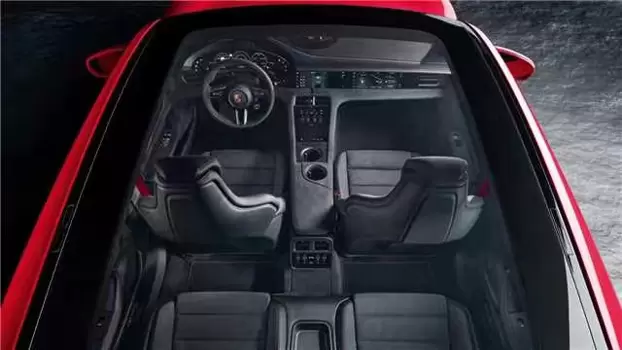
The table below summarises the published figures for the three colour routes. All values are film-level manufacturer specifications from the Shuifa Singyes product pages, accessed 11 November 2026, and must be re-measured on the final laminated or applied glass.
Parameter | White automotive smart film | Black automotive smart film | Grey smart film |
Listed visible light transmittance | > 83 % | 35 % | 38 % |
Thickness | 400 μm | 400 μm | 400 μm |
Maximum width | 2,000 mm | 2,000 mm | 2,000 mm |
Base construction | Wide-temperature PDLC on flexible substrate | Black PET layer + nano liquid crystal coating | Grey-toned PET with UV-resistant coating |
Powered-off appearance | Milky white, high haze, daylight maintained | Black frosted, near-opaque, hides contents | Grey / matte, subdued contrast |
Characteristic benefit | Openness, daylight, glare diffusion | Privacy, anti-peeping, security | Softer aesthetics, reduced glare, architectural projects |
Control options | Touch, voice, light sensor, app, in-car screen, buttons | In-car buttons, mobile app (Bluetooth / 4G), voice | Standard smart film control |
Production lead time | 7 working days | 7 working days | 10 working days |
MOQ | 50 m/roll or 1 m²/sheet | 50 m/roll or 1 m²/sheet | 50 m/roll or 1 m²/sheet |
The white automotive smart film is the daylight option. Shuifa Singyes describes millisecond switching, glare blocking above 90 % in strong sunlight, nano-coating and liquid-crystal structure for infrared and ultraviolet management, and an ultra-thin flexible substrate that conforms to curved automotive glass. Hidden electrodes remove the need for bulky mechanical sunshades, which is a real packaging gain in a panoramic roof. The page also lists colour customisation including Deep Black and Ice Crystal White, pattern options such as logos, and control methods ranging from a physical button to a mobile app and voice commands.
The frosted state stays bright. That is a feature in a family vehicle or a sunroof — the cabin keeps natural light while direct beams are diffused — and a limitation when a parked executive car must conceal its interior at night. Scattering does not erase an image; strong cabin lighting against a dark exterior can still reveal shapes. For privacy-critical rear glazing, the black variant is usually the safer specification. Our guide to black automotive smart film for privacy car windows covers that use case in detail.
The black automotive smart film adds a black PET base layer and a nano liquid crystal coating. With power off, the film presents a black frosted, near-opaque surface; with power applied, it switches to a clear state. The product page cites a service life above 80,000 hours, anti-ageing performance without yellowing or degumming, fragment retention for glass-break safety, compatibility with window heating, defogging and rain sensors, and no interference with ETC or navigation signals. It also describes control through in-car buttons, a Bluetooth/4G app, or voice commands.
Those are meaningful differentiators for a car pdlc smart film black specification, particularly for parked-car security: a dark off state hides bags, electronics and occupants far better than a milky one. The trade-offs are equally concrete. A 35 % listed VLT is substantially below the 70 % regular transmittance required for windscreens and glazing in the driver's field of vision under UN Regulation No. 43, so the black variant belongs on rear side windows, roof glass, quarter glass and partitions in markets applying that rule. It also carries a visible tint in the powered state, which affects the perceived openness that a white roof would deliver.
One caution for specifiers: the black product page mentions compliance with national motor vehicle safety technical inspection standards while also listing 35 % VLT. Compliance is always a property of the installed position and the finished assembly in the target market, not of a film in isolation. Confirm the applicable regulation and the assembly-level test report for every vehicle programme rather than relying on a generic statement.
Grey smart film lists 38 % VLT, more than 99 % UV blocking, power consumption of about 5 W per square metre, and a 2,000 mm maximum width. Its documentation is written primarily for architectural projects — high-end residences, offices, hotels and cultural spaces — where the grey tone provides a softer, matte aesthetic than milky white and a "black box" effect against night lighting. Bringing a grey or dark grey electric smart film into a vehicle programme is possible, but it needs the automotive-grade validation, wide-temperature formulation and curved-glass processing that the automotive product line is built for.
Between white and black sit a range of Tinted Automotive Window Film, Smart Black Tint Film, tinted smart film, Black Switchable Film and Tinted Privacy Smart Film options, as well as Dark-Dye PDLC and Black-Dye smart film constructions for programmes that want a specific off-state density. Colour smart film and tips on choosing a colour smart film for a customisable PDLC project cover the wider palette; for a vehicle, always start from the required VLT and work backwards to the dye, not the other way round.
The clear state is the state that matters while the vehicle is moving, and it is where the white film wins decisively. A listed > 83 % VLT is close to untinted glazing; combined with low residual haze, it preserves mirror checks, screen readability and night visibility. Haze and luminous transmittance should be measured with a defined procedure — ASTM D1003 covers both for transparent plastics and notes that veiling glare, such as that produced when driving into the sun, is exactly what haze measurement helps diagnose.
There is a subtlety worth flagging. PDLC clear-state haze is never literally zero; published characterisations show that the aligned state still differs optically from bare glass, and that clear-state transmission depends on the film and the glass it is combined with. A dyed black base adds a permanent tint even when fully powered. For a windscreen-adjacent or front side window application, that residual tint plus the film's VLT must be evaluated against the legal threshold and against the driver's night-vision requirement. UN Regulation No. 43 sets a 70 % floor for windscreens and glazing requisite for driving visibility, and the UNECE global technical regulation comparison references ISO 3538 as the measurement method.
Practical rule: specify the clear state for the driver, and the frosted state for the passengers. That single sentence resolves most white-versus-black debates. A driver-critical pane needs high VLT and low haze; rear and roof glazing can trade visible light for privacy and solar comfort. Where both behaviours are wanted from the same pane, zoning through pattern etching can keep a narrow clear strip for mirror visibility while the main area switches.
Privacy is the reason most buyers look at switchable film, and it is where black wins. With no power, a standard white PDLC film scatters light into a milky surface. Light is redistributed rather than removed, so a cabin stays bright — and high-contrast silhouettes can remain perceptible when interior lighting is strong. A black film combines scattering with absorption, so the off state reads as a dark, near-opaque panel that conceals contents and reduces the "fishbowl" effect of a glazed roof or rear window.
Independent PDLC literature supports the scale of the scattering effect: outdoor test cells have measured roughly 71 % transparency under a 20 V AC supply against about 27 % with no power, and large-format films have been reported at 98 % haze in the scattering state. But haze is a measure of diffusion, not of concealment. Two films with the same haze value can look very different at night if one has a dyed base. Any privacy specification should therefore include a backlit night-time sample test with representative cabin lighting, viewed from the outside at a realistic distance. Photographs under that condition are more useful to a vehicle programme than a single haze number.
The fail-safe behaviour also belongs here. Standard PDLC is frosted with the power off, which means a parked vehicle defaults to private — useful for security, and a design decision that the control logic must respect. If a roof must remain clear whenever the ignition is on, the controller and power supply, not the colour, determine the outcome. Voice, app, light-sensor and in-car screen control are all listed options on the white product page, and the black page adds Bluetooth/4G app control; a smart film controller with a defined power-loss state should be named in the specification.
A third consideration is appearance in the privacy state. A milky white frosted roof reads as bright and technical; a black frosted roof reads as premium and discreet; a grey frosted panel reads as architectural and understated. For brands building a cabin "design language", that choice is as much a product decision as an optical one — which is why custom auto modification smart film for vehicle windows and the auto modification smart film product route exist alongside the standard colour options.
Colour changes the visible part of the spectrum most, and the infrared part only if the formulation is designed for it. This is the part of a smart film comparison that gets flattened most often, so the numbers matter.
A dark film absorbs visible light, which reduces the sensation of brightness and can lower the radiant load on occupants. But solar heat gain is dominated by near-infrared radiation and by the behaviour of the whole glazing stack — glass type, interlayer, coatings and film together. Vehicle research from the US National Renewable Energy Laboratory (NREL) illustrates the scale: one soak-test programme measured a test cabin about 9 °C cooler with a solar-reflective film, while later NREL work showed that solar-reflective glass and parked-car ventilation each produced multi-degree reductions in cabin air temperature. Those results come from dedicated solar-control technologies, not from the colour of a switchable layer. Published PDLC characterisations report solar heat gain coefficients of roughly 0.63 and 0.68 for the translucent and transparent states respectively — a small difference that confirms scattering alone is a weak thermal lever.
UV is different. UV blocking is primarily a property of the PET substrate and its coatings, which is why the grey product page can quote more than 99 % UV rejection regardless of the switching state. Infrared rejection depends on whether an infrared-reflective or absorbing layer is engineered into the film — the difference between a generic switchable film and a genuine Infrared Blocking Film for Cars or Smart Heat Rejection Film. Shuifa Singyes has published work on a light-selective smart film granted an invention patent by the China National Intellectual Property Administration (company news, 14 October 2025), designed to block ultraviolet and harmful blue light while improving heat insulation and resistance to yellowing, reduced off-state blocking and declining powered-state transparency over time. That patent is relevant to both architectural glass and automotive window glass, and it illustrates the right way to think about colour: as one layer in a light-selective stack, not as a shortcut to thermal performance.
For new energy vehicles, the stakes are higher because A/C draw competes directly with range. NREL notes that air-conditioning loads can cut EV range by nearly 40 % depending on system size and driving cycle, which is why a smart film for new energy vehicle sunroofs should be evaluated together with the roof glass specification. A white film keeps the cabin bright and diffuses direct glare; a black film adds absorption; neither replaces an infrared-reflective interlayer. Ask for a spectral transmittance curve across the UV, visible and near-IR bands for the finished assembly, and treat the VLT number and the heat-rejection number as separate line items.
The cleanest way to make the decision is to work pane by pane. The table below is a starting framework; final values must be checked against the regulations and the vehicle's own glazing file.
Glass position | Priority | Recommended route | Reason |
Windscreen / front side windows (driver visibility) | Visibility, legal VLT, low haze | Generally not a standard switchable film; if used, a high-VLT white variant with assembly-level approval | UN R43 requires ≥ 70 % regular light transmittance for visibility-critical glazing |
Panoramic roof / fixed glass roof | Daylight, glare, heat, openness | White automotive smart film, optionally zoned | > 83 % listed VLT, glare diffusion, no mechanical shade |
Rear side windows / quarter glass | Passenger privacy, parked security | Black automotive smart film | Dark off state hides contents; lower VLT is acceptable outside the driver's field of vision |
Partition glass in MPVs and executive vehicles | Two-way openness plus confidential conversations | Black or tinted, with zone etching | Absorption plus scattering gives a credible privacy mode |
RV, ambulance, special vehicle windows | Daylight by day, privacy when stationary | White for living areas, black for equipment/patient areas | Different zones have different priorities within one vehicle |
Aftermarket retrofit | Feasibility with existing glass and 12 V access | Either, subject to glass shape and size assessment | Curvature, trim removal and wiring decide what is installable |
Two further rules apply. First, never mix variants across a single pane without re-checking the busbar layout and switching uniformity — a partially dyed area will not switch identically to an undyed one. Second, if the same vehicle is sold in multiple markets, the glazing bill of materials may need to differ by region. US tint rules are set at state level, while UNECE-type approval applies the 70 % visibility threshold; a single global colour choice is rarely the cheapest solution.
NEV panoramic roofs. Large glass areas are the most common source of glare and soak complaints, and a mechanical shade costs headroom and parts. A white switchable roof preserves the open-cabin feeling while diffusing direct sun; the discussion of how PDLC smart film makes panoramic roofs more practical covers the packaging argument. Where the brand wants a darker, more private roof, a black variant is the alternative — with the thermal caveat above.
Executive and chauffeur-driven vehicles. Rear privacy is intermittent: clear for scenery, frosted for calls. A black film gives a credible confidentiality mode and a premium appearance, and a partition can be zoned so that a strip stays transparent. This is the core use case behind Tinted Automotive Window Film and smart pdlc film glass with dark privacy tint specifications.
RVs, campers and special vehicles. The white product page lists RVs, ambulances and police vehicles explicitly: transparent by day for light and operations, frosted at night or when parked for privacy. A mixed specification — white in living areas, black around equipment or patient compartments — often outperforms a single colour across the whole vehicle.
Fleets and premium ride-hailing. Repeatability matters more than novelty. An electronic privacy function does not depend on passenger behaviour, does not wear out like a curtain, and can be tied to a "privacy mode" preset. Fleet buyers should ask for switching-cycle and weathering data instead of a headline lifetime figure.
Modification and personalisation. The aftermarket values unique visual effects, dynamic patterns and gradients that a fixed tint cannot produce. How to install professional auto modification smart film on car windows shows the practical constraints, while what role pattern etching plays in automotive smart film design explains how zones and logos are built into the film. For these projects, colour is often the first thing the customer chooses — so the VLT conversation has to happen early.
The engineering differences between OEM and aftermarket applications are larger than the colour difference. An OEM programme can co-design the glass, busbar position, wiring route and control logic, and will expect prototype approval, environmental testing and batch traceability before series production — see how smart film is prepared for large-scale automotive production. A retrofit project works with the glass, trim and 12 V access that already exist, and needs a kit that includes the matched driver and controller.
For a sourcing request, specify the following rather than just a colour name:
· Variant and target VLT — oem white automotive smart film, black automotive smart film, or a grey smart film / tinted construction, with clear-state and frosted-state VLT targets on the finished assembly.
· Glass drawing — curvature, size, thickness, framing and seal details. What automakers should consider when integrating smart film into vehicle glass lists the coordination points.
· Zoning and pattern — etched logos, fixed clear strips, gradient or breathing effects, and which areas switch independently.
· Control and power — touch, voice, light sensor, app or in-car screen; the smart film controller and dedicated power supply; the required behaviour on power loss.
· Environment — operating and storage temperature range, UV exposure, humidity, vibration. Why wide-temperature smart film is ideal for automotive applications explains the −30 °C to 100 °C requirement.
· Commercial terms — the product pages list 50 m/roll or 1 m²/sheet MOQ, 7 working days for automotive white and black, 10 working days for grey, and roll packaging on a 6-inch ABS core (accessed 11 November 2026).
· Quality evidence — IATF 16949:2016 defines the automotive quality-management baseline of defect prevention and variation reduction for production and accessory part organisations; ask for the certificate scope, control plan and PPAP-style documentation from any white automotive smart film manufacturer, black automotive smart film supplier china, or china grey smart film partner you shortlist.
That last point is where the long-tail supplier terms in a sourcing brief belong naturally. A buyer searching for a white automotive smart film supplier china, an automotive smart film-white factory, a black automotive smart film producer, or a grey smart film manufacturer china is not looking for a colour opinion — they are looking for evidence that a supplier can deliver a consistent dye lot, a repeatable VLT and a traceable batch. Colour consistency across rolls is a real manufacturing challenge: a visible shift between two rear door windows is a warranty claim, not a design detail.
A disciplined validation sequence costs far less than a colour change after SOP.
l Reconcile the datasheet. Confirm whether VLT figures refer to the free film or the finished glazing, and in which state. The black page lists 35 % VLT while also describing high clarity when powered; both must be resolved into one assembly-level test report measured to ASTM D1003.
l Test both states optically. Measure regular light transmittance and haze with a defined method, and photograph the frosted state under night-time backlighting from outside the vehicle.
l Check the legal position. Map each pane to the target-market requirement; the 70 % floor for visibility-critical glazing under UNECE R43 is the reference point in UNECE-type-approval markets.
l Cycle it thermally. Verify switching time, adhesion and optical drift at −30 °C and at the upper operating extreme; UNECE R43 weathering provisions include a 95 %-of-initial transmittance criterion and a 70 % floor for visibility glazing.
l Confirm the thermal story separately. Request a spectral curve for UV, visible and IR on the finished assembly; do not infer heat rejection from darkness.
l Build a prototype vehicle. Curvature, edge sealing, busbar routing and control logic only reveal themselves at this stage.
l Lock the supply chain. Confirm dye-lot consistency, batch traceability and the supplier's automotive quality system before series production.
The result of that process is usually a mixed bill of materials rather than one colour: white on the roof, black on rear glazing, tinted or zoned film on partitions. That is a better outcome than a single global choice, and it is the answer most OEM programmes eventually reach.
Which is better for a panoramic sunroof, white or black? For daylight and an open-cabin feeling, white automotive smart film is usually the better fit: it lists > 83 % VLT and diffuses glare while keeping the cabin bright. Choose black if the design brief prioritises privacy and a darker roof appearance, and pair either with an infrared-management strategy for heat.
Does black automotive smart film make the car cooler? It absorbs more visible light than white, which reduces perceived brightness, but meaningful heat rejection comes from infrared coatings and the glazing stack. Published PDLC measurements show only a small SHGC difference between states, while the large soak-temperature reductions seen in NREL testing came from dedicated solar-control glazing.
Can black film be used on front side windows? Check the finished assembly VLT against the target market's rules. UN Regulation No. 43 requires at least 70 % for windscreens and glazing requisite for the driver's field of vision; a 35 % VLT variant is normally suited to rear side windows, roof glass and partitions.
What is the difference between frosted white and frosted black at night? A white frosted film scatters light and can still show silhouettes against a bright cabin; a black film adds absorption, so the off state appears dark and near-opaque. Always review a backlit night sample before specifying.
Can I get a grey or custom colour for a vehicle? Grey smart film is available at 38 % listed VLT with more than 99 % UV blocking, though its documentation is primarily architectural. Custom colours, patterns and control methods are listed for the automotive line; confirm the automotive-grade wide-temperature formulation and validation route for any non-standard colour. Colour smart film and the customisation guide are the starting points.
Do white and black films need different controllers or power supplies? Both use the same PDLC switching principle and a matched driver/controller; differences are in control interfaces rather than the electrical basics. Define the power-loss behaviour explicitly, because standard PDLC returns to its frosted state with no power.
How long does the colour last? Dye stability is a weathering question. The black product page cites anti-ageing performance without yellowing or degumming and a service life above 80,000 hours (accessed 11 November 2026); how long colour smart film maintains its performance and privacy covers durability in more detail. Ask for xenon-arc weathering and cycling data for the specific dye lot.
White and black automotive smart film are not two finishes of the same product decision. White optimises the clear state — daylight, openness, low haze, > 83 % listed VLT — and suits panoramic roofs and living areas. Black optimises the frosted state — privacy, parked-car security, a dark premium appearance — and suits rear side windows, quarter glass and partitions, with a 35 % listed VLT that must be checked against the glazing regulations for the intended position. Grey and tinted variants occupy the middle ground, but need the same automotive-grade validation as the standard colours. The switching technology, thickness, width capability and customisation options are shared; the optical and legal consequences are not.
Start from the glass position, then fix the clear-state VLT, the frosted-state privacy requirement and the thermal strategy as three separate line items. Review the automotive smart film hub and the white and black product pages, then send us your glass drawings, target VLT per pane, control concept and market list — we will prepare matched samples in each colour so the decision can be made on the finished glazing, not on a swatch.