Automotive Smart Film: The “Light and Shadow Manager” for New Energy Vehicles, Unlocking a New Comfortable Driving Experience
Learn more >


Automotive smart film genuinely works — but only at the jobs it was engineered to do. A PDLC film laminated into or applied to car glass switches between a clear and a privacy state in milliseconds, reduces direct glare, and keeps doing so across a wide temperature range. What it does not do is replace a solar-control glazing package, deliver continuous dimming, or turn a frosted pane into a fully opaque one. Most "it doesn't work" complaints come from benchmarking a switchable privacy film against a heat-rejection tint or a blackout blind. Below we separate the claims that can be verified from the ones that cannot, then give you the specification list to work through before an
OEM programme or retrofit project moves into mass production.
A glass partition in an office and a side window in a car are not the same specification problem. An architectural film lives indoors, at room temperature, on flat glass, with a stable mains supply. A vehicle pane faces −30 °C cold starts, sun-loaded glass approaching 100 °C, vibration, curved geometry, a 12 V electrical architecture, and safety legislation that limits how dark driver-critical glazing may be. A film that performs perfectly in a showroom demo can still fail a vehicle programme.
So the useful question is never "does smart film work" in the abstract. It is: does this specific automotive smart film deliver this specific, measurable outcome, on this specific glazing stack, for the service life of this vehicle? That framing produces six testable claim groups:
1. Switching — does the pane move reliably between clear and frosted, at what speed, and at what temperature?
2. Privacy — what can an outside observer actually see in the frosted state, by day and at night?
3. Light and glare — how much direct sunlight is diffused, and how much visible light remains in each state?
4. Thermal and UV — how much infrared and ultraviolet energy is rejected by the complete glass assembly?
5. Durability — how many switching cycles, how much UV ageing, and how much humidity and thermal cycling before optical drift?
6. Compliance and integration — does the assembly still meet light-transmission rules, and does the electrical design fail safe?
Judged against those six groups, PDLC technology performs very well on the first three, conditionally on the fourth, and depends heavily on engineering discipline for the last two. The sections that follow work through each group and name the numbers a buyer should ask for.
Automotive smart film is a polymer-dispersed liquid crystal layer, typically sandwiched between two transparent conductive coatings on a PET substrate. With no voltage applied, the liquid crystal droplets are randomly oriented; their refractive index no longer matches the surrounding polymer, so incoming light is scattered at every droplet boundary and the pane looks milky or frosted. Apply an AC field and the droplets align, the refractive indices match, and light passes through with little scatter. Peer-reviewed characterisations of PDLC glazing describe exactly this two-state behaviour, including outdoor test cells that measured roughly 71 % transparency under a 20 V AC supply versus about 27 % with no power applied, and solar heat gain coefficients of roughly 0.63 in the translucent state against 0.68 in the transparent state.
Two consequences follow directly from the physics, and they matter more than any marketing sentence.
First, the off state is a privacy state, not a blackout state. Scattering redirects light; it does not absorb it. A frosted pane still transmits diffuse daylight, which is why cabins stay bright, and why silhouettes and strong backlighting can remain perceptible at night. A white film produces a high-haze, milky appearance; a black automotive smart film adds a dyed PET layer so the off state reads as a dark, near-opaque surface. Choosing between them is an optical decision, not a cosmetic one — our separate comparison of white and black automotive smart film covers that in detail.
Second, scattering is not the same as solar control. Because the energy is redirected rather than removed, a PDLC layer on its own has a modest effect on total solar gain — the SHGC figures above differ by only about 0.05 between the two states. Meaningful heat rejection comes from infrared-blocking coatings, solar-control interlayers, and the glass specification itself. This is the single most important boundary to communicate to a customer, and the reason a Smart Heat Rejection Film or an Infrared Blocking Film for Cars should be specified as a system rather than assumed to be an inherent property of any switchable film.
Electrically, PDLC is an AC device. A vehicle supplies 12 V DC, so a driver or inverter module converts the supply to the AC voltage the film needs, and a smart film controller or dedicated power supply governs switching. Power consumption in the clear state is only a few watts per square metre, and the frosted resting state consumes essentially nothing. That fail-safe characteristic — power off means privacy on — is a design advantage for parked vehicles, but it must be deliberate: a programme that expects power loss to leave windows clear needs a reverse-mode product, not a standard one.
The core functionality is technically achievable. Automotive smart film switches between transparent and frosted states in milliseconds, without a mechanical shade, a curtain, or a permanent dark tint. Shuifa Singyes lists visible light transmittance above 83 % for its white automotive smart film and 35 % for its black automotive smart film, both at 400 μm thickness and up to 2,000 mm width (product pages, accessed 11 November 2026). Those are film-level figures; the assembly-level values are what a homologation file needs, and they should always be re-measured on the intended laminated or retrofitted glass.
The practical value is highest where a fixed dark tint would be a poor compromise: rear side windows on executive vehicles, partitions in luxury MPVs, ambulance and police glazing, and parked-car privacy. A black variant with a power-off black frosted state is particularly effective at hiding valuables, because it combines scattering with absorption — a useful detail when comparing a car pdlc smart film with a conventional privacy glass. A car smart film should therefore be selected by glass position and lighting conditions, not by colour preference alone. Our guide to black automotive smart film for privacy car windows documents these scenarios.
One verification rule: evaluate privacy under the lighting conditions that matter. A frosted white film that looks completely private in a daylight showroom can reveal shapes when cabin lights are on and the exterior is dark. Ask for a night-time, backlighting test, and measure haze with a recognised method such as ASTM D1003, which covers luminous transmittance and wide-angle scattering of transparent plastics and notes that highly diffusing materials need a different treatment.
The second well-supported claim is visual comfort. Strong, direct sunlight is diffused across the whole pane in the frosted state, which reduces harsh beams on occupants and screens while keeping the cabin lit. The white product page states that the film blocks more than 90 % of glare in strong sunlight (Shuifa Singyes product page, accessed 11 November 2026), and describes millisecond switching that returns the glass to full transparency in tunnels or at night. For panoramic roofs, this is the reason switchable film is often preferred to a fixed sunshade: the shading appears only when needed.
The mechanism also explains the limits. Because scattering spreads light rather than removing it, a frosted pane is a diffuse light source, not a dark one. Drivers should not expect the "blacked-out" look of a dense dyed film, and specifiers should treat glare control and solar heat control as separate line items. A UV Protection Automotive Film claim and a heat insulation PDLC film claim should each come with its own test report, measured on the complete glazing stack rather than on a free-standing film sample.
Vehicle glass is thermally brutal. Winter overnight soaks push well below freezing; a parked car in direct sun can drive interior surface temperatures toward 70–80 °C, with glass areas higher still. A narrow laboratory operating range is not acceptable. Shuifa Singyes specifies its automotive range as −30 °C to 100 °C for wide-temperature smart film, and reports deployment across more than 40 OEM vehicle models on the automotive smart film product page (accessed 11 November 2026). Independent PDLC literature reports stable behaviour in the 20–100 °C band for building glazing, which is consistent with the direction of automotive-grade formulations.
What matters in procurement is not the headline range but the shape of the test: switching time at both temperature extremes, optical drift after thermal cycling, and adhesion after humidity exposure. A wide temperature PDLC film for cars should arrive with cycling data, not just a range printed on a datasheet. The same discipline applies to curved glass: how smart film adapts to different automotive glass shapes and sizes is a geometry and busbar question as much as a materials question, and pattern etching defines which zones switch and which stay clear.
This is the most common overclaim. Vehicle thermal research from the US National Renewable Energy Laboratory (NREL) shows how much solar gain enters through glass and how much a genuinely solar-control glazing can achieve. In one soak-test programme, a solar-reflective film kept a test cabin about 9 °C cooler, and advanced glazing combined with ventilation materially reduced solar gain; the same work notes that air-conditioning loads can cut EV range by nearly 40 % depending on system size and drive cycle. Later NREL vehicle testing reported that solar-reflective glass reduced average cabin air temperature by roughly a third of the maximum possible reduction, and that parked-car ventilation strategies produced reductions of 5–7 °C in breath air temperature. A separate NREL study on solar-control PVB found approximately a 1 °C reduction in average interior air temperature and a 4 % reduction in A/C power from a windshield change alone — a useful reminder that gains are real but incremental, and highly dependent on glass area and test conditions.
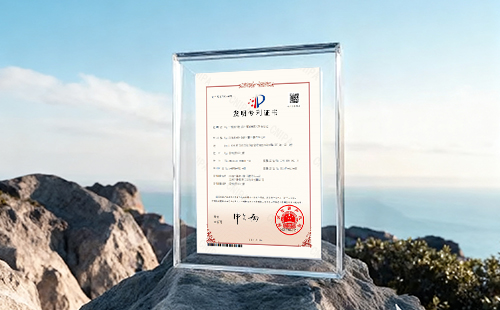
The honest formulation for a switchable film is therefore: it contributes to comfort by diffusing direct radiation, and it can support a solar-control strategy, but it is not a substitute for infrared-reflective coatings or solar-control glass. Published PDLC characterisations report SHGC values that change only slightly between the frosted and clear states. If a supplier promises ceramic-tint-level heat rejection from a bare PDLC layer, ask for the spectral data on the full assembly. Products described as Infrared Blocking Film for Cars, Smart Heat Rejection Film, or UV resistant PDLC film earn those labels through coatings and formulation — and Shuifa Singyes has published work on a light-selective smart film designed to block UV and infrared while preserving visible light, granted as an invention patent by the China National Intellectual Property Administration (company news, 14 October 2025). That is the right direction: added functionality, not assumed functionality.
A related and often confused point is UV. Architectural smart film datasheets commonly quote more than 99 % UV blocking; the grey smart film page does exactly that (Shuifa Singyes product page, accessed 11 November 2026). UV rejection is a material property of the PET and coating stack, whereas heat rejection is a system property of the glazing. Treating them as one number is the fastest route to a disappointed customer.
A frosted white pane diffuses an image, it does not erase it. High-contrast silhouettes can remain visible against a bright interior at night, and close proximity to the glass reduces the effective privacy distance. Black and tinted variants push further toward opacity because the dye absorbs in addition to scattering, at the cost of lower visible light transmittance. Tinted Privacy Smart Film, Dark-Dye PDLC, and Black-Dye smart film are all responses to this trade-off, and the choice belongs in the specification rather than in the sales conversation.
There is also a legal dimension. UN Regulation No. 43 requires a regular light transmittance of at least 70 % for windscreens and for glazing in positions requisite for the driver's field of vision, with lower-transmittance glazing elsewhere carrying a specific marking. The comparison tables in the UNECE global technical regulation proposal align on the same 70 % threshold for visibility-critical areas, with no lower limit for areas not requisite for driving visibility, and reference ISO 3538 as the light-transmission test method. In other words, a 35 % VLT product belongs on rear side windows, roof glass, or a partition — not on front driver-critical glazing in markets applying those rules. Always check the local regulation for the target market; US state tint laws, for example, are set at state level rather than federally. A responsible supplier will raise this before a sample is cut.
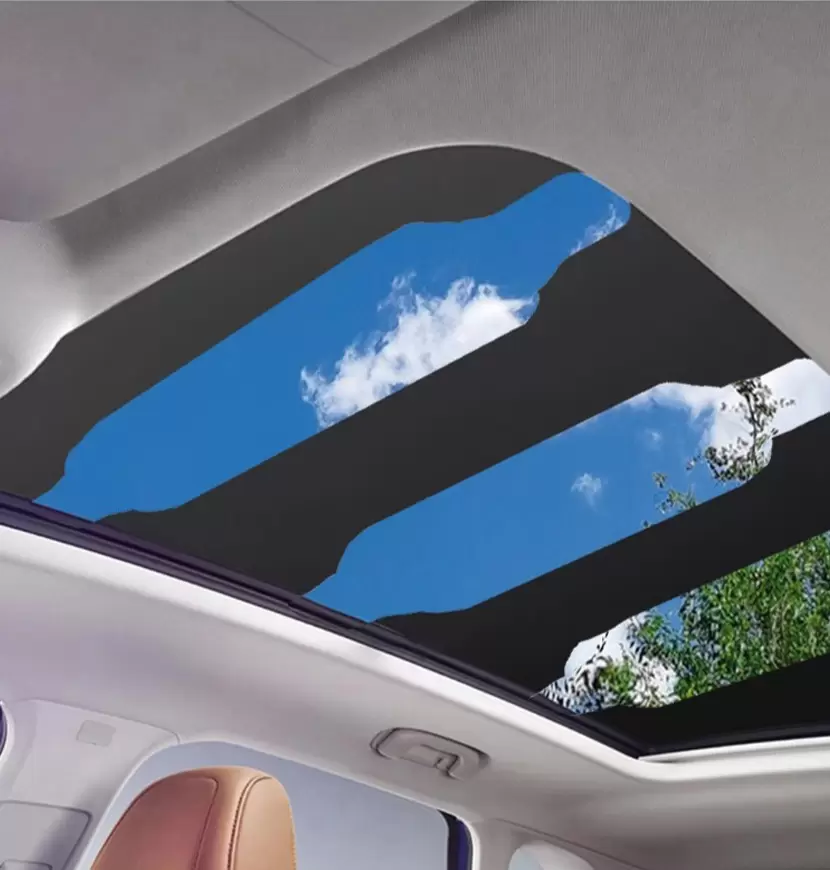
Standard PDLC is binary: scattering or transmitting. There is no half-aligned state that produces useful intermediate shading. If a programme requires continuously variable tint, an electrochromic or SPD technology is the correct comparison, and a smart film for car based on PDLC should not be sold against that requirement. What PDLC does offer is zoning: through pattern etching, part of a panoramic roof can switch while a strip stays clear for mirror visibility, or a logo can appear only in the privacy state. What should automakers consider when integrating smart film into vehicle glass covers the coordination this requires at the glazing design stage.
Power behaviour is the other half of this limitation. Because the frosted state is the resting state, continuous transparency depends on a functioning supply, driver, and control path. For a roof that must stay clear whenever the vehicle is moving, the control logic — not the film — is what guarantees the outcome. That is why OEM and aftermarket applications follow different engineering routes: an OEM can design the wiring, busbar position, and fail-safe logic into the vehicle, while a retrofit kit must work with the glass, trim, and 12 V access that already exist. Our step-by-step guide to installing professional auto modification smart film on car windows shows how much of the result is decided by preparation and wiring.
The cheapest way to answer "does it really work" is to ask for evidence in the same units the vehicle programme uses. A credible car PDLC smart film manufacturer will be able to produce the following without hesitation:
Claim on the datasheet | Document to request | Test basis / what to watch |
Visible light transmittance, clear and frosted | Assembly-level spectral report | Measure on the final laminated or applied glass, not free film; compare against UNECE R43 thresholds for the glass position |
Haze and privacy performance | Haze measurement plus night-time backlit photographs | ASTM D1003 defines haze and luminous transmittance procedures; highly diffusing samples need the appropriate practice |
Switching speed at temperature extremes | Cycling report at −30 °C and high temperature | Look for drift in switching time, not just a single room-temperature number |
UV and infrared rejection | Spectral transmittance curve, 300–2,500 nm | Separate UV, IR and visible figures; do not accept a single "heat rejection" percentage |
Wide-temperature reliability | Thermal cycling, humidity, xenon-arc weathering | UNECE R43 weathering provisions reference a 70 % floor for visibility glazing and a 95 %-of-initial transmittance criterion |
Service life | Switching cycle count, yellowing and adhesion data | The black product page cites a service life above 80,000 hours (Shuifa Singyes, accessed 11 November 2026); confirm the test conditions |
Consistency across batches | Traceability, PPAP-style documentation, control plan | IATF 16949:2016 defines the automotive QMS baseline of defect prevention, variation and waste reduction for production and accessory part organisations |
Three practical checks sit alongside the paperwork. First, test the sample in the intended orientation, with the same glass, curvature, interlayer and lighting as the vehicle — the climate performance article explains why so many apparent film failures are actually glazing or installation issues. Second, run a prototype vehicle, not a flat demo panel: busbar routing, edge sealing, and control logic only show up at that stage. Third, confirm the industrialisation path — how smart film is prepared for large-scale automotive production covers prototype approval and batch traceability, which is where laboratory performance either survives or disappears.
For retrofit buyers, the same checklist applies with a shorter list: confirm whether the existing glass can take a self-adhesive application, whether the window regulator and heating elements remain functional, and whether the controller and power supply are included in the kit. A smart tint for car or a pdlc smart film for car sold without a matched driver and power supply is not a complete product.
The technology is at its best where the alternative is a mechanical shade, a permanent dark tint, or a physical partition — in other words, where the user wants two behaviours from one pane.
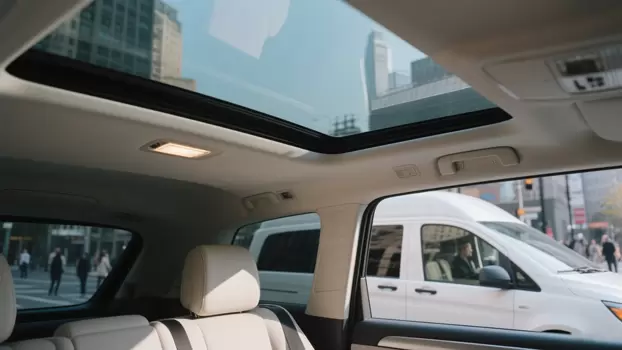
Panoramic roofs and fixed glass roofs. Large glazing areas create the strongest glare and heat complaints, and a mechanical shade costs headroom, weight, and parts. A switchable roof gives the open feeling when wanted and diffuse light when not; the discussion of smart film for new energy vehicle sunroofs is relevant here because reduced A/C load matters more on a battery vehicle, as NREL's air-conditioning load research makes clear.
Rear side windows and privacy partitions. Executive transport, ride-hailing premium tiers, and family vehicles need privacy intermittently. A frosted black film hides the cabin when parked, then returns to clear for the drive. This is also where a Privacy Control Car Film or vehicle safety glass film specification earns its place, since the laminated structure can help retain glass fragments.
Special vehicles and fleets. Ambulances, police vehicles, mobile clinics, and RV conversions need visibility during operations and privacy when stationary. Fleet buyers additionally value repeatability: an electronic function does not depend on passenger handling or curtain hygiene.
OEM design language and modification projects. Custom sizing, pattern etching, and colour options let a brand make the glass itself a design feature. The auto modification smart film route supports small-batch customisation, while OEM programmes need the validation and quality discipline described above. Our overview of PDLC film for car sunroof versus traditional car tint is the clearest short comparison if the choice is still between fixed tint and switchable film, and what makes a car PDLC smart film manufacturer worth choosing addresses supplier selection.
A programme built on the wrong expectation usually fails in one of three predictable ways. The thermal target is missed because privacy was mistaken for solar control; the privacy target is missed because a white frosted film was specified for a night-time, backlit use case; or the compliance target is missed because a low-VLT variant was applied to driver-critical glazing. Each is avoidable at the specification stage, and expensive afterwards — a retrofit that has to be removed, a roof module that has to be re-homologated, or warranty claims resulting from yellowing, delamination, or edge degradation.
The countermeasure is unglamorous: write the requirement as a measurable outcome on the finished glazing assembly, name the test method, and require the report. Standards exist for precisely this reason. UNECE R43 sets the light-transmission and weathering framework for safety glazing, ASTM D1003 defines how haze and luminous transmittance are measured, and IATF 16949 sets the quality-management baseline expected of an automotive supplier. A long lifespan smart film, a UV Protection Automotive Film, or an automotive optical light control film is only as credible as the documentation behind it.
That is also the honest answer to the question in the title. Automotive smart film works — demonstrably, repeatably, and at scale — when it is specified as a switchable privacy and light-management component inside a properly engineered glazing system. It fails when it is bought as a miracle material that cools, darkens, dims, and blackouts all at once.
Does smart film actually cool the cabin? It reduces the feeling of direct solar radiation by diffusing sunlight, and coated or infrared-blocking versions contribute more. It should not be specified as a replacement for solar-control glass: published PDLC measurements show only a small SHGC difference between the two states, while the large soak-temperature reductions seen in NREL testing came from dedicated solar-reflective glazing. Ask for spectral data on the complete assembly.
Is the frosted state completely opaque at night? No. A frosted white film scatters light and keeps the cabin bright, so strong interior lighting can still reveal silhouettes. A black automotive smart film with a dyed PET base absorbs as well as scatters and is the better choice for parked-car privacy. Always review a backlit night sample.
What happens if the power is cut? Standard PDLC returns to its frosted state when power is removed, providing a useful privacy function when the vehicle is parked. If a programme requires the glass to stay clear on power loss, request a reverse-mode product and design the control logic accordingly.
Does automotive smart film work at −30 °C and 100 °C? Wide-temperature automotive grades are specified for −30 °C to 100 °C (Shuifa Singyes product page, accessed 11 November 2026). What should be verified is switching time and optical stability at both extremes, plus adhesion after thermal cycling and humidity exposure.
Can it be fitted to front side windows legally? It depends on the market and the resulting assembly VLT. UN Regulation No. 43 requires at least 70 % regular light transmittance for windscreens and glazing requisite for the driver's field of vision, with marking requirements for lower-transmittance glazing elsewhere. A 35 % VLT black variant is suited to rear side windows, roof glass and partitions; confirm local rules before specification.
How does smart film work, and how is it different from traditional car tint? PDLC liquid crystal droplets scatter light when unpowered and align to transmit light when an AC voltage is applied — a two-state switch. Traditional tint is a fixed, passive absorber. The sunroof explainer covers the mechanism, and the tint comparison covers the buying decision.
Automotive smart film really works for on-demand privacy, glare diffusion, and fast, wide-temperature switching — and it is already in production across more than 40 vehicle models. It does not work as a stand-alone heat-rejection product, a continuous dimmer, or a guaranteed blackout, and it does not exempt a programme from light-transmission rules. The difference between a satisfied OEM and a failed retrofit is almost always the specification: measurable outcomes, assembly-level test reports, a matched controller and power supply, and a supplier with an automotive quality system.
If you are evaluating a panoramic roof, a rear privacy glazing package, or a fleet retrofit, start with the checklist in Section 5, then request a sample built to your glass drawing. Review the automotive smart film specifications and send us your glazing dimensions, target VLT, control concept and climate range — we will confirm what the film can and cannot do on your assembly before any tooling is committed.